
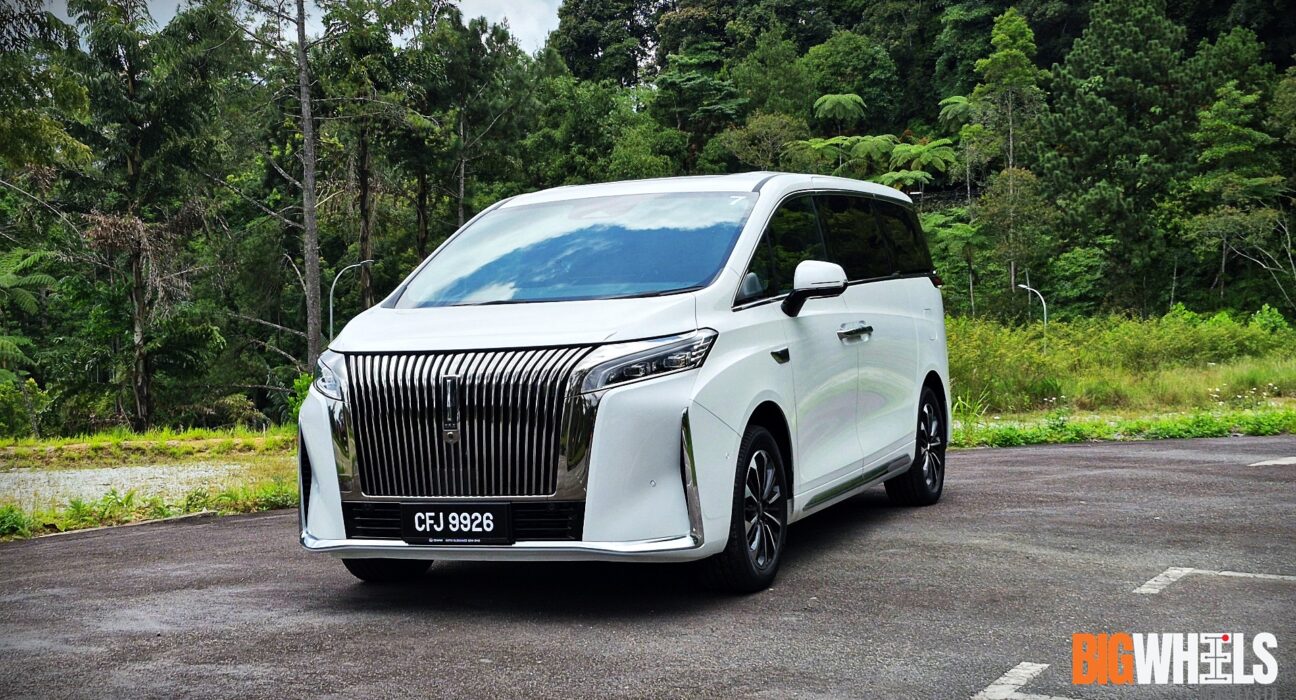
The GWM WEY G9 Hi4 HEV costs RM20,000 less than the PHEV and doesn’t require external charging. But there are a few compromises buyers should know about.
The GWM WEY G9 has already established itself as an interesting alternative in Malaysia’s luxury MPV segment. Now, GWM Malaysia is giving buyers another option with the introduction of the WEY G9 Hi4 HEV.
Priced at RM249,800, the HEV is RM20,000 cheaper than its plug-in hybrid (PHEV) sibling. More importantly, it offers a different ownership proposition: you get the benefits of hybrid technology without having to worry about plugging in the vehicle.
On paper, that sounds like a pretty attractive deal. However, spend a little more time looking at the differences between the two, and you’ll realise that the cheaper HEV isn’t necessarily the better buy.
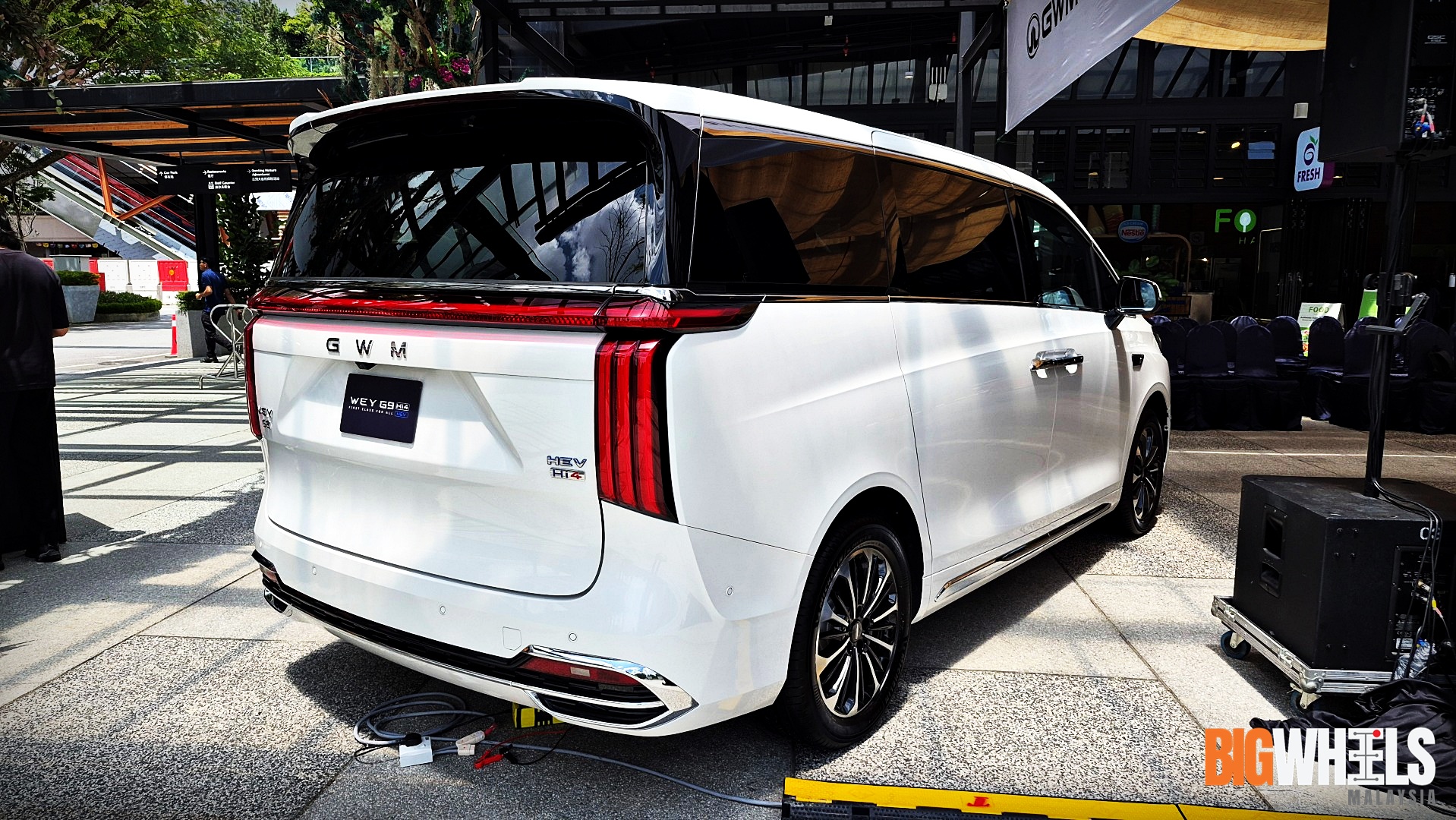
A different kind of hybrid
Under the bonnet sits a 2.0-litre turbocharged four-cylinder petrol engine paired with GWM’s Hi4 intelligent all-wheel-drive hybrid system. The setup incorporates electric motors, a 1.67kWh hybrid battery and a four-speed Dedicated Hybrid Transmission (DHT). Combined system output stands at 358 PS and 782 Nm of torque, with power delivered to all four wheels.
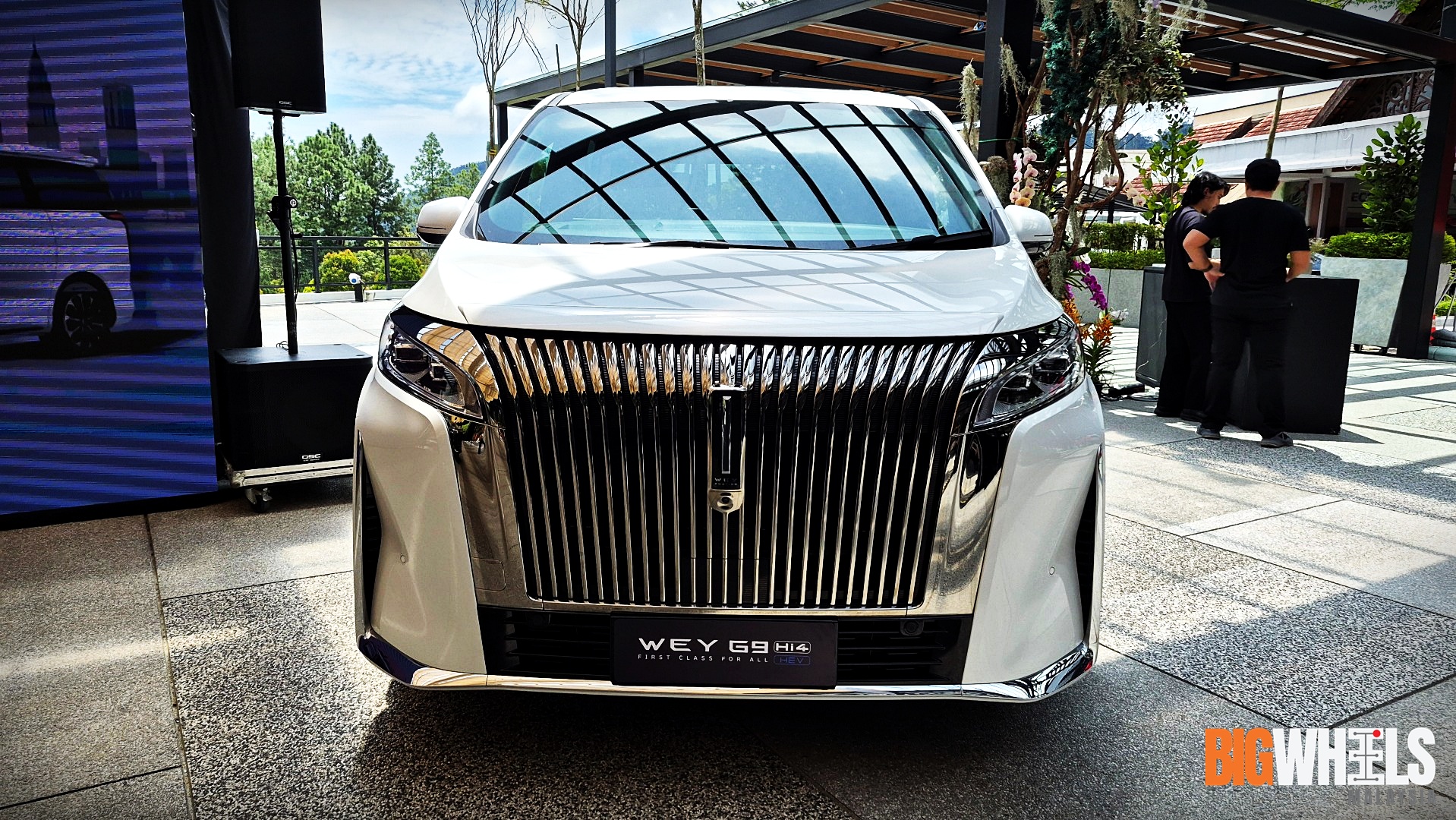
Those are substantial numbers for a family-oriented MPV. During our first driving impressions, the power delivery was one of the more pleasant surprises. Despite its considerable size, the G9 feels responsive when you get on the accelerator, with enough performance to make highway acceleration and uphill driving feel less demanding. GWM claims a 0-100 km/h acceleration time of 7.5 seconds.
Of course, this isn’t a sports car, nor is it supposed to be one. But having 358 PS and 782 Nm at your disposal is certainly reassuring when you’re carrying a full load of passengers.
No charging anxiety, but there’s a catch
Here’s where the HEV makes its strongest argument. Unlike the PHEV, which comes with a considerably larger battery and supports external charging, the HEV is a self-charging hybrid. Its 1.67kWh battery is replenished through the vehicle’s hybrid system and regenerative braking.
In other words, you simply fill it up with petrol and drive. GWM quotes fuel consumption of 6.5 litres per 100 km under the NEDC testing cycle, with a claimed combined driving range of up to 845 km.
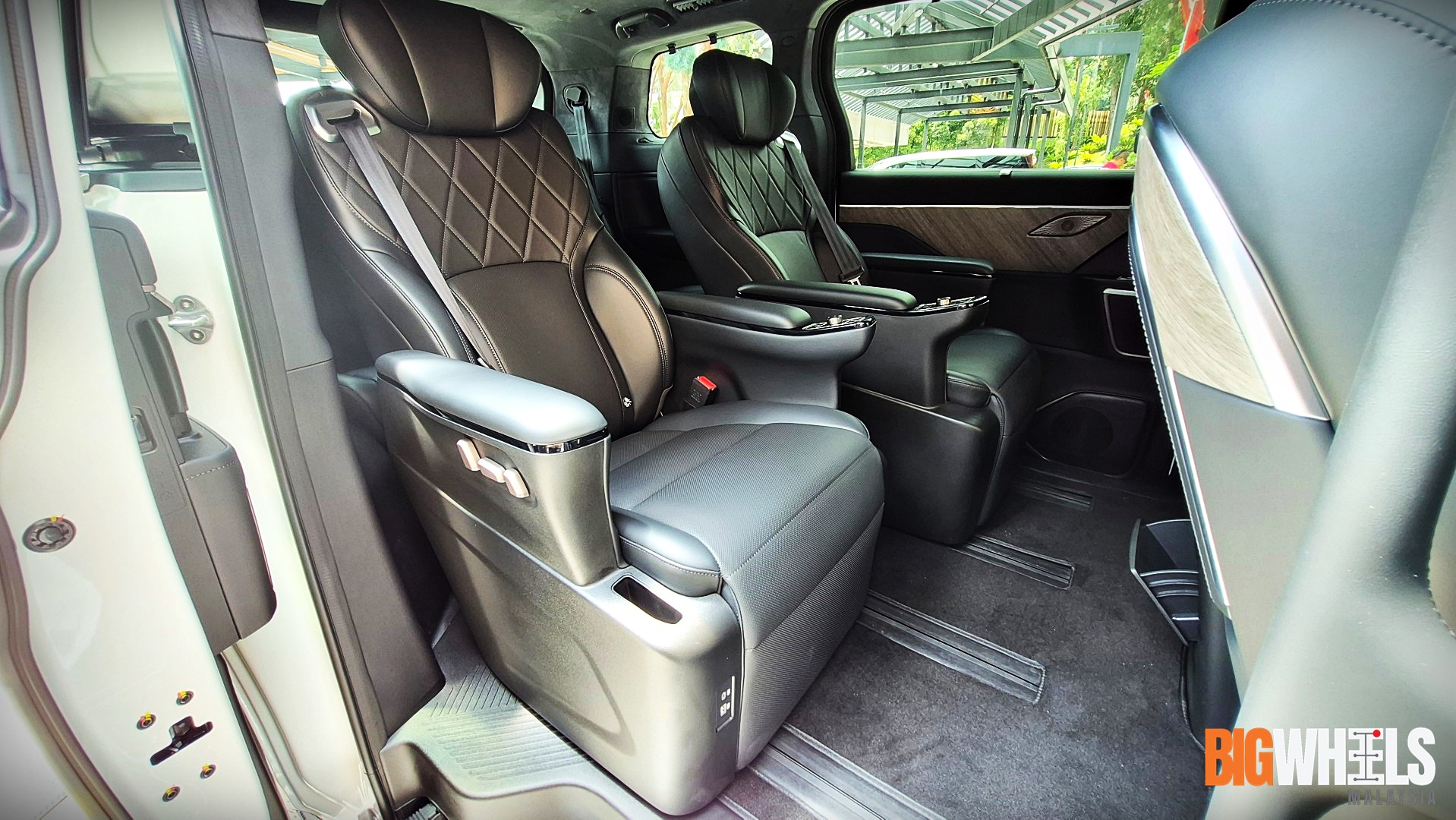
For buyers who live in condominiums, travel frequently or simply don’t want another charging routine to worry about, this arrangement makes plenty of sense.
However, there’s another consideration which is the price of the road tax. The HEV uses a larger 2.0-litre turbocharged engine, compared to the PHEV’s smaller 1.5-litre turbocharged unit. In Malaysia, that means the HEV attracts higher annual road tax.
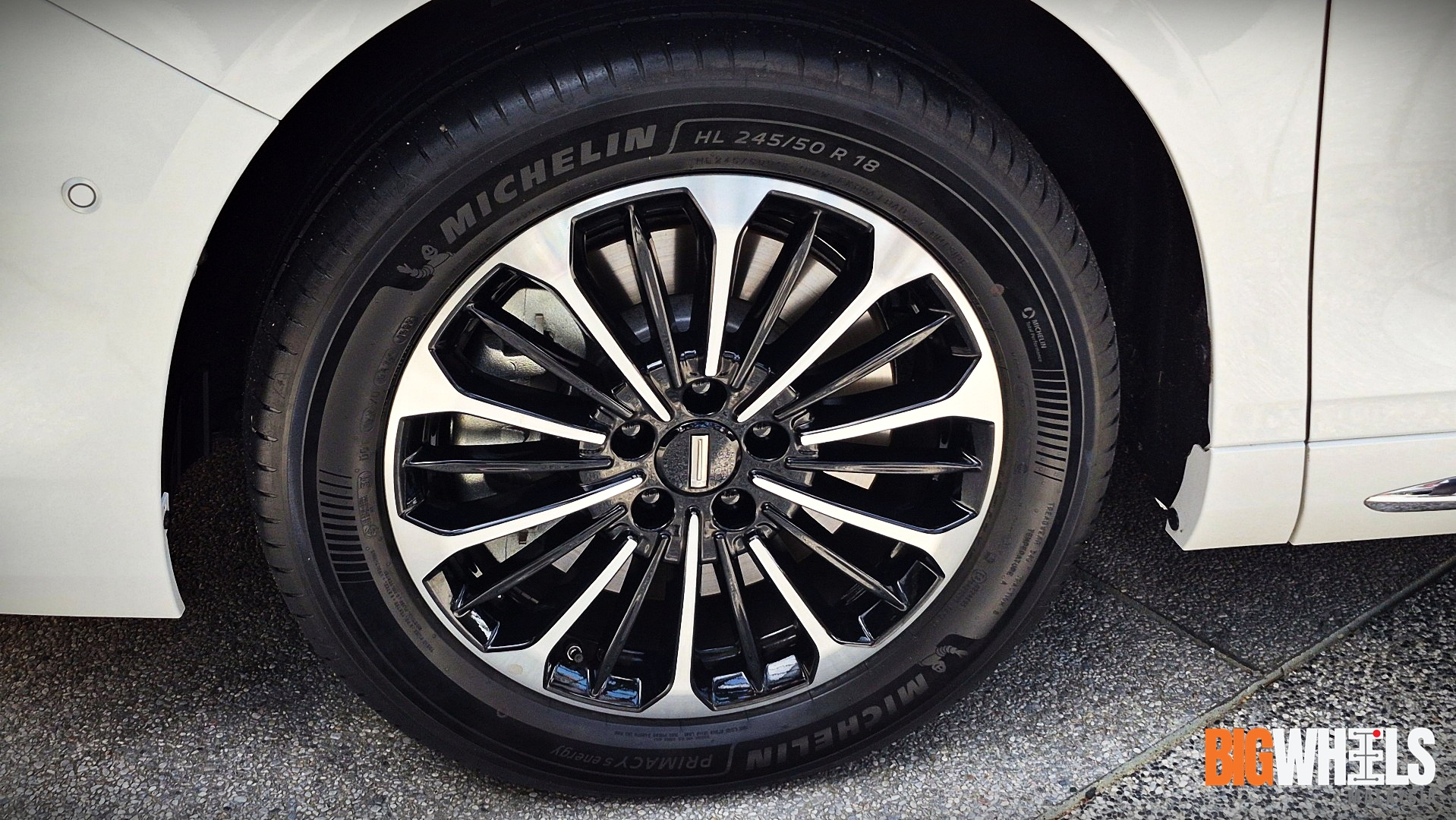
It’s an important ownership cost to consider, particularly for buyers who are comparing the two purely on price.
First-class treatment for seven
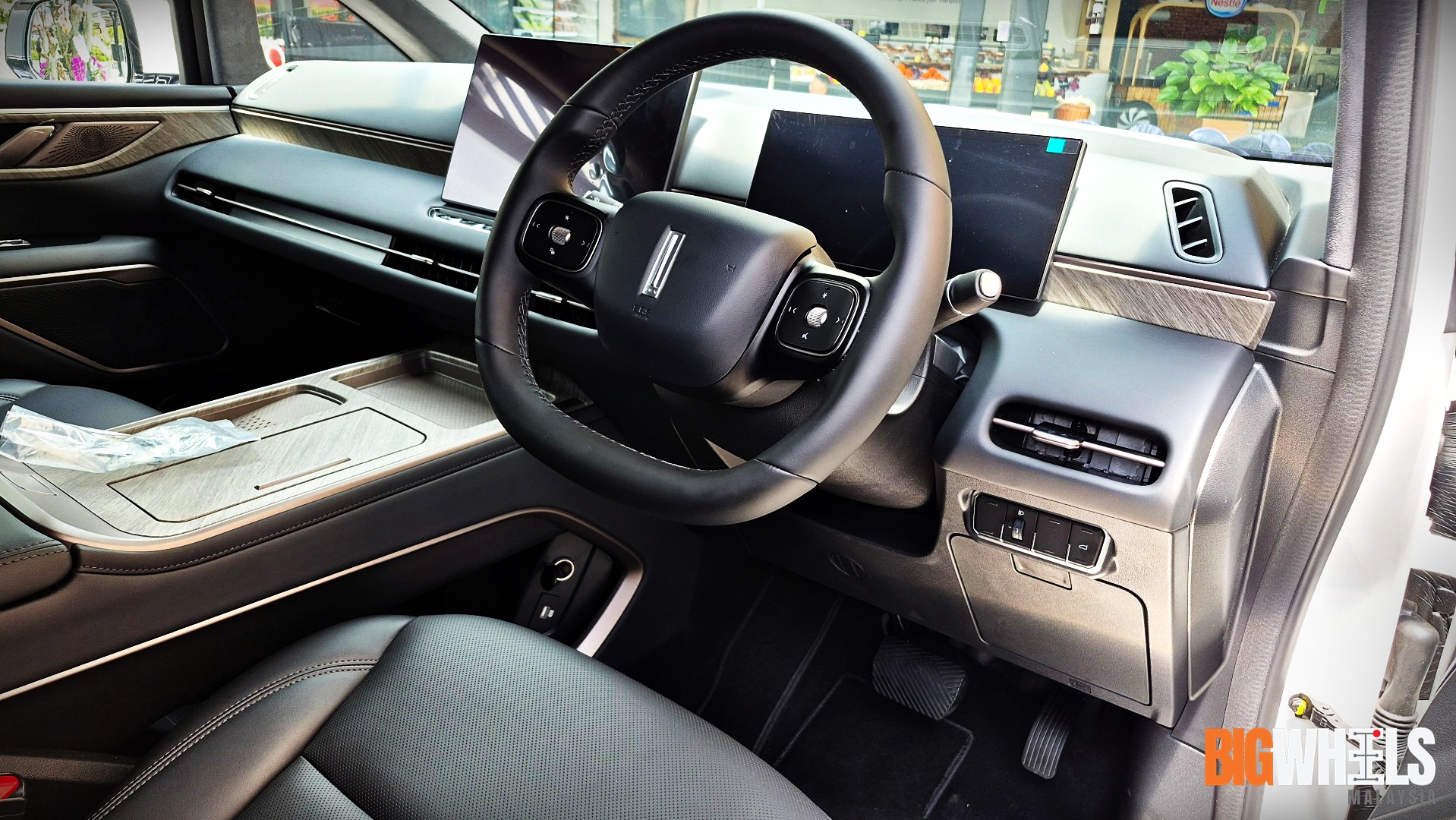
The WEY G9’s biggest selling point has always been its cabin, and the HEV doesn’t disappoint when it comes to equipment. It retains the seven-seat 2+2+3 configuration, with the second row featuring Zero Gravity captain seats.
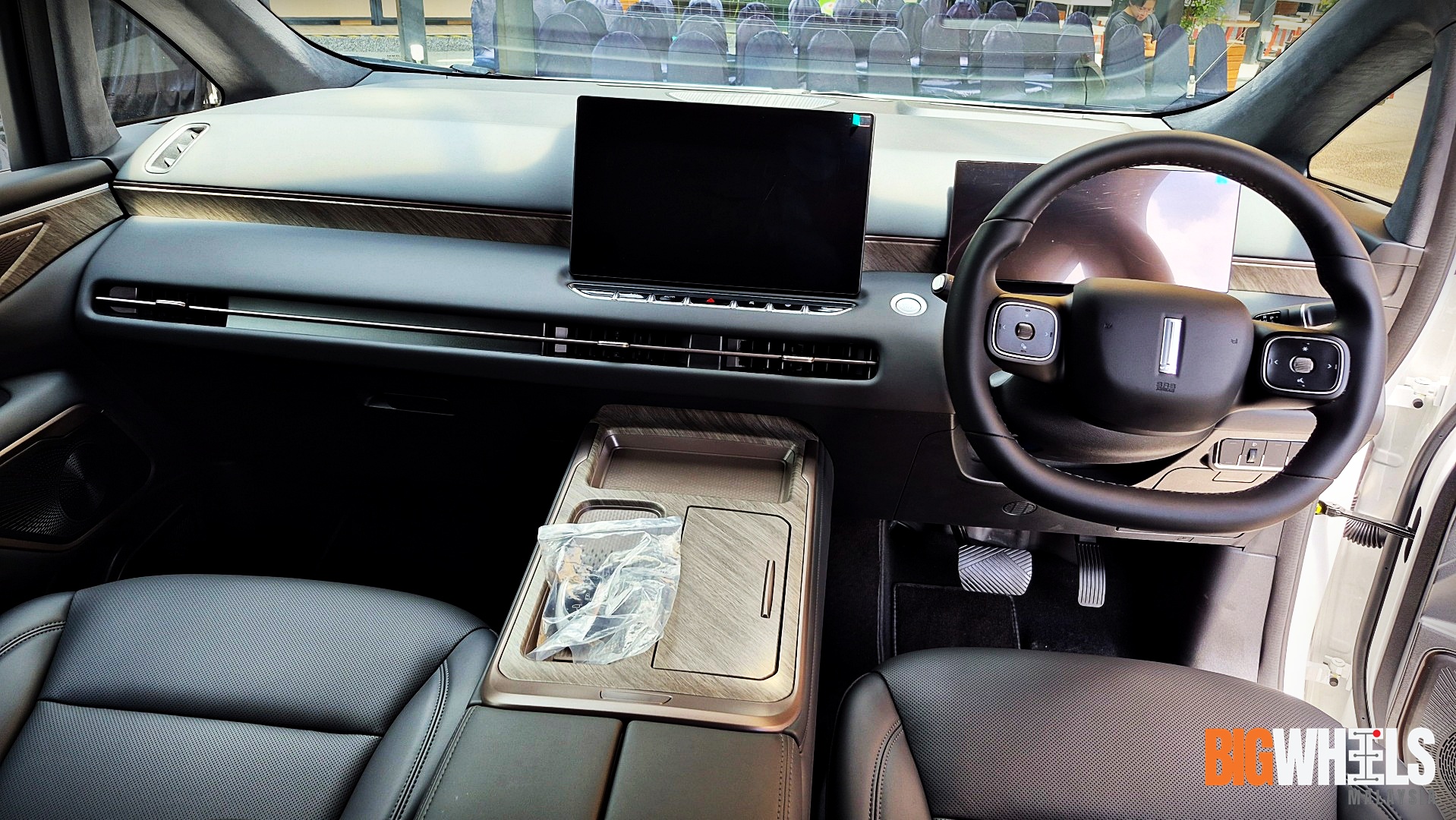
These come with electric adjustment, electric leg rests, ventilation and massage functions. The first and second rows are upholstered in Nappa leather, while three-zone automatic climate control helps keep everyone comfortable.
There’s also a 14.6-inch infotainment display, a 12.3-inch digital instrument cluster, a head-up display, wireless Apple CarPlay and Android Auto, and a 21-speaker premium audio system.
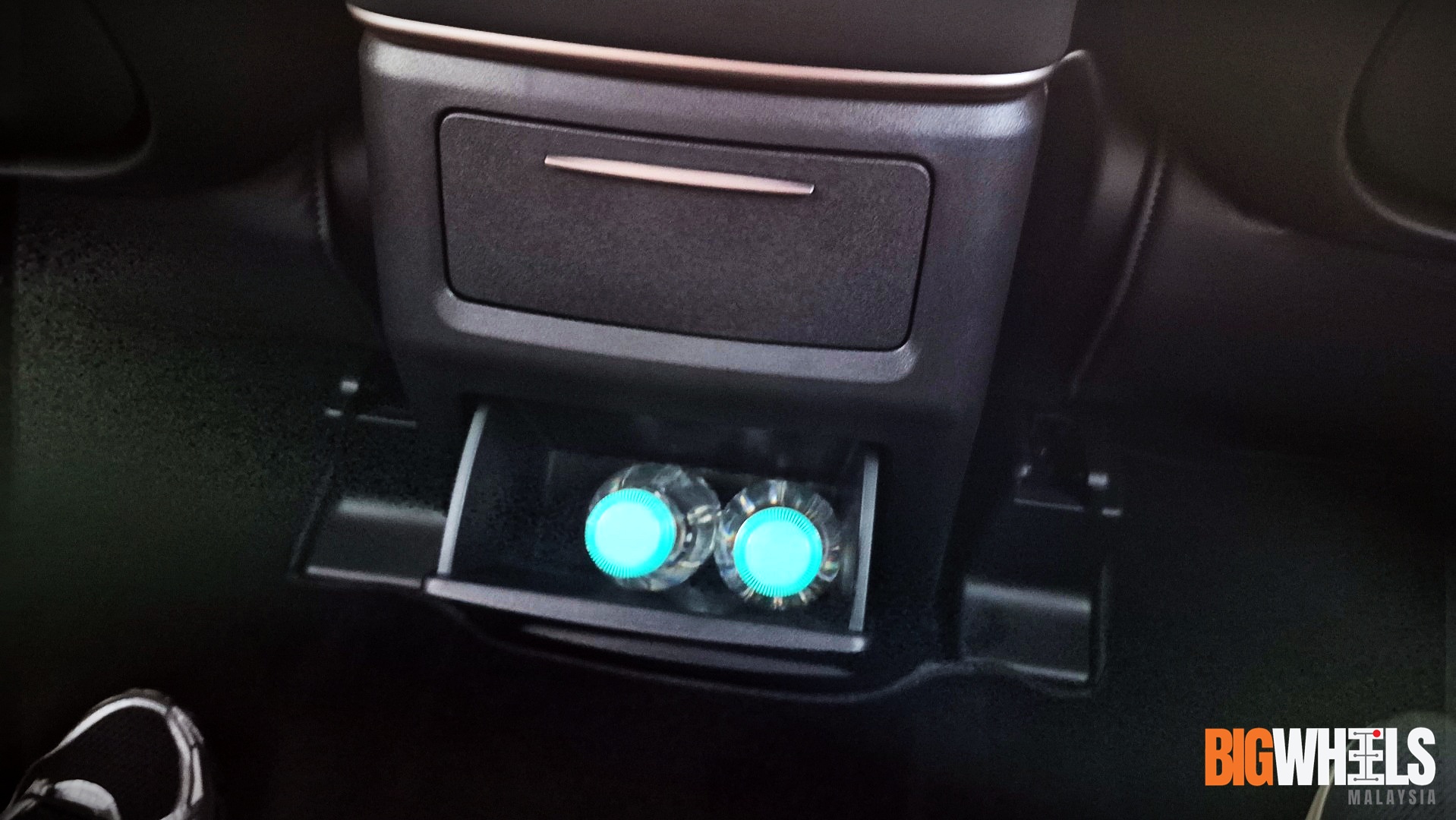
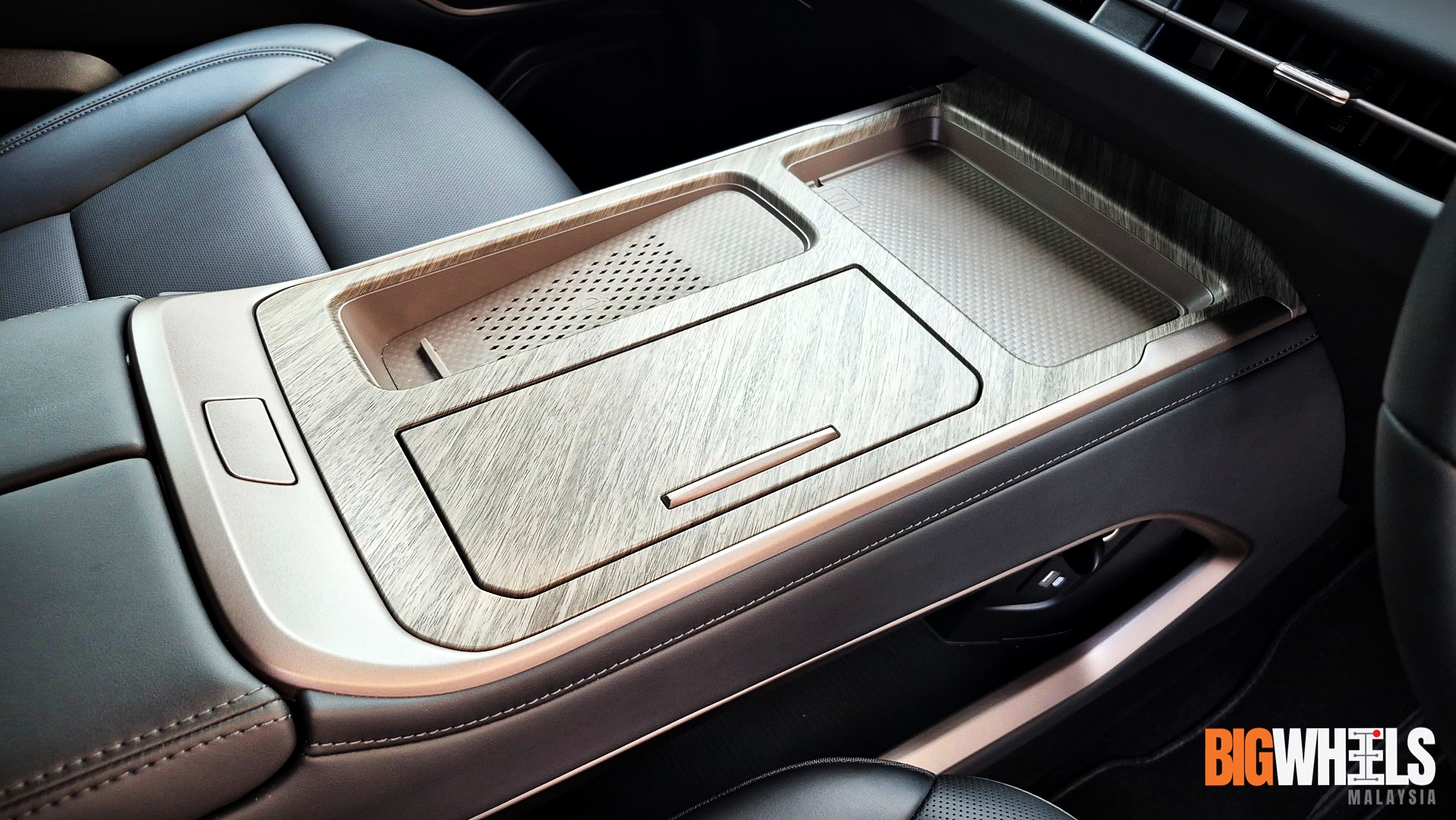
However, there are two noticeable differences if you’re particular about cabin aesthetics and features. While the PHEV offers a brown interior upholstery option and comes with a fridge, the HEV is only available with an all-black interior and doesn’t get the fridge. Instead, you get a storage compartment.
It’s not a mechanical disadvantage, obviously, but in a luxury MPV where cabin ambience and convenience is a big part of the ownership experience, these matter.
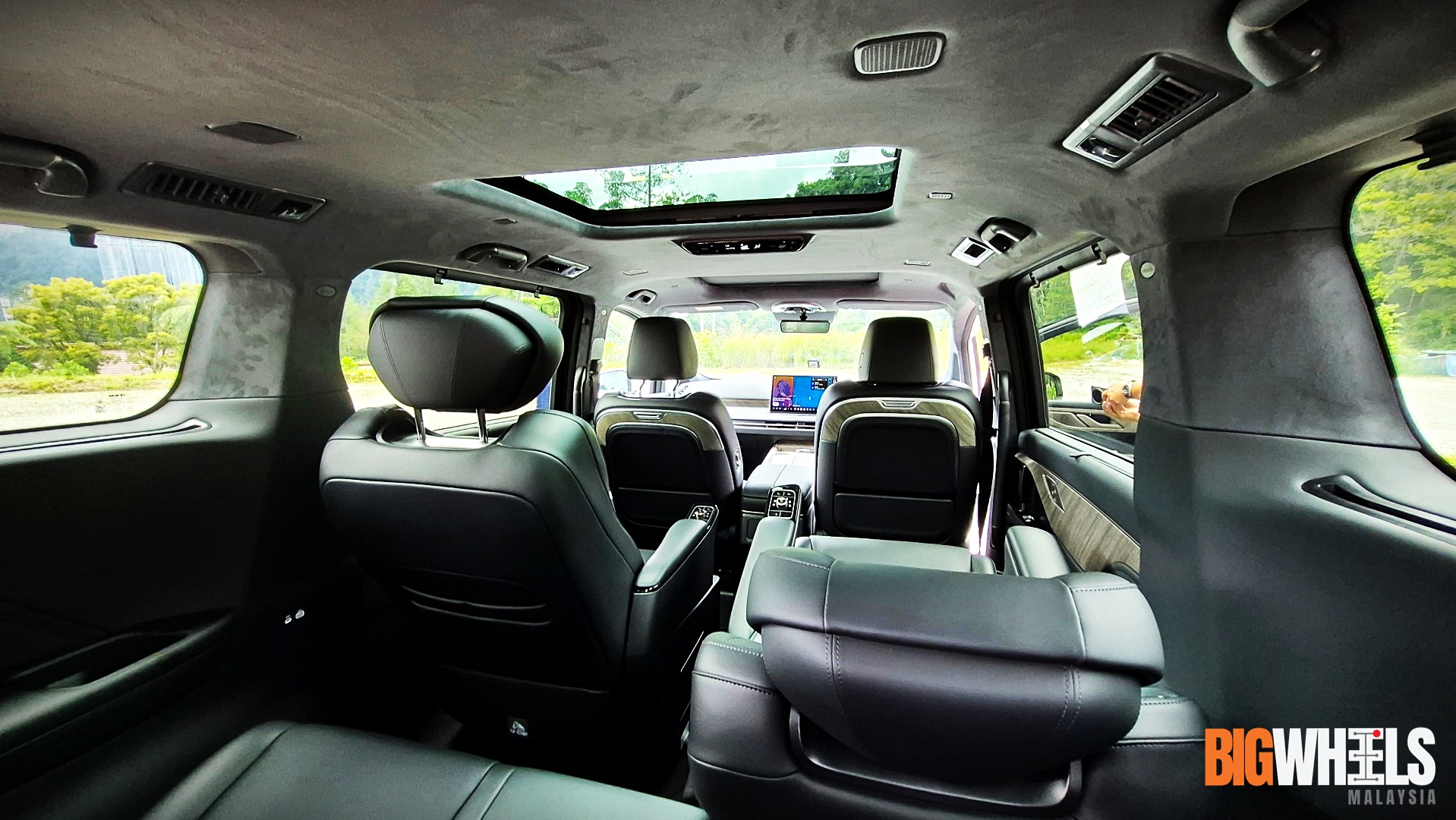
Practicality hasn’t been forgotten either. The third row can be folded to accommodate additional luggage, with boot capacity ranging from 233 litres to 1,725 litres depending on seat configuration.
What do you give up compared to the PHEV?
The RM20,000 price difference isn’t just about the powertrain. The HEV has a smaller 1.67kWh battery compared to the PHEV’s 44.2kWh unit. Consequently, it doesn’t offer the PHEV’s meaningful electric-only driving capability.
The PHEV also produces more combined power at 442 PS, offers a claimed electric driving range of up to 170 km (NEDC), and includes additional features such as vehicle-to-load (V2L) capability.
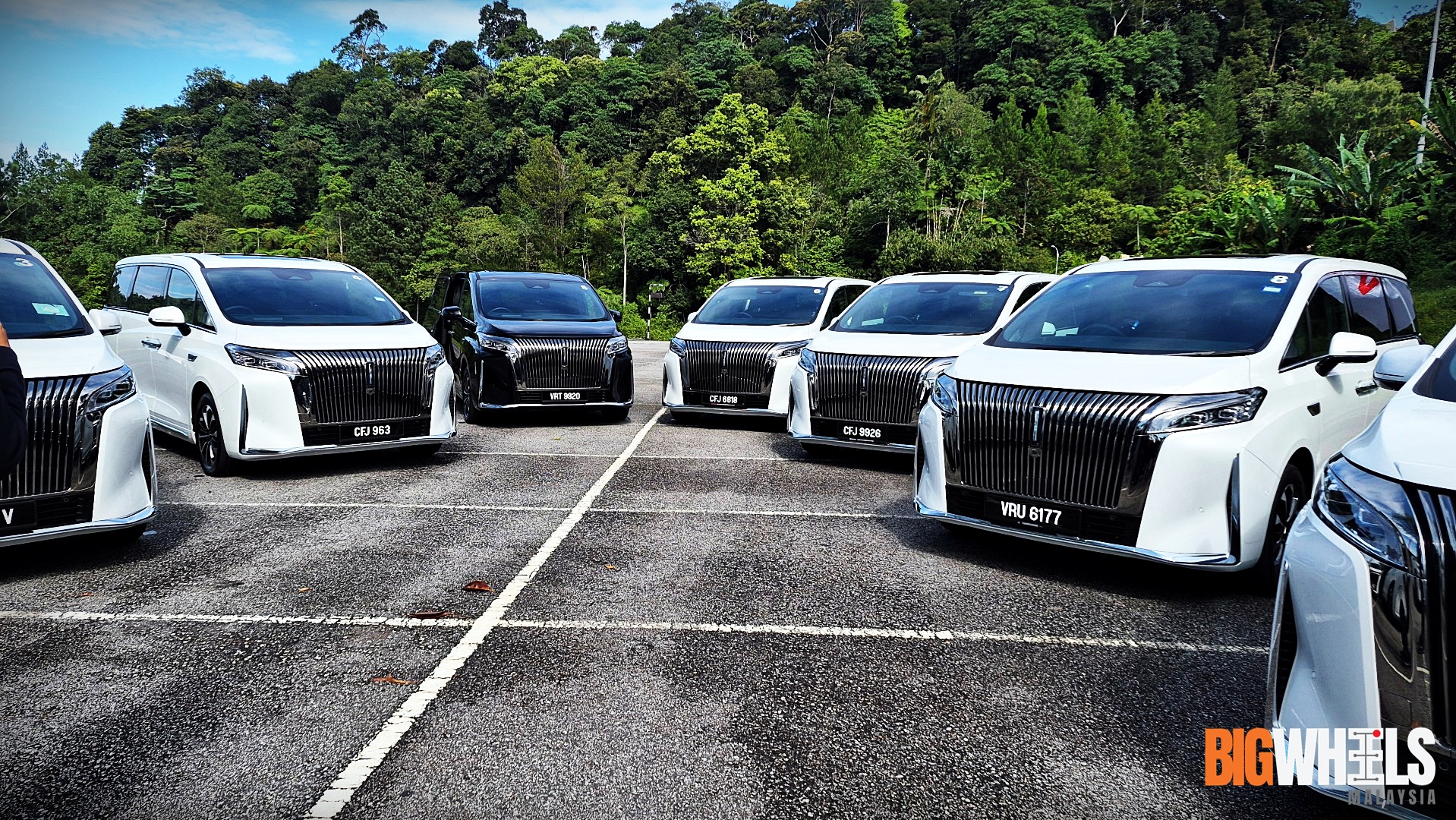
The PHEV’s smaller 1.5-litre engine also means lower road tax, while buyers have the option of a brown interior. On the other hand, the HEV is cheaper to purchase, doesn’t need external charging and still offers a substantial amount of performance and luxury.
So, which one makes more sense?
Conclusion: You win some, you lose some
The GWM WEY G9 Hi4 HEV is certainly an interesting proposition. At RM249,800, it offers a luxurious seven-seater with a powerful hybrid AWD system, plenty of technology and the convenience of conventional refuelling.
But cheaper doesn’t automatically mean better. You save RM20,000 upfront, but you get a larger engine with higher road tax, a considerably smaller battery, less overall system output, no meaningful electric-only driving capability and fewer interior colour choices.
The PHEV, meanwhile, costs more but gives you greater electric-driving flexibility, more power, lower road tax and the option of a brown interior. Ultimately, you win some, you lose some.
If you don’t have access to home charging, frequently travel long distances and prefer the simplicity of a self-charging hybrid, the HEV could be the more practical choice. But if you can take advantage of its plug-in capability, want more performance and appreciate the additional touches, the PHEV could justify the extra RM20,000.
The important thing is not to assume that the cheaper WEY G9 is automatically the better WEY G9. They cater to different priorities, and buyers should weigh the compromises before making that decision.
