
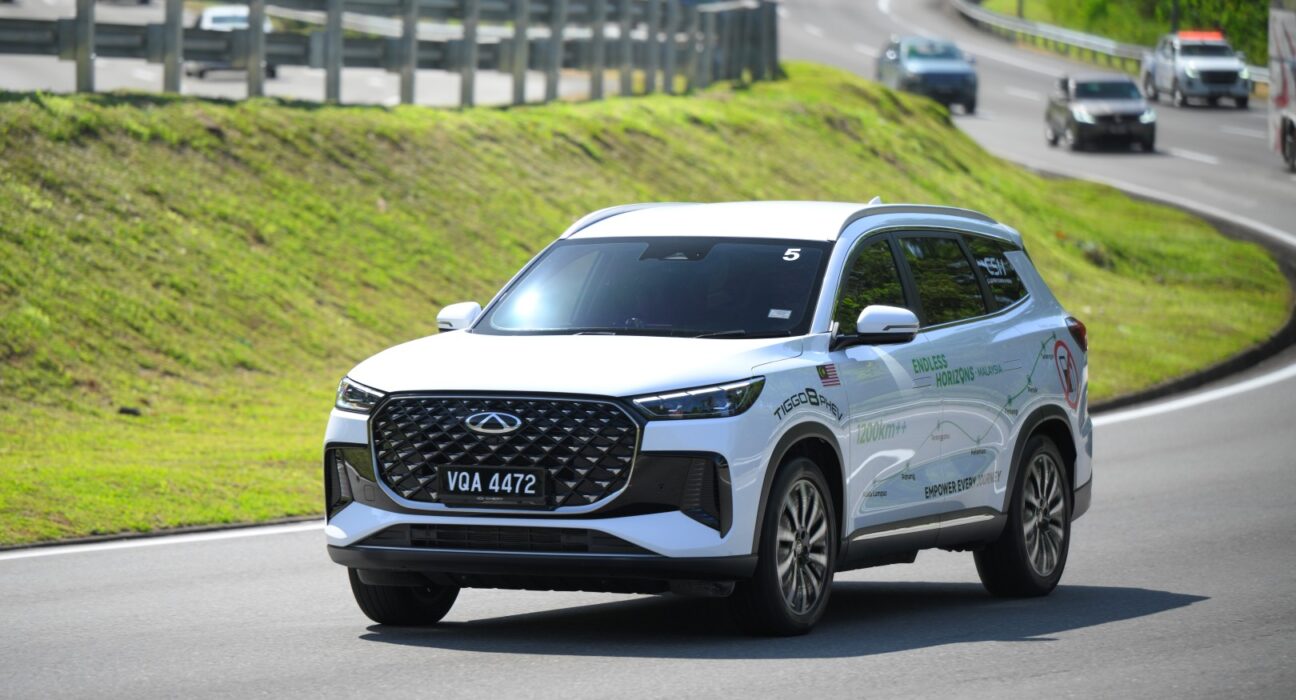
When Chery Malaysia launched the Chery Tiggo 8 PHEV, one headline figure grabbed everyone’s attention — a claimed combined driving range of 1,200km with a full tank of fuel and a fully charged battery.
It sounded impressive, but naturally, many wondered whether it was genuinely achievable in the real world or simply a marketing number derived from laboratory testing.
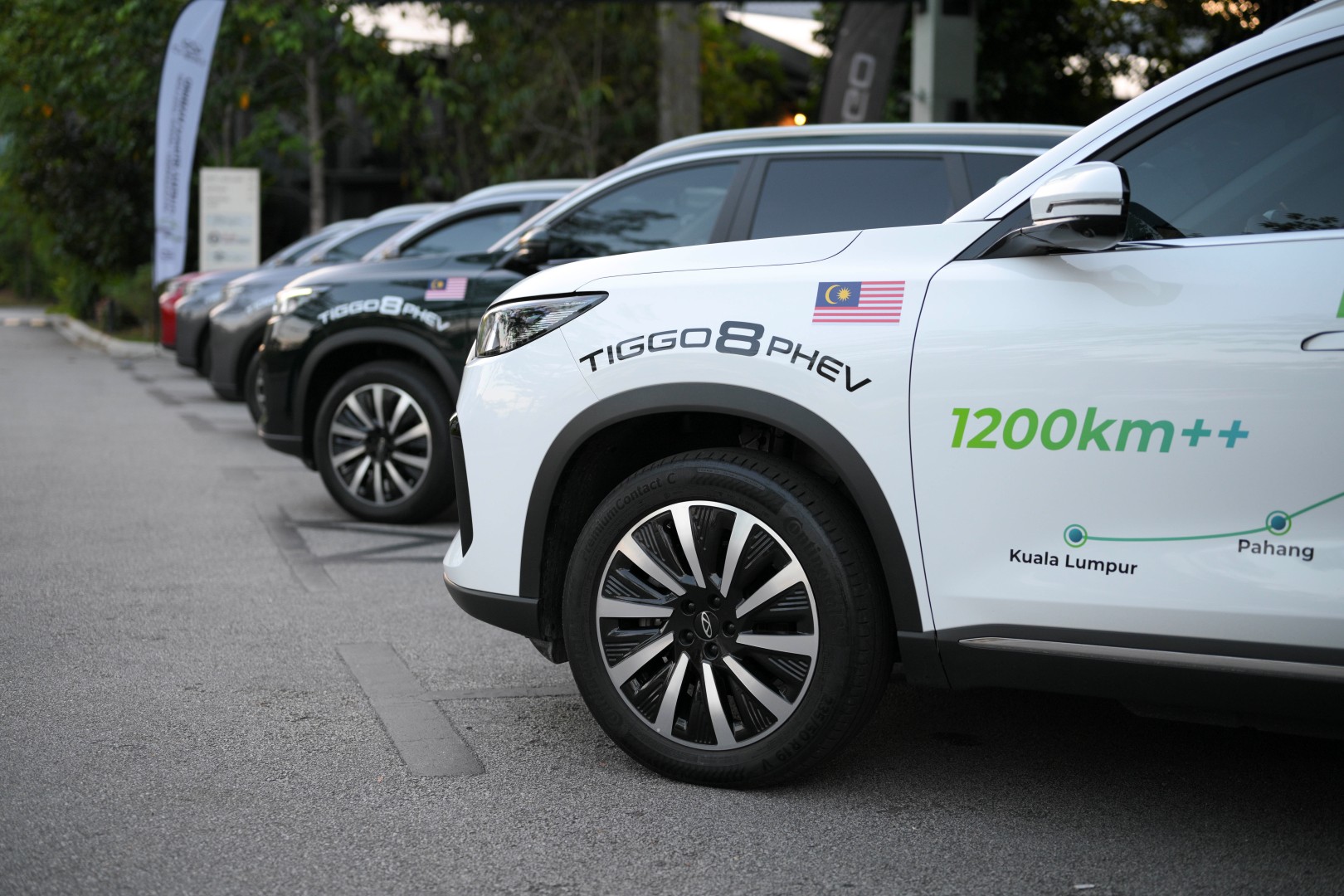
To settle the question once and for all, Chery Malaysia invited members of the media to take part in a challenge: drive the Tiggo 8 PHEV over 1,200km without refuelling or recharging.
The rules were straightforward. We would begin with a full tank of fuel and a fully charged battery, and from that point onwards there would be no pit stops for fuel or charging. The objective? To see whether the SUV could genuinely match — or perhaps even exceed — the range figure claimed during its launch.
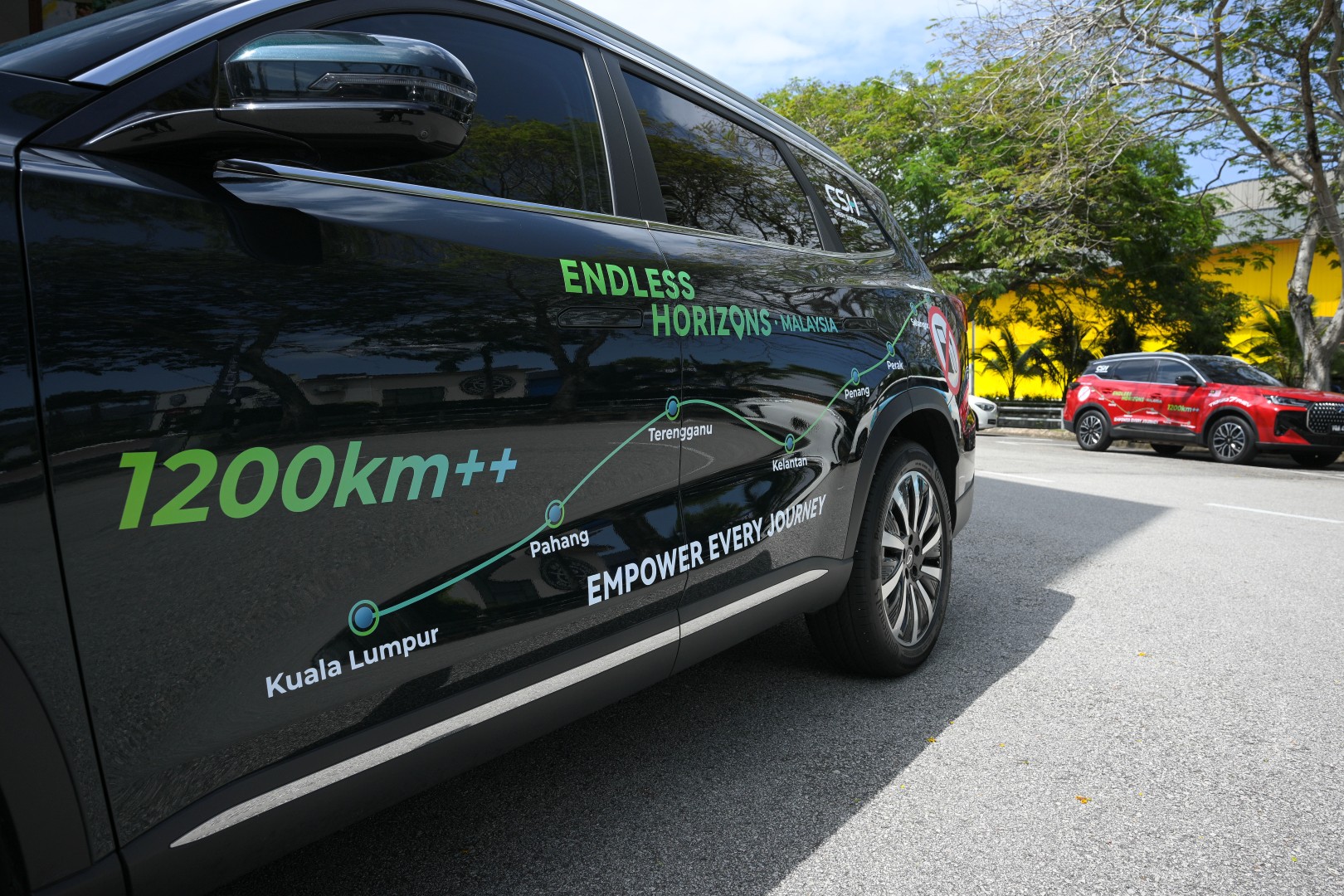
By the time the journey ended two days later, we had covered 1,243km, and surprisingly, it was far easier than anyone expected.
But before getting into the journey itself, it’s worth understanding what the Tiggo 8 PHEV brings to the table.
Positioned as Chery’s flagship electrified SUV in Malaysia, the Tiggo 8 PHEV is priced at around RM160,000, making it one of the most competitively priced three-row plug-in hybrid SUVs in the market.
It sits above the conventional Tiggo 8 Pro and introduces Chery’s latest Super Hybrid (CSH) powertrain technology, designed to deliver both performance and exceptional efficiency.
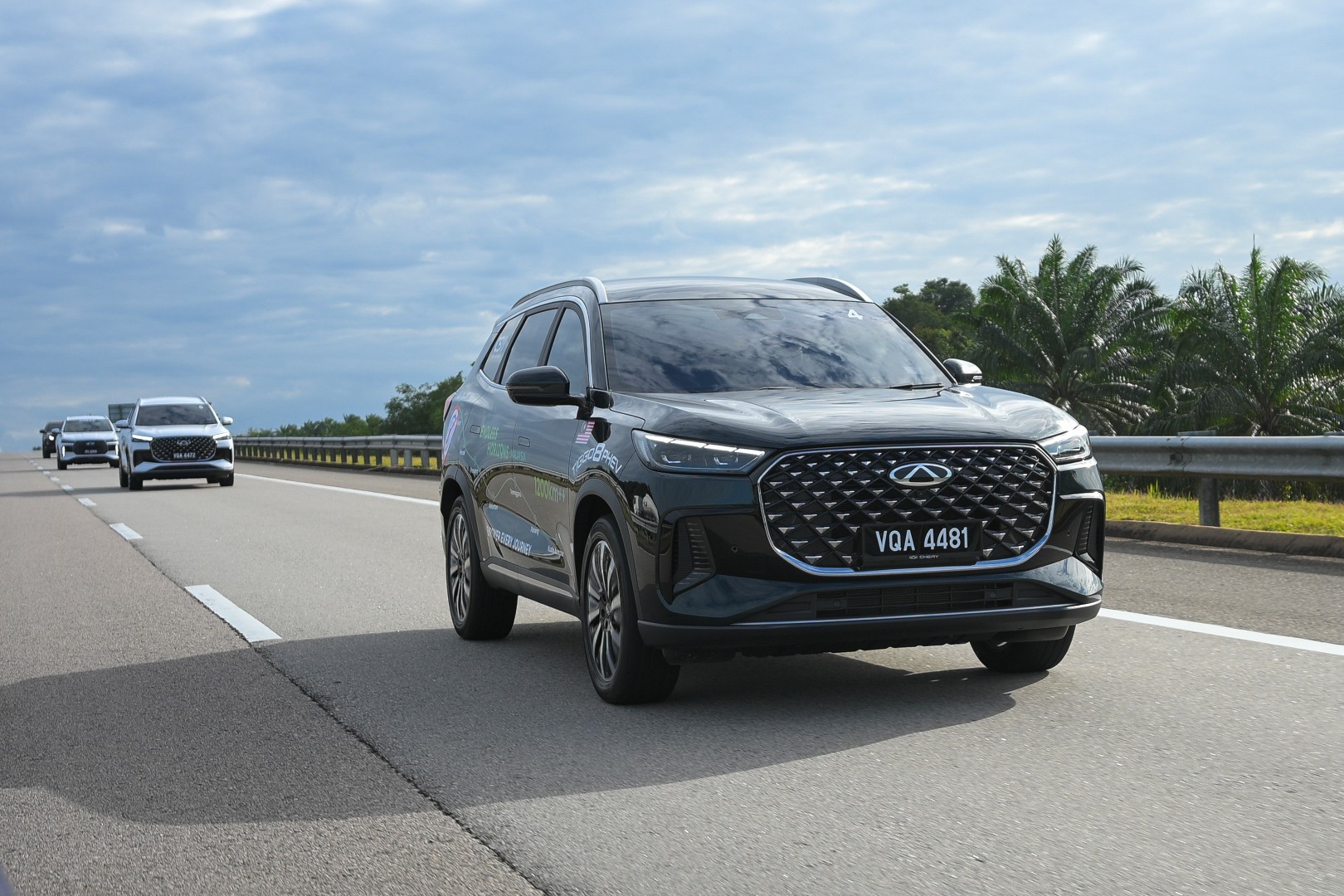
From a design perspective, the Tiggo 8 PHEV largely mirrors the bold styling of the Tiggo 8 Pro. At the front, a large diamond-pattern grille dominates the fascia, flanked by slim LED headlamps and sharp daytime running lights. The overall silhouette is clean and modern, with a long wheelbase that hints at the spacious cabin within.
The rear is equally contemporary, featuring a full-width LED light bar and sculpted surfaces that give the SUV a slightly more premium appearance than its price might suggest. Riding on large alloy wheels and measuring nearly five metres in length, the Tiggo 8 PHEV certainly has the road presence expected of a family-oriented flagship SUV.
Step inside and the Tiggo 8 PHEV continues to impress. The cabin is dominated by a dual-screen layout, integrating the digital instrument cluster and infotainment display into a single seamless panel. The system itself is intuitive and responsive, with clear menus and a layout that proved easy to navigate during the long journey.

Material quality is another highlight. Soft-touch surfaces, leather upholstery, and neatly integrated ambient lighting give the cabin a genuinely upmarket feel. More importantly, space is abundant. With three rows of seating, the Tiggo 8 PHEV comfortably accommodates larger families, while the generous wheelbase ensures second-row passengers enjoy plenty of legroom.
Comfort was clearly a priority in the vehicle’s development. The seats are supportive, cabin insulation is excellent, and overall refinement levels are surprisingly high — something we would come to appreciate even more during the extended drive.
The real star of the Tiggo 8 PHEV, however, lies beneath the skin. It is powered by Chery’s Super Hybrid (CSH) system, which combines a 1.5-litre turbocharged petrol engine with dual electric motors and a high-capacity battery pack.

The setup produces a combined output of around 326PS and over 500Nm of torque, giving the large SUV performance that comfortably rivals many conventional turbocharged petrol SUVs.
Power is sent to the wheels through Chery’s Dedicated Hybrid Transmission (DHT), a system designed to seamlessly manage power delivery between the petrol engine and electric motors.
On the electric side, the Tiggo 8 PHEV is equipped with a 19.27kWh lithium iron phosphate (LFP) battery, providing a pure-electric driving range of roughly 90km (NEDC). Charging the battery from an AC wallbox typically takes around three hours, while regenerative braking helps replenish energy during driving.
What truly sets the system apart, however, is its intelligent energy management. The hybrid system constantly decides whether to run on electric power, petrol power, or a combination of both to maximise efficiency.

Drivers can also manually intervene through features such as forced charging, allowing the petrol engine to recharge the battery while driving actively. This function would prove especially useful during our long-distance challenge.
Efficiency challenges are usually stressful affairs. In most cases, drivers are forced to adopt hypermiling techniques that make the entire process exhausting. That means accelerating extremely gently, keeping speeds very low, drafting behind other vehicles, maintaining ultra-low engine revs, and coasting wherever possible.
The slightest mistake — a heavy foot on the accelerator or a brief burst of speed — can significantly affect the final consumption figure.
Naturally, many of us expected the same kind of intense concentration during this challenge. The route itself was ambitious.
Day 1 began at Bamboo Hills in Kuala Lumpur, heading east towards Kuala Terengganu. This leg included a mixture of highways, winding uphill and downhill sections along the Karak Highway, and long cruising stretches on the East Coast Expressway (LPT).
From Kuala Terengganu, we continued northwards towards Penang, completing the first day with a healthy number of kilometres already under our belt.
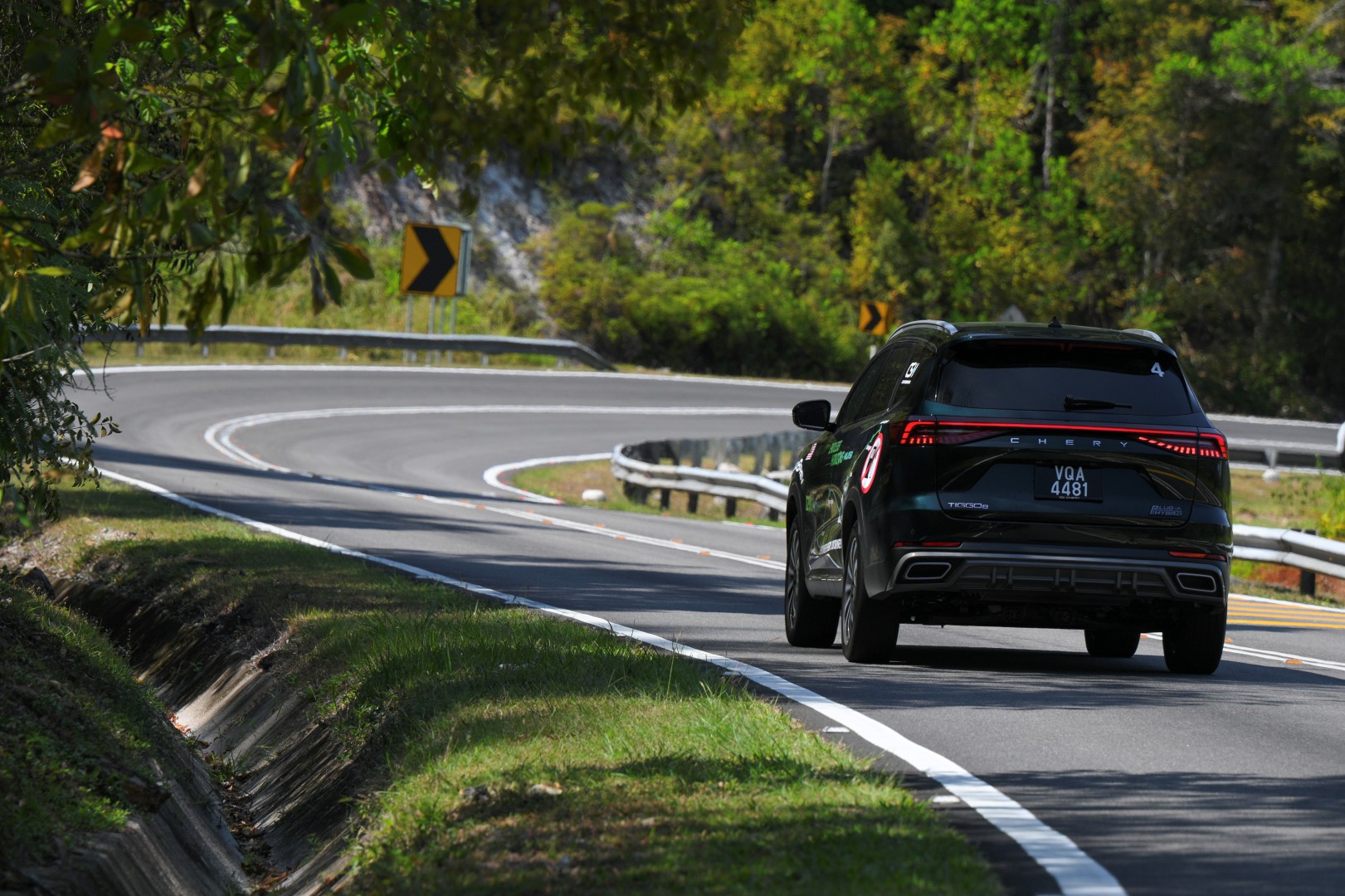
Day 2 was arguably the most challenging segment of the journey. The route from Penang back to Kuala Lumpur took us through the Gerik–Belum stretch, a road that is essentially Malaysia’s version of a touge route — narrow, twisty, and filled with elevation changes.
If there was ever a section capable of ruining a fuel-efficiency attempt, this was it, but something unexpected happened along the way.
Instead of constantly worrying about efficiency, the drive in the Tiggo 8 PHEV turned out to be remarkably stress-free. In fact, our average speed throughout the journey was around 90km/h, which is perfectly reasonable for real-world driving.
We were not crawling along at unrealistic speeds, nor were we obsessively trying to squeeze every last kilometre from the battery. Much of the credit goes to the Chery Super Hybrid system, which handled energy management incredibly well.
Features such as intelligent charging and force charging allowed us to strategically maintain battery levels. For example, we could activate force charging before approaching a steep uphill section, ensuring that there was sufficient electric assistance when climbing.

On downhill stretches or when lifting off the throttle, the system would automatically regenerate energy back into the battery.
In many ways, the Tiggo 8 PHEV did most of the work for us. All we really needed to do was remain aware of the terrain ahead — deciding when to allow the car to recharge itself and when to take advantage of electric assistance.
Beyond efficiency, the Tiggo 8 PHEV also proved to be an excellent long-distance companion. Build quality felt solid throughout the drive, with no rattles or squeaks even when tackling the rougher sections of the Gerik–Belum road. Cabin insulation was equally impressive, keeping wind and tyre noise well controlled at highway speeds.
The seats remained comfortable even after several hours behind the wheel, and passengers in the second row enjoyed generous legroom and headroom.
The infotainment system was also refreshingly straightforward to use. Navigation, media controls, and vehicle settings were easily accessible, reducing distractions during the drive.
Perhaps the biggest improvement over the Tiggo 8 Pro lies in the driving refinement. The accelerator and brake calibration have been tuned far more effectively here. Throttle response is smooth and predictable, while braking feels progressive and natural — something that cannot always be said about hybrid vehicles.
If there is one area where some might have preferred a different setup, it would be the suspension. The Tiggo 8 PHEV is clearly tuned with comfort as the top priority, which means the ride is soft and absorbent.
A slightly firmer setup might have added more body control through corners, particularly along twisty roads like the Gerik–Belum stretch. That said, considering this is primarily a family-oriented SUV, the comfort-focused tuning is understandable.
When we finally returned to Bamboo Hills, the trip computer told the full story – 1,243km travelled without refuelling or recharging.
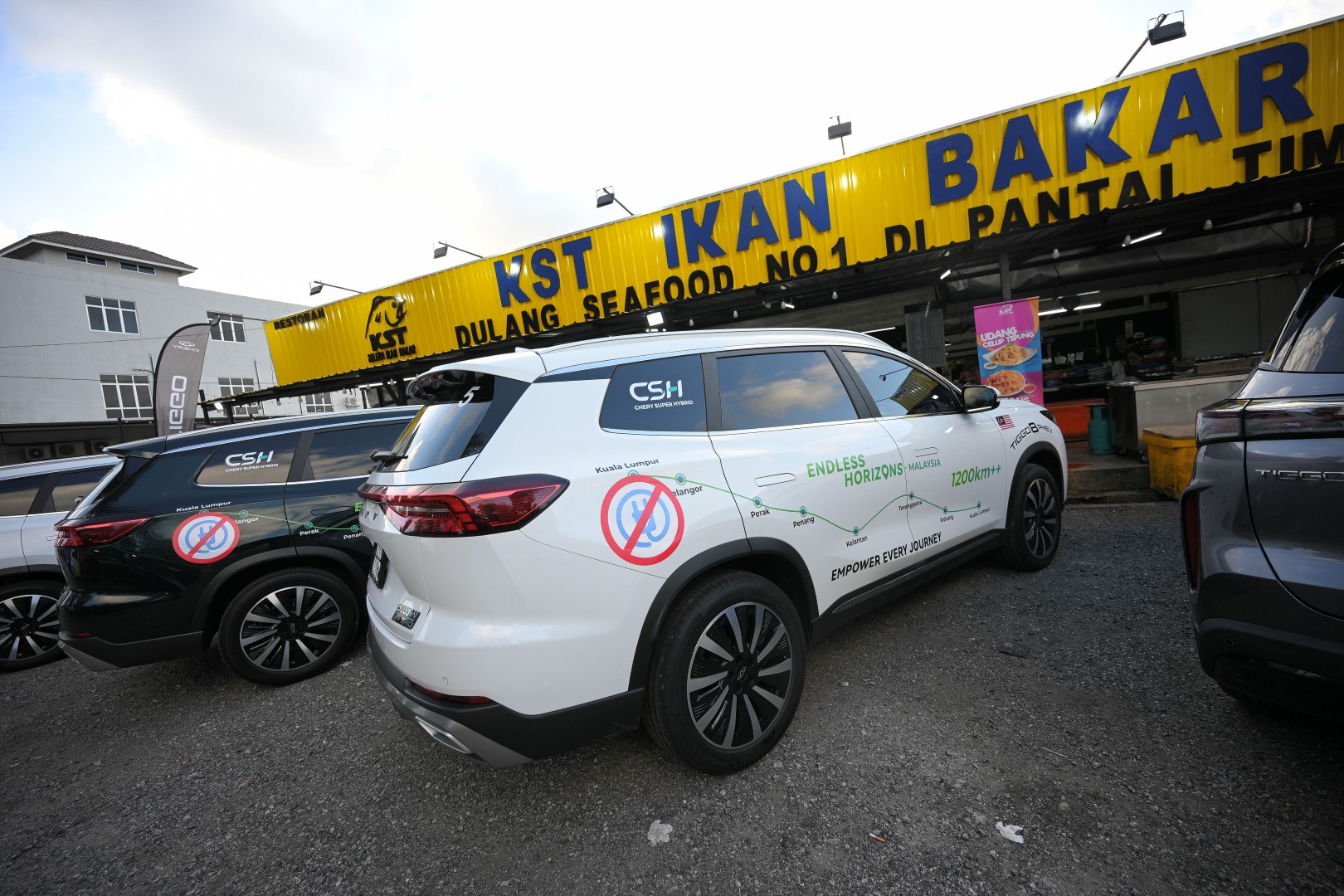
Not only had the Tiggo 8 PHEV met the claimed 1,200km range, it had actually exceeded it but perhaps the most impressive part was how easily it achieved that figure.
This wasn’t a painstaking hypermiling exercise where drivers crawled along at unrealistic speeds. Instead, the Tiggo 8 PHEV delivered its range while being driven at normal highway speeds across a mix of terrains, including challenging mountainous roads.
Three things ultimately stood out from this experience – the fact that we exceeded the 1,200km target with relative ease, how pleasant and refined the Tiggo 8 PHEV is to drive, and third — perhaps most importantly — just how effective the Chery Super Hybrid system really is.
The takeaway is simple – the technology does exactly what it claims.
That being said, in an era where impressive range figures are often viewed with scepticism, the Tiggo 8 PHEV proves that this one isn’t just a marketing gimmick.