
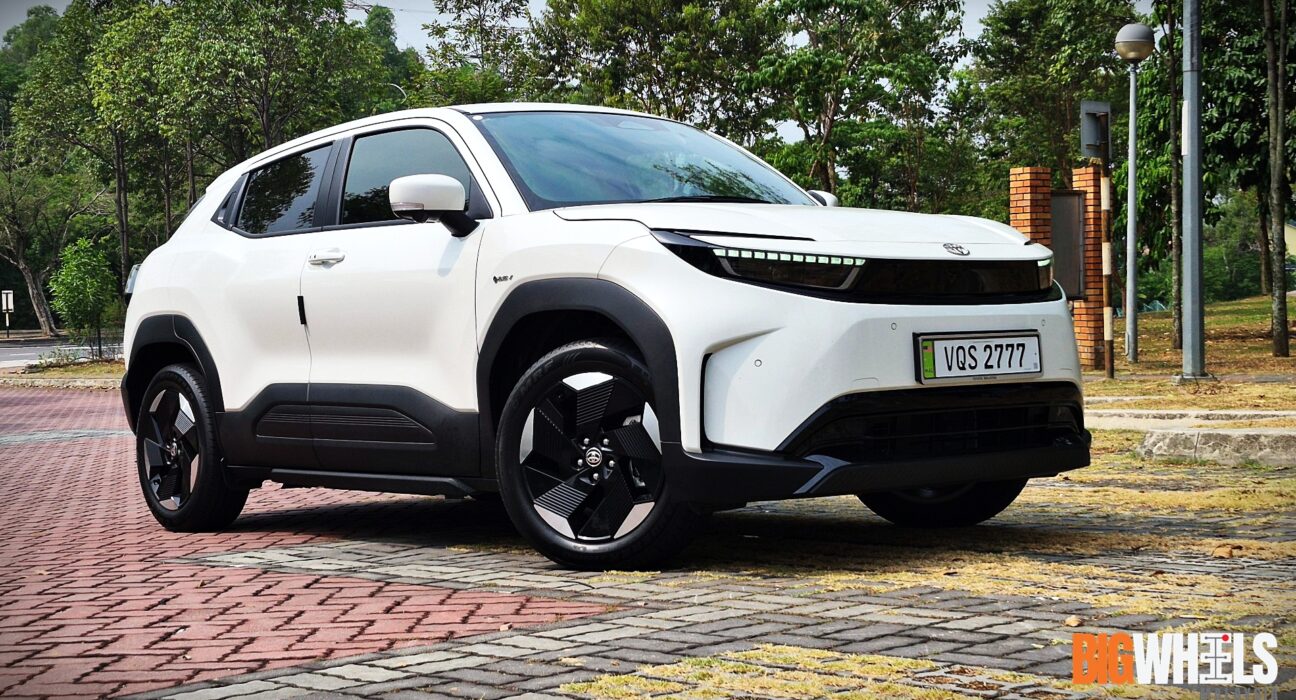
The Toyota Urban Cruiser gets the important things right, from its distinctive styling and clever cabin to its composed driving manners. Unfortunately, its price makes the compromises harder to ignore.
There are cars that win you over with their specifications, and then there are cars that make more sense the longer you live with them. The Toyota Urban Cruiser belongs to the latter category.
Toyota’s compact electric SUV has a distinctive personality, a surprisingly versatile cabin and driving characteristics that make everyday journeys feel effortless. It is the sort of vehicle that gradually grows on you, particularly when you start using it as intended: carrying people, running errands and occasionally heading out of town.
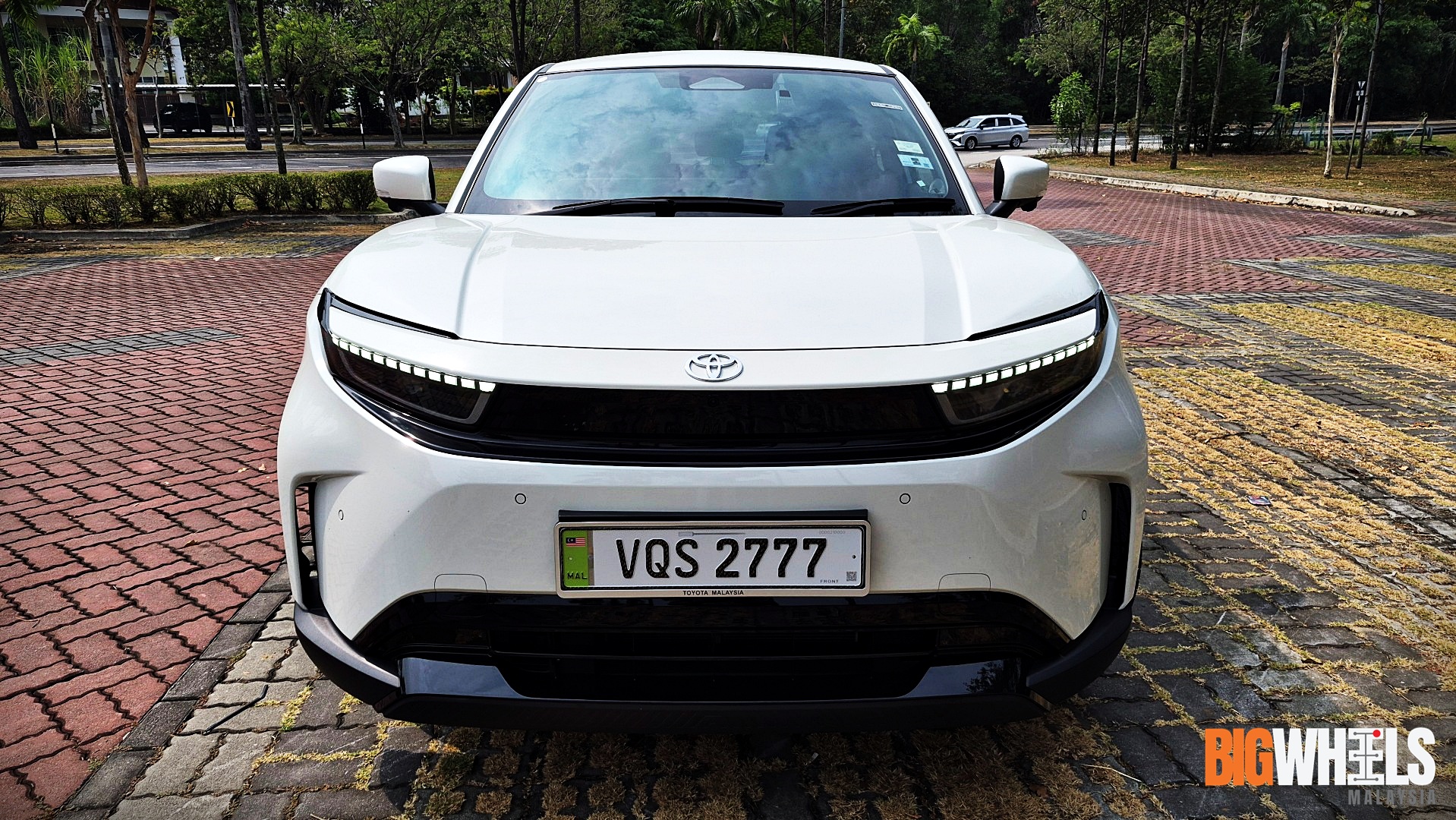
The problem is that, at RM198,000, the Urban Cruiser has to do more than simply get the fundamentals right.
A design that stands out
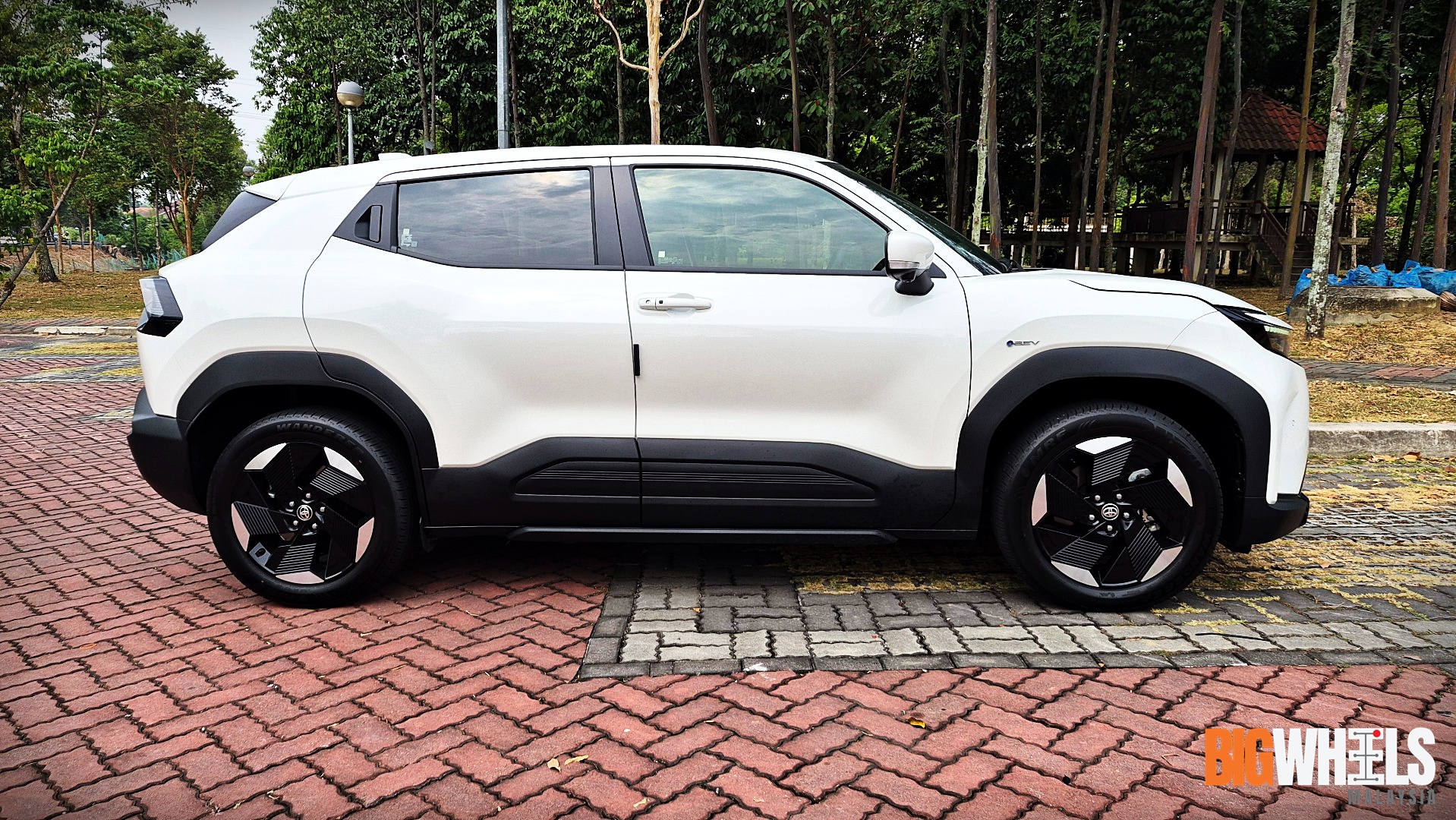
The first thing you notice about the Urban Cruiser is that it does not look like another generic electric SUV. Its chunky proportions, muscular wheel arches, distinctive hammerhead-inspired front end and full-width rear lighting give it a character all its own.
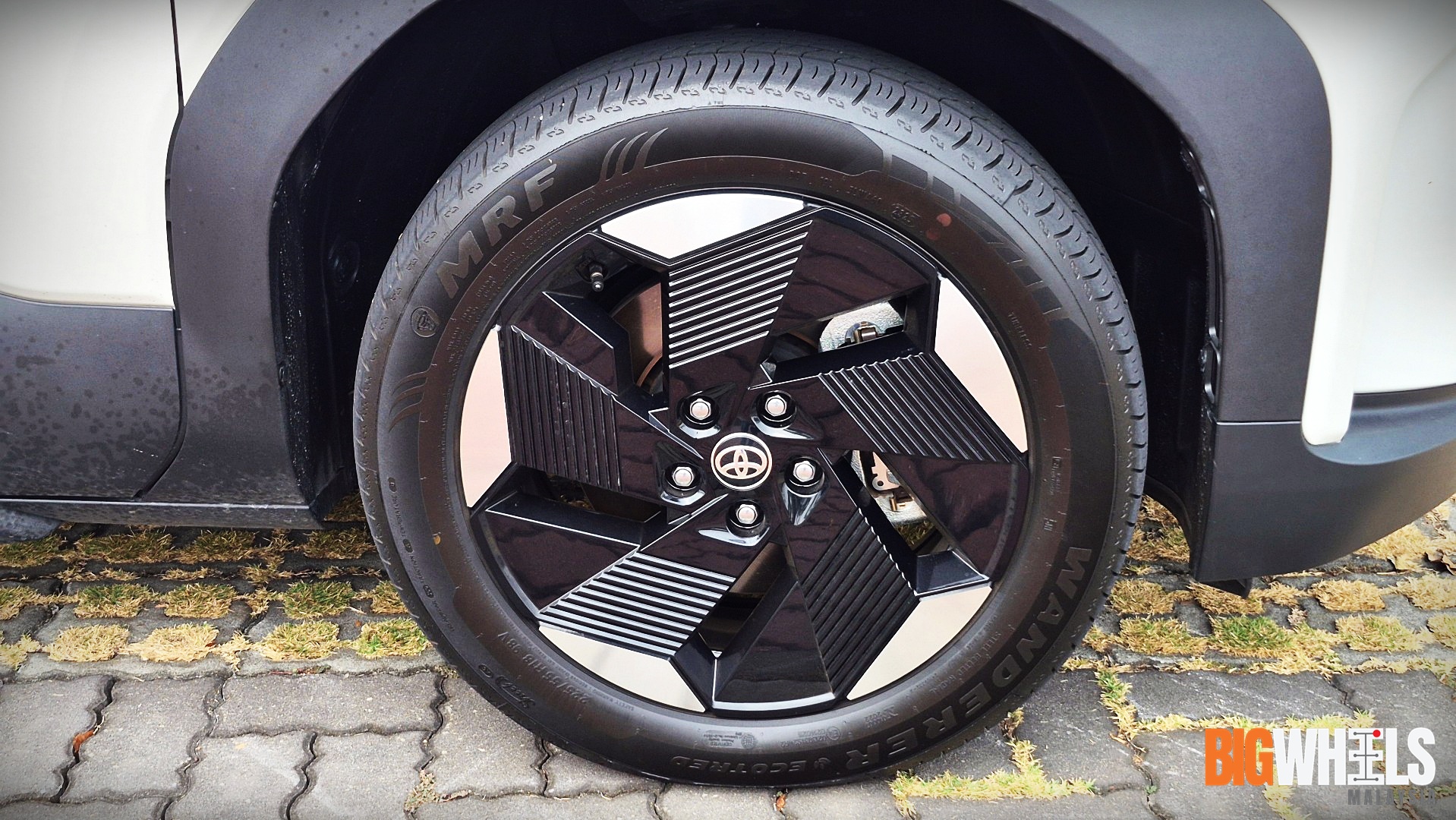
Measuring 4,285 mm long, 1,800 mm wide and 1,635 mm tall, it has a relatively compact footprint, while its 2,700 mm wheelbase helps maximize interior space. The 18-inch alloy wheels also suit its upright, purposeful stance.
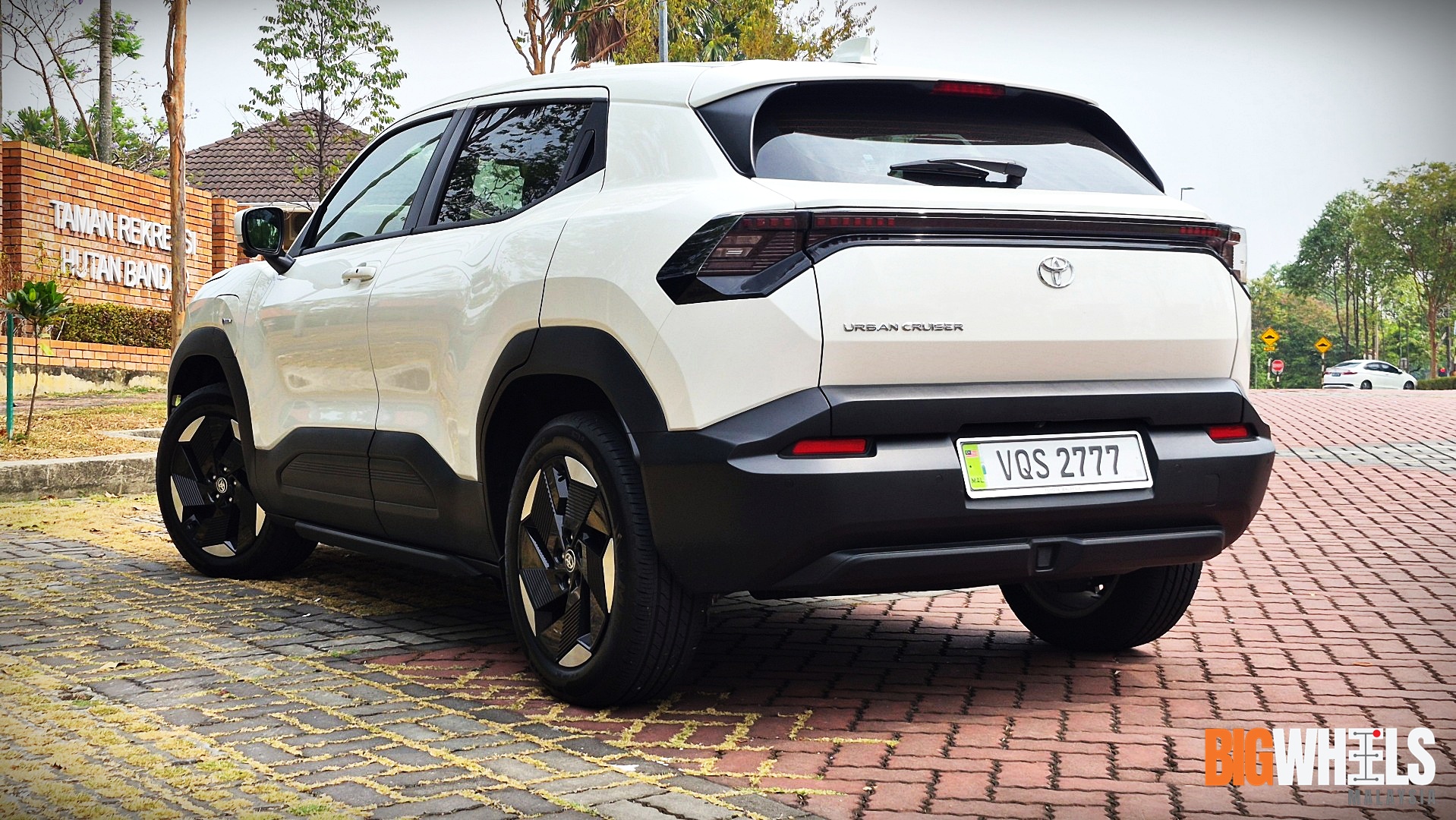
Personally, I find the design refreshing. It looks modern without trying too hard to be futuristic, and there is enough visual character to make it stand out in a car park full of increasingly similar-looking crossovers.
It is also a reminder that an electric vehicle does not have to look like a conventional SUV with a few futuristic details added afterwards.
Small outside, surprisingly spacious inside
The Urban Cruiser’s strongest quality becomes apparent when you step inside. Despite its compact exterior dimensions, the cabin is genuinely spacious and practical, with a layout that makes good use of the available room.
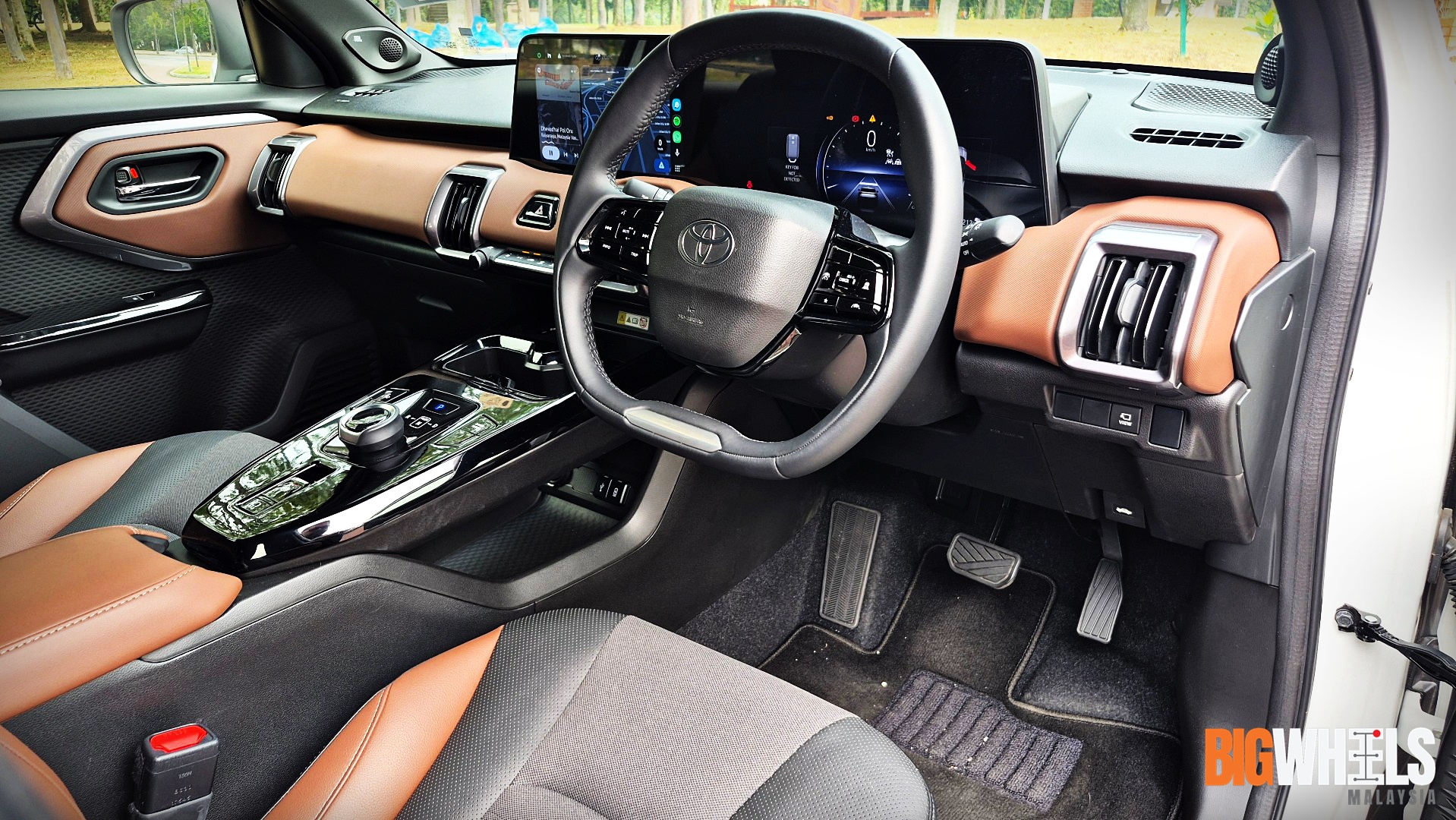
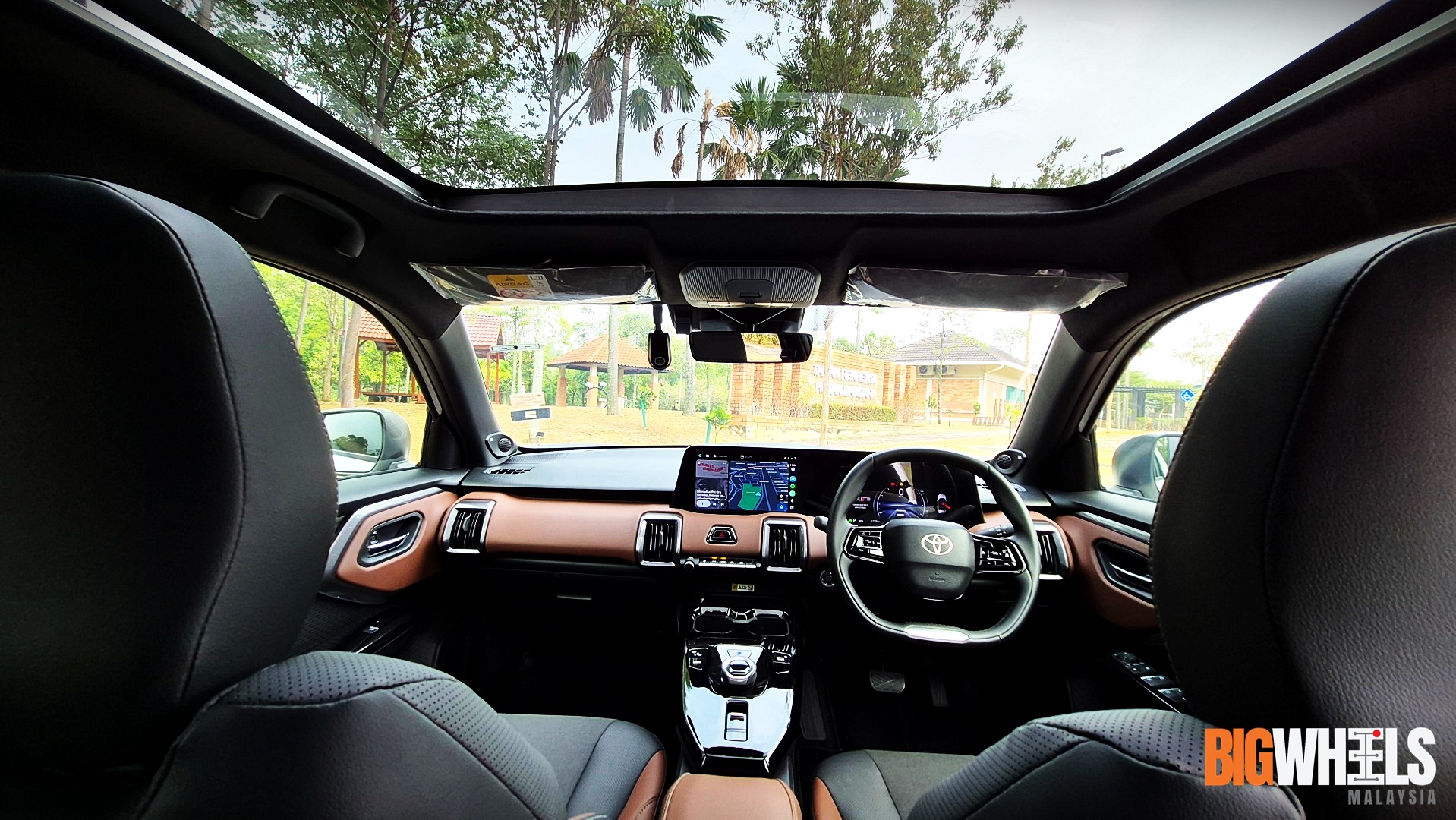
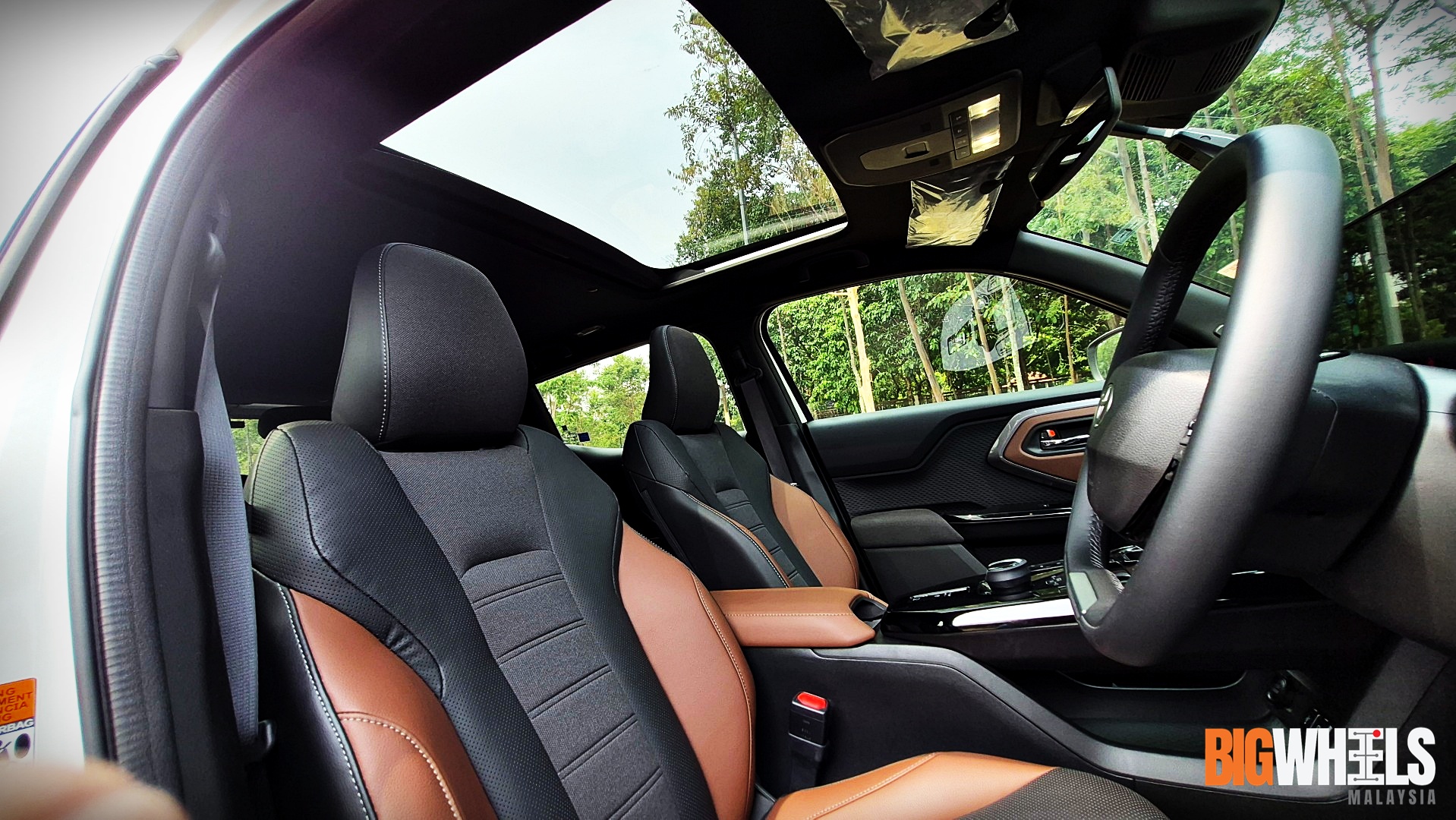
The dashboard has a modern, almost cockpit-like design, featuring a 10.25-inch digital instrument display and a 10.1-inch infotainment touchscreen. The raised center console, contrasting brown and black upholstery, ambient lighting and neatly arranged controls give the interior a distinctive appearance.
It is a cabin I find genuinely cool, even if the materials do not feel as premium as those in Toyota’s larger bZ4X.
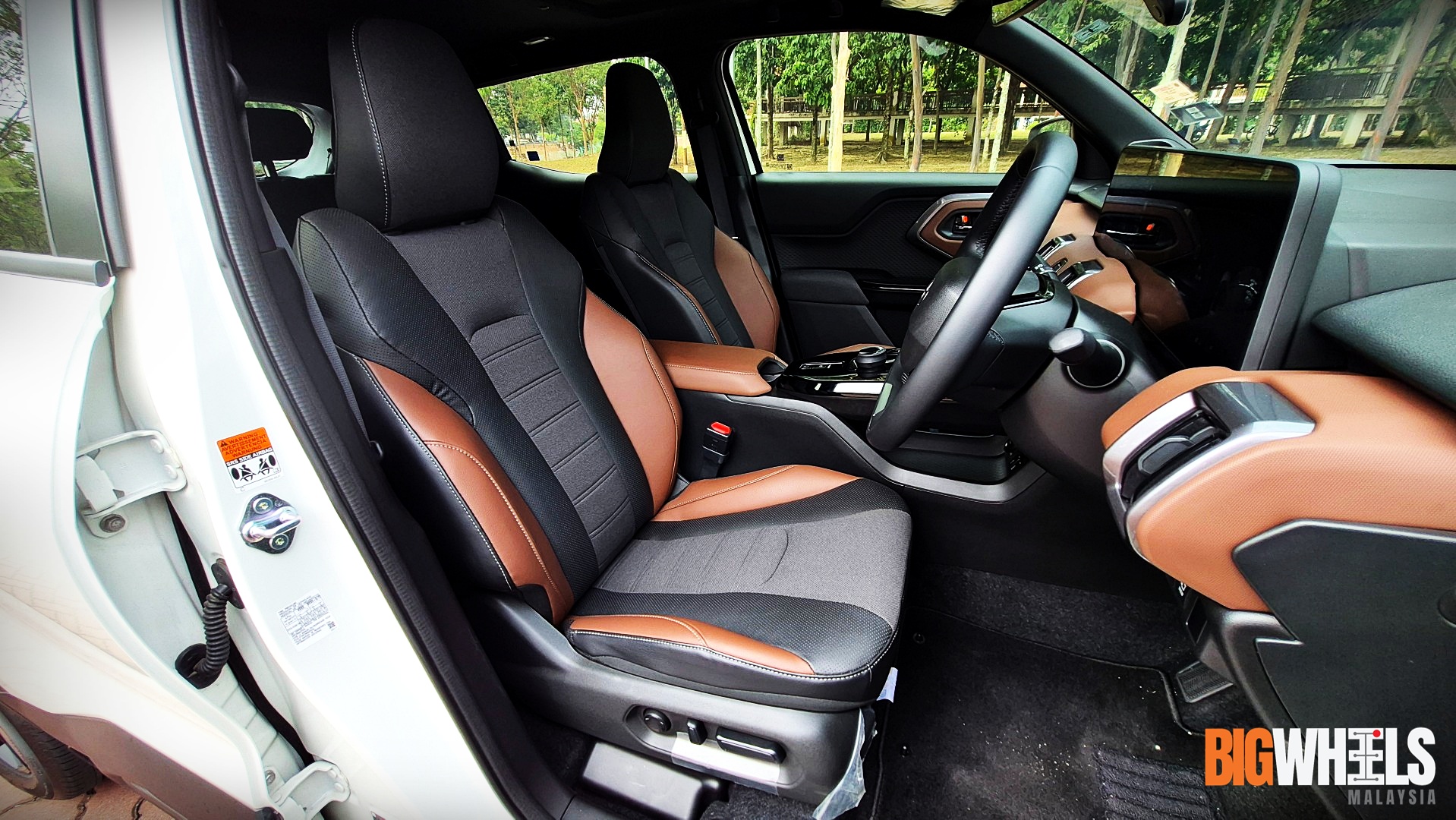
There is a difference between a cabin that looks interesting and one that feels expensive, and the Urban Cruiser does not always bridge that gap. Some of the materials could be better for a vehicle approaching RM200,000, although the overall design remains one of its more appealing attributes.
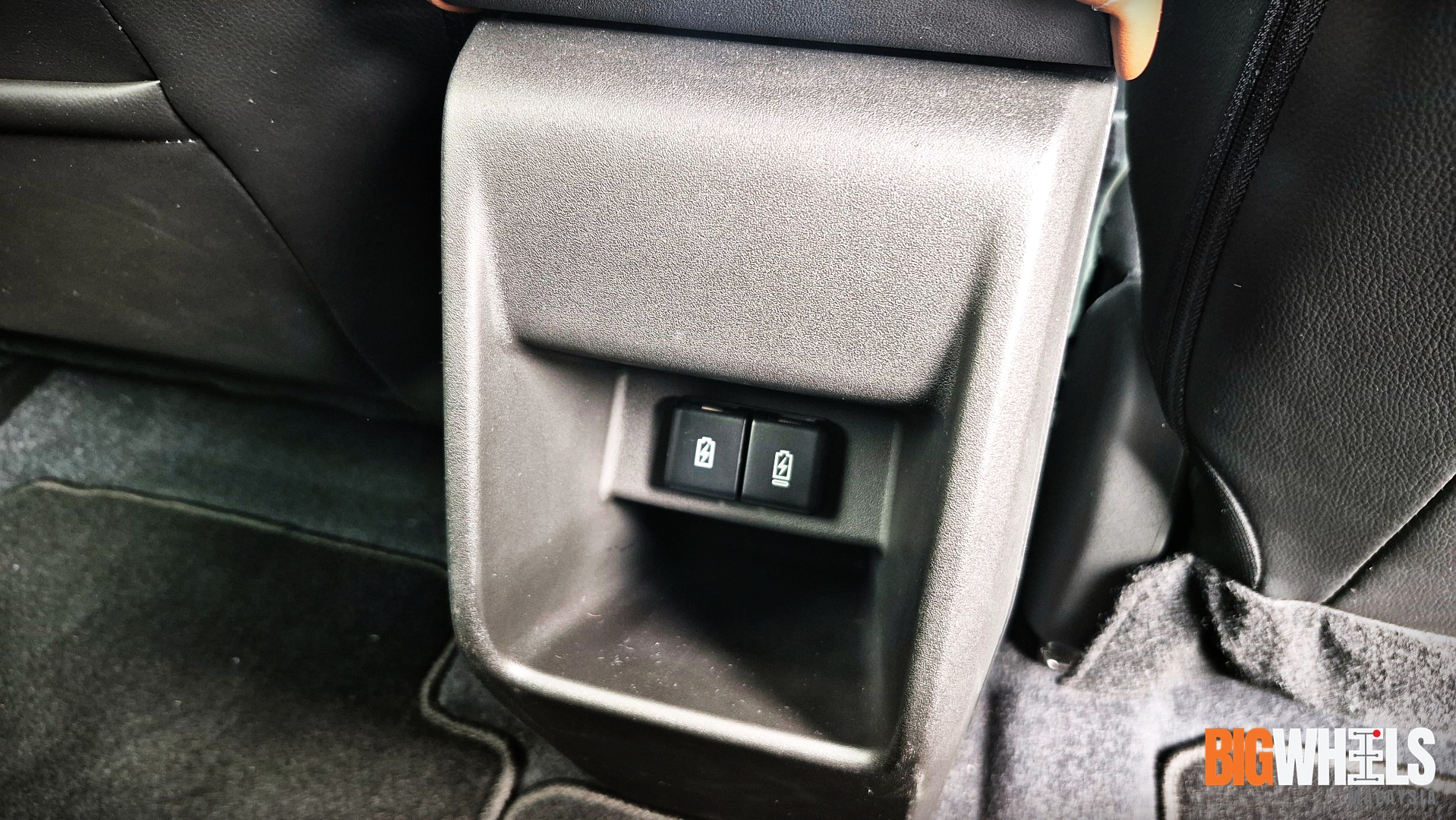
Where it really impresses is practicality. The rear seats can slide forwards and backwards, allowing you to choose between passenger legroom and luggage space. They also recline, and this feature proved particularly useful during longer journeys.
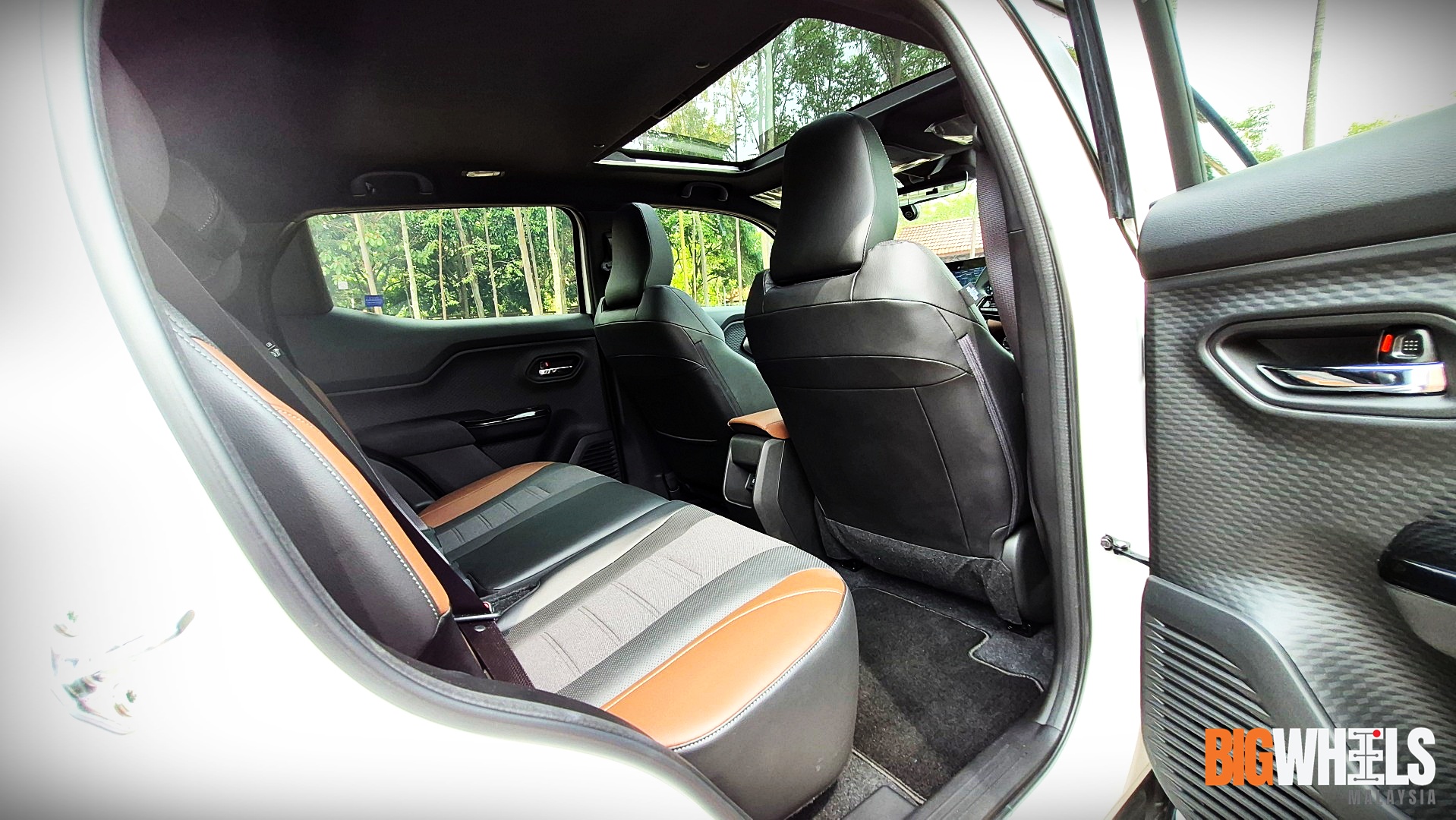
Being able to adjust the backrest to a more comfortable angle makes a meaningful difference when spending hours on the road. It is the sort of thoughtful detail that you appreciate far more in everyday use than you might from reading a specification sheet.
Boot capacity is officially listed at between 238 and 562 liters, depending on the rear-seat position and configuration. The 40:20:40 split-folding rear backrests add further flexibility when carrying longer or bulkier items.
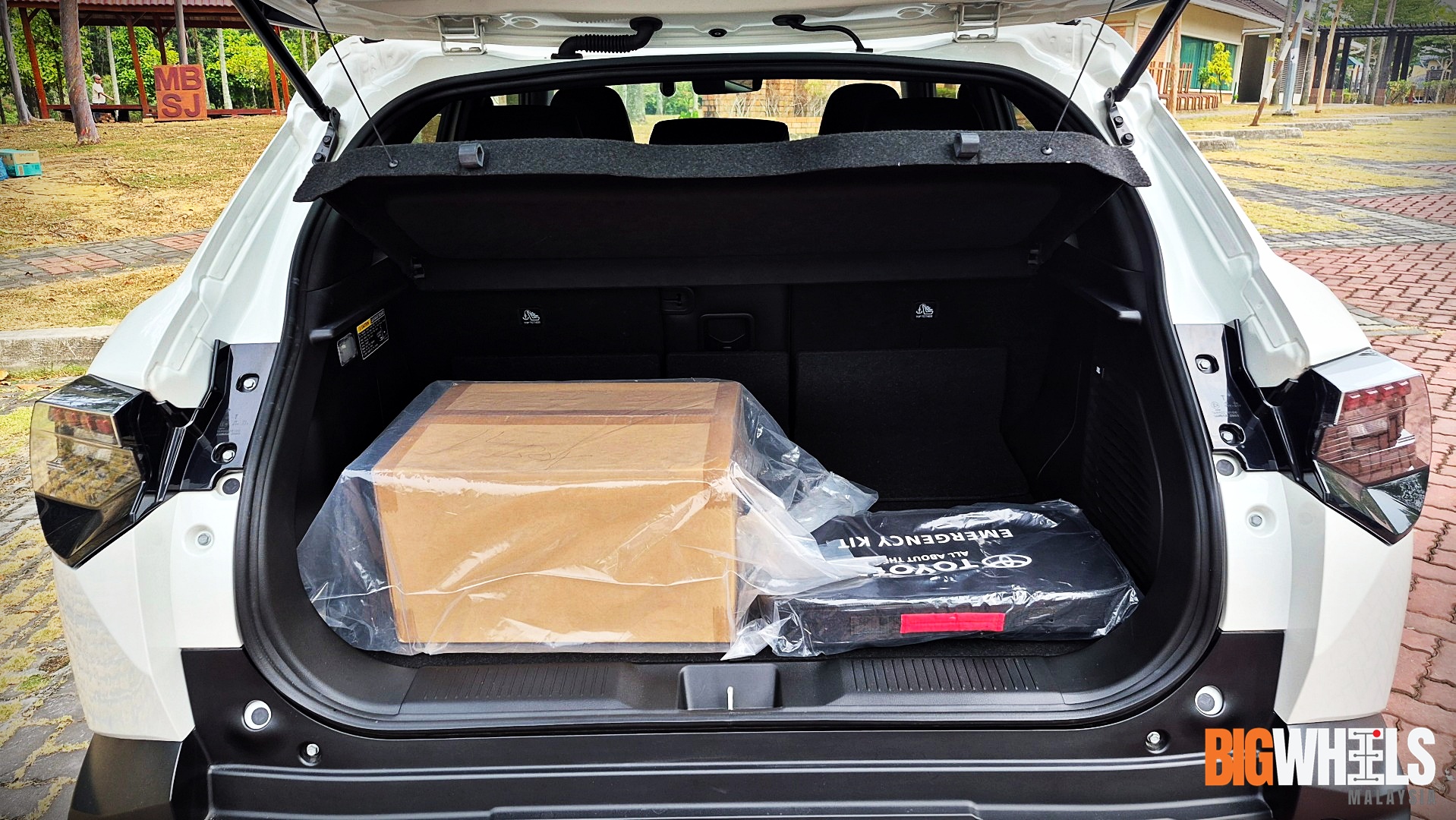
For a vehicle of this size, the Urban Cruiser makes a convincing case as a practical family car.
Enough performance for Malaysian roads
Power comes from a single front-mounted electric motor producing 128 kW (174 PS) and 193 Nm of torque, drawing energy from a 61.1 kWh battery. Power goes to the front wheels through a single-speed reduction drive.
On paper, these figures might not sound particularly remarkable in a market where increasingly powerful EVs are becoming commonplace. In practice, however, the Urban Cruiser has more than enough performance for its intended role.
Acceleration is immediate and predictable, making it easy to merge into traffic, overtake slower vehicles and build speed when joining a highway. There is sufficient reserve power for cruising, too, so it never feels as though it is struggling to maintain pace.
What I particularly appreciate is how naturally the vehicle responds to the driver’s inputs. The power delivery is easy to modulate, and the overall driving experience does not require much adjustment if you are moving from a conventional petrol-powered car.
The ride and handling are equally impressive in my experience. The Urban Cruiser feels composed, with reassuring body control through corners and steering that makes the vehicle easy to place on the road. It feels stable at cruising speeds and sufficiently agile for navigating urban traffic.
Rather than chasing outright performance figures, Toyota has delivered an EV that feels well suited to everyday driving. That is arguably more important for most buyers than acceleration figures designed to impress at a showroom.
Is 426 km enough?
Toyota claims a maximum driving range of up to 426 km under the WLTP testing cycle. That is a useful starting point, although actual range will depend on driving conditions, speed, air-conditioning use and other factors.
For someone living in the Klang Valley, the Urban Cruiser’s range is perfectly workable for daily commuting, shopping and other routine journeys. With access to home or workplace charging, it is relatively easy to make the vehicle fit into an ordinary weekly routine.
Long-distance trips require a little more thought. The claimed 426 km is a laboratory-rated figure, not a promise that you will cover that distance in every real-world situation. Highway speeds and other conditions can reduce the distance available, so it makes sense to plan charging stops with a comfortable reserve rather than rely on the full advertised range.
The Urban Cruiser supports AC charging at up to 7 kW, with DC fast charging also available. Toyota’s launch information quotes approximately 50 minutes for a 15% to 80% DC charge, although actual charging times depend on the charger and battery conditions.
In other words, the Urban Cruiser works well as a daily EV, but owners traveling between states should plan their routes around charging opportunities. It is manageable, just not something to leave entirely to chance.
The equipment question
This is where the Urban Cruiser begins to lose some of its appeal. At RM198,000, expectations are naturally higher. The cabin looks modern, the vehicle drives well and the practicality is excellent, but certain omissions become difficult to overlook at this price.
The seats use a combination of leather and melange jersey rather than full-leather upholstery throughout. There is no powered tailgate, either, which feels like a noticeable omission on an SUV in this price bracket.
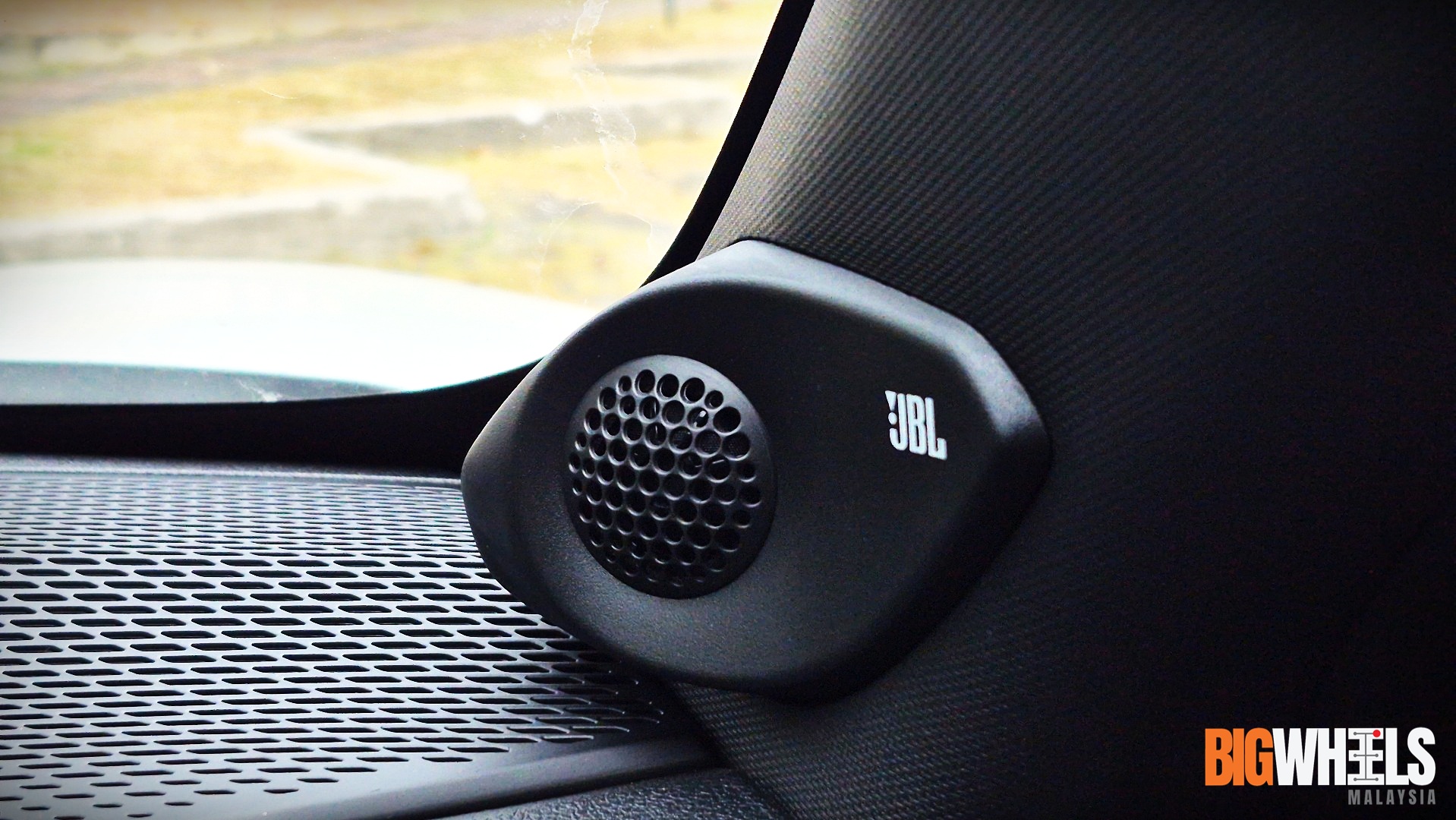
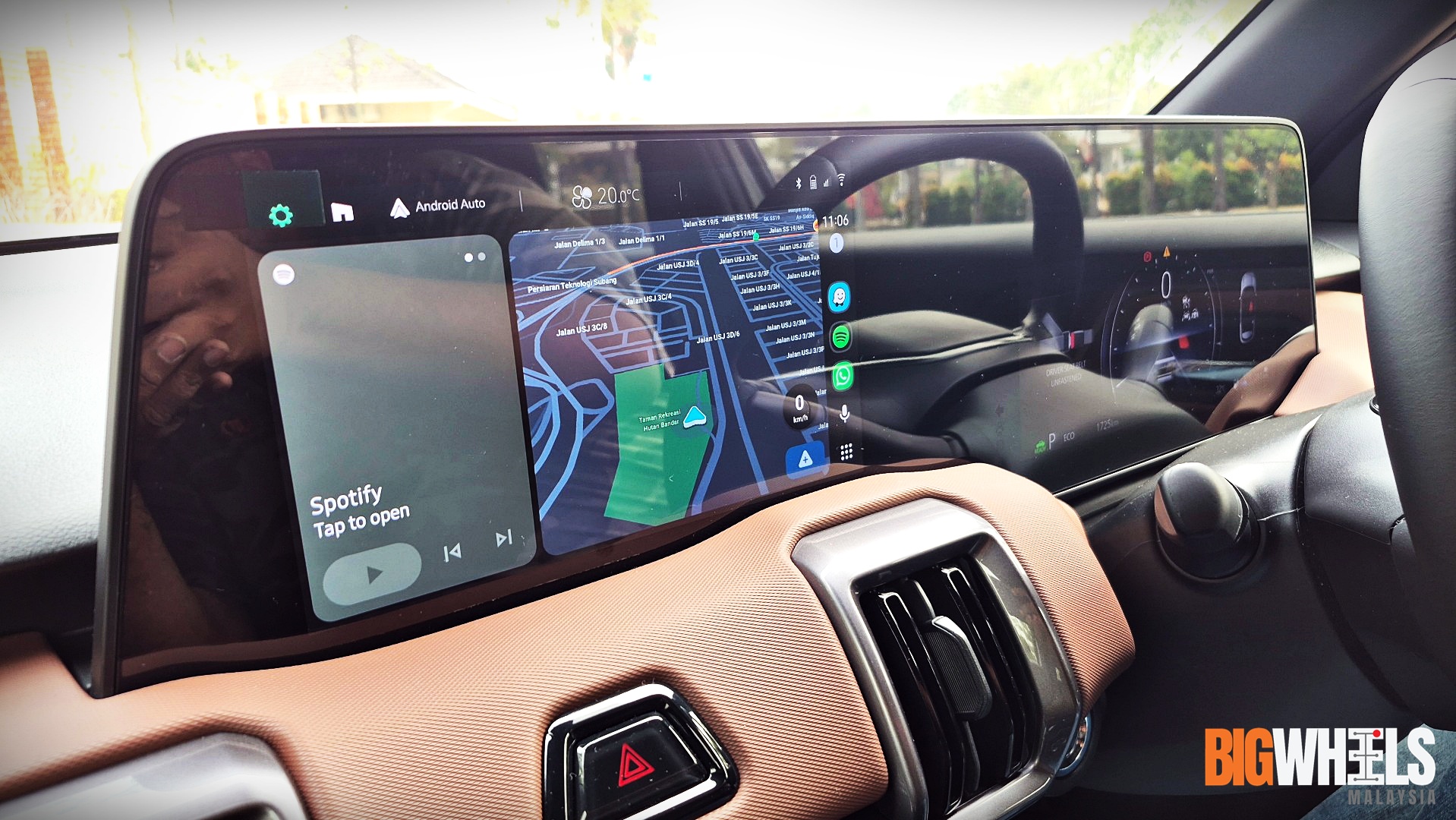
The infotainment system is another area where I would have liked to see more. The 10.1-inch touchscreen supports Wireless Apple CarPlay and Android Auto, and the standard JBL sound system is a welcome inclusion. However, the interface and overall presentation feel a little dated compared with some newer systems available in the market.
These are not deal-breakers individually. The problem is that they begin to add up when you consider how much the Urban Cruiser costs.
The bZ4X, Toyota’s larger electric SUV, provides a useful point of comparison. The Urban Cruiser does not necessarily need to match its bigger sibling in every respect, but the difference in perceived material quality and overall sophistication makes the price gap worth thinking about.
A good car caught in a pricing dilemma
There is a lot to like about the Toyota Urban Cruiser. It has distinctive styling, a cleverly packaged interior, genuinely useful rear-seat adjustment and enough performance for Malaysian roads. Its composed handling and everyday usability also make it an EV that is easy to appreciate beyond the novelty of driving something electric.
Its claimed 426 km WLTP range is adequate for daily use around the Klang Valley, while longer journeys remain possible with sensible charging plans.
Yet, the RM198,000 asking price changes the conversation. At this level, buyers are entitled to expect more premium cabin materials, a powered tailgate and a more contemporary infotainment experience.
I keep coming back to one thought – “What if the Urban Cruiser were priced at around RM150,000 instead?”
At that price, its strengths would be much easier to appreciate, and its equipment compromises would be considerably less frustrating. It would have a stronger case as a distinctive, practical electric SUV for buyers who want something different from the usual choices.
As it stands, the Toyota Urban Cruiser is a good vehicle with the right fundamentals. I enjoyed its practicality, its road manners and the way it fits into everyday life.
But at RM198,000, liking the car is one thing. Justifying the price is another.