
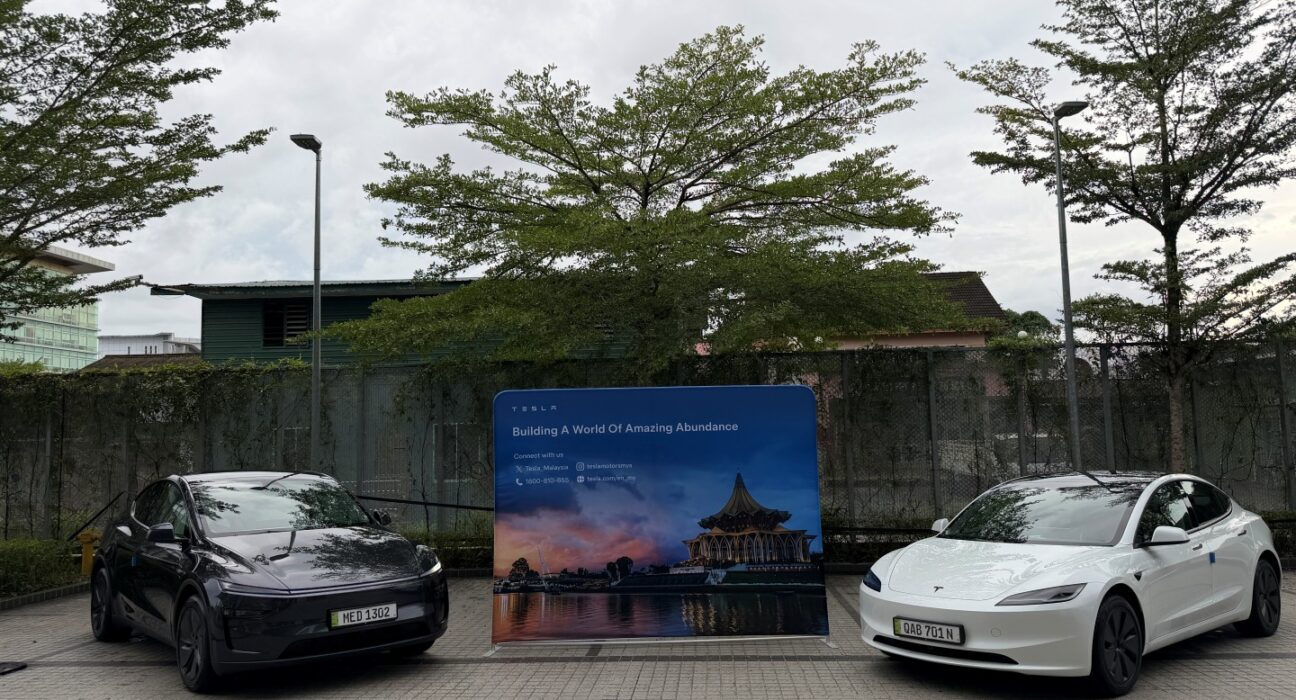
Tesla has crossed a geographical and symbolic threshold in Malaysia with its first official vehicle handover in East Malaysia, held in Kuching.
While modest in scale, the delivery marks the brand’s transition from a Peninsular-centric operation to a genuinely nationwide presence — a critical step for EV adoption in a market where regional accessibility has long been a limiting factor.
The milestone follows the company’s Kuching debut in January and points to a measurable rise in interest from Sabah and Sarawak, regions that have traditionally faced slower access to new automotive technologies.
By establishing an ownership footprint there, Tesla is no longer merely testing demand; it is validating East Malaysia as a viable EV market with the infrastructure, purchasing power and early adopters needed to sustain growth.
More importantly, the move reframes the narrative around electric mobility in Malaysia. Until recently, EV ownership was largely concentrated in urban centres such as the Klang Valley, where charging access and product visibility were strongest.
The first customer deliveries in Kuching signal that the ecosystem — vehicles, charging, sales channels and aftersales support — is beginning to extend beyond its original core, making long-range electric driving a realistic proposition across the South China Sea divide.
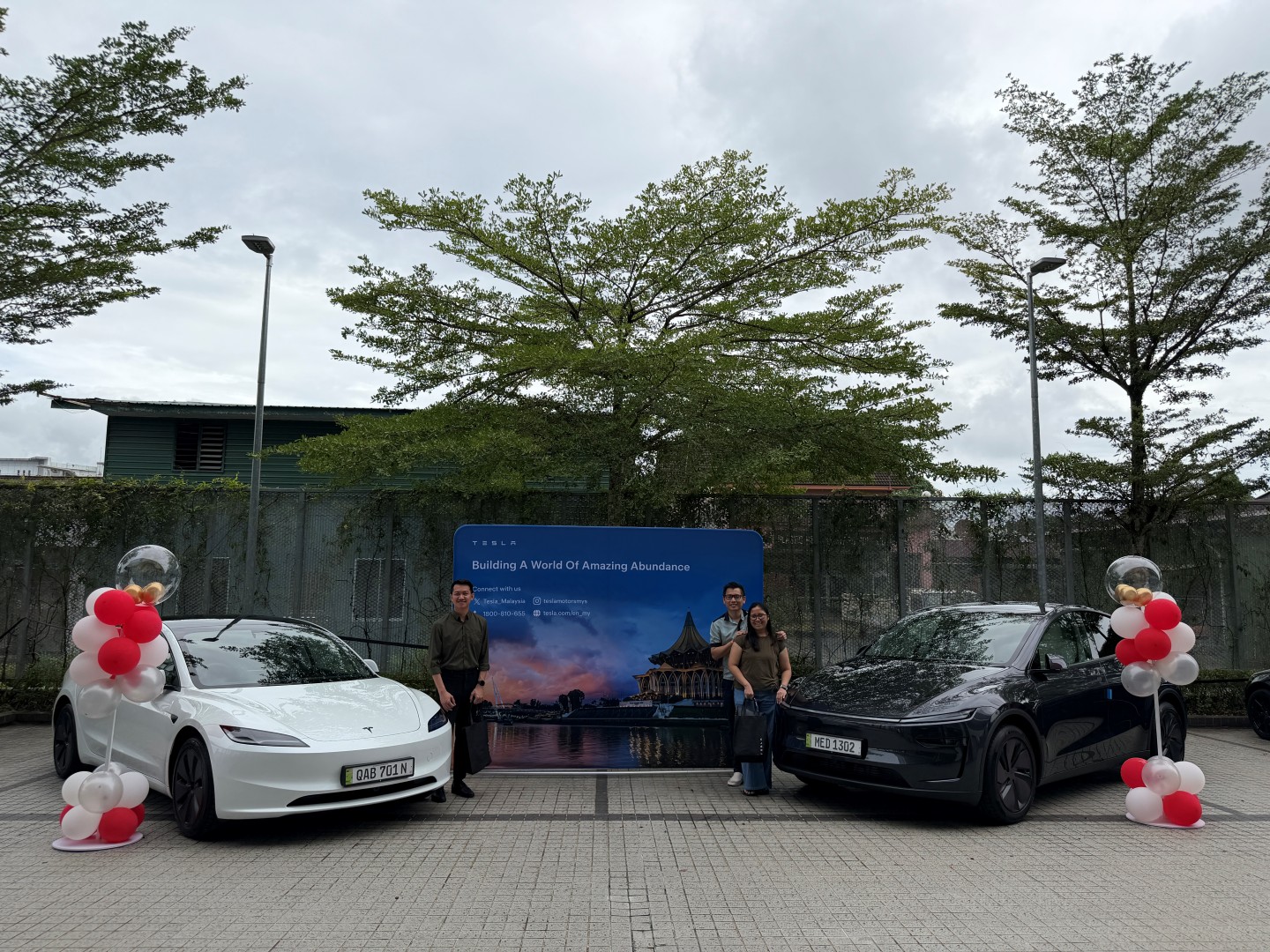
Price accessibility is another lever in this expansion. With Tesla ownership now starting from RM147,600, or roughly RM1,138 per month, the Model 3 Rear-Wheel Drive becomes the brand’s most attainable entry point to date.
Positioned as the core Tesla experience rather than a stripped-down variant, it retains the elements that define the marque: top-tier safety performance, a software-centric user interface, over-the-air update capability and a minimalist, driver-focused cabin.
This pricing strategy is less about chasing volume in the traditional sense and more about widening the addressable market for first-time EV buyers.
Infrastructure remains the backbone of that strategy. As of early 2026, Tesla operates 18 Supercharging locations with 76 Superchargers, alongside 17 Destination Charging sites offering 79 chargers nationwide.
The network’s continued expansion is essential not just for daily usability but for intercity mobility, particularly as the brand begins laying the groundwork for similar coverage in East Malaysia. In practical terms, charging visibility and reliability are what convert curiosity into confirmed purchases.
From a market-development perspective, this first delivery represents the start of a new adoption phase rather than a single celebratory event. It demonstrates that demand for premium EVs is no longer geographically concentrated and that customers outside Peninsular Malaysia are ready to participate in the transition — provided the ownership experience matches what is offered in the country’s main urban hubs.
Ultimately, Tesla’s arrival in East Malaysia is about more than adding another delivery location. It is a structural expansion of the EV map, bringing the brand’s software-defined vehicles, long-distance capability and integrated charging ecosystem to a region that has historically been on the periphery of new-energy mobility.