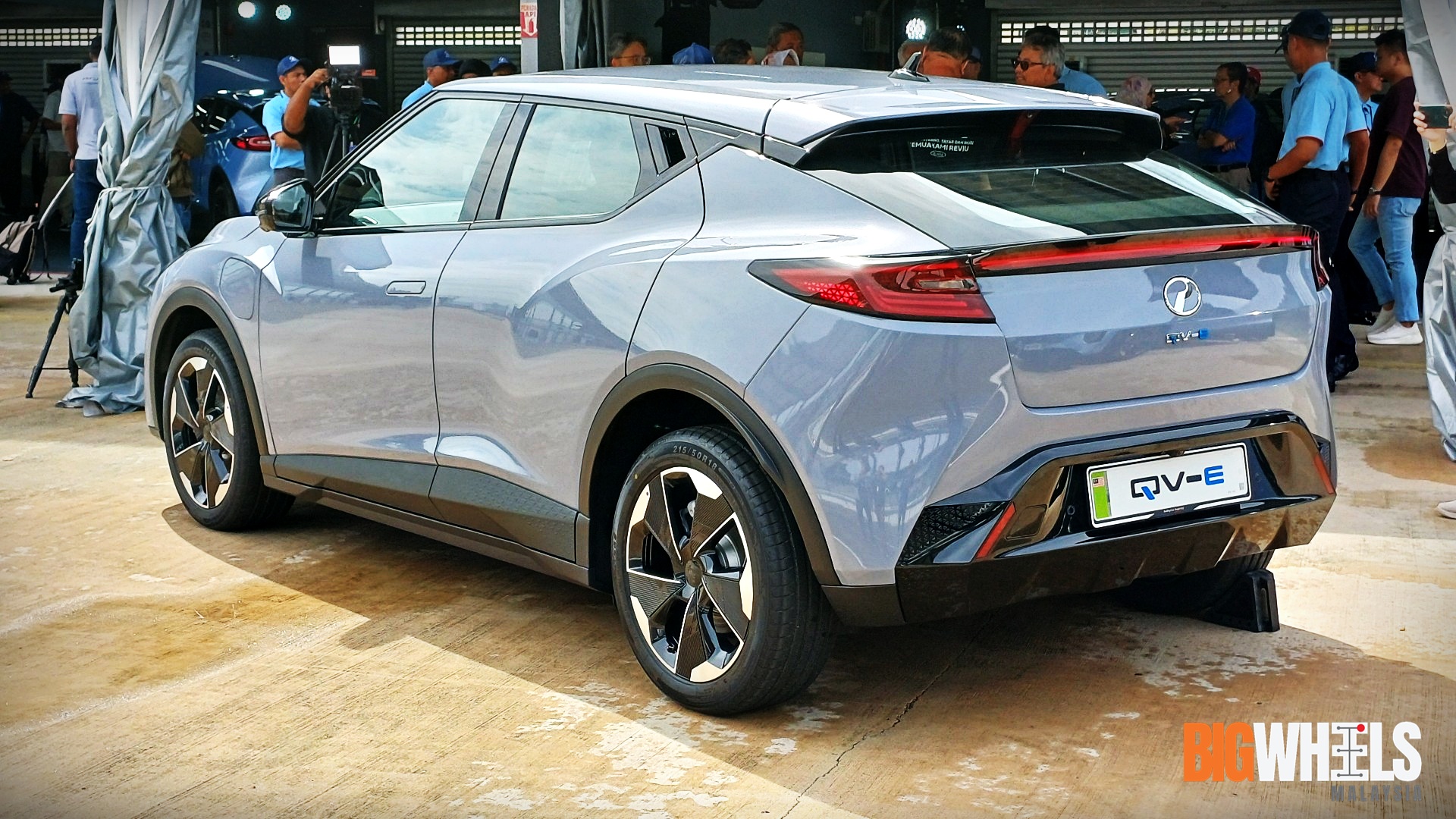
Perodua has officially launched the QV-E, marking a historic moment for the brand and for Malaysia’s automotive landscape. Unveiled by Prime Minister Datuk Seri Anwar Ibrahim at MITI’s headquarters in Kuala Lumpur, the QV-E is positioned as the country’s first fully homegrown electric vehicle—an ambitious national project that Perodua was tasked to deliver within an accelerated timeline.
Priced at RM80,000 (on-the-road, without insurance), the QV-E’s headline surprise is its Battery-as-a-Service (BaaS) model. In this system, the EV’s battery is not sold with the vehicle but leased separately for RM275 per month, bundled together with the owner’s regular loan instalment into a single monthly payment.
Perodua says the approach directly addresses public concerns over battery degradation, replacement cost, resale value, and proper battery disposal. The company keeps full ownership and responsibility over each pack, guaranteeing replacements if its state of health drops below 70%.
While the battery itself comes with a lifetime warranty, the car itself comes with a 6-year/150,000km warranty; meanwhile, the drive unit is covered for up to 8 years or 150,000km, whichever comes first.

According to Perodua, a total of RM800 million was invested, in addition to 266,000 man-hours of ground-up R&D to ensure that the vehicle is finally ready—right on schedule.
Perodua emphasises that the QV-E is 100% Malaysian-made and that the company owns the intellectual property for both the car and its modular EV platform. Still, the project was not carried out alone, as it was co-developed with Magna Steyr.
Known for assembling the Mercedes-Benz G-Class, BMW Z4, Toyota GR Supra and the Jaguar I-Pace, Magna Steyr also co-developed earlier BMW X3 generations and Mercedes’ 4Matic system.
Their expertise was used to refine and co-create the QV-E’s platform, which Perodua says will eventually underpin a family of A- and B-segment EVs ranging from a hatchback to a crossover and even hybrids or range-extender EVs in the future.

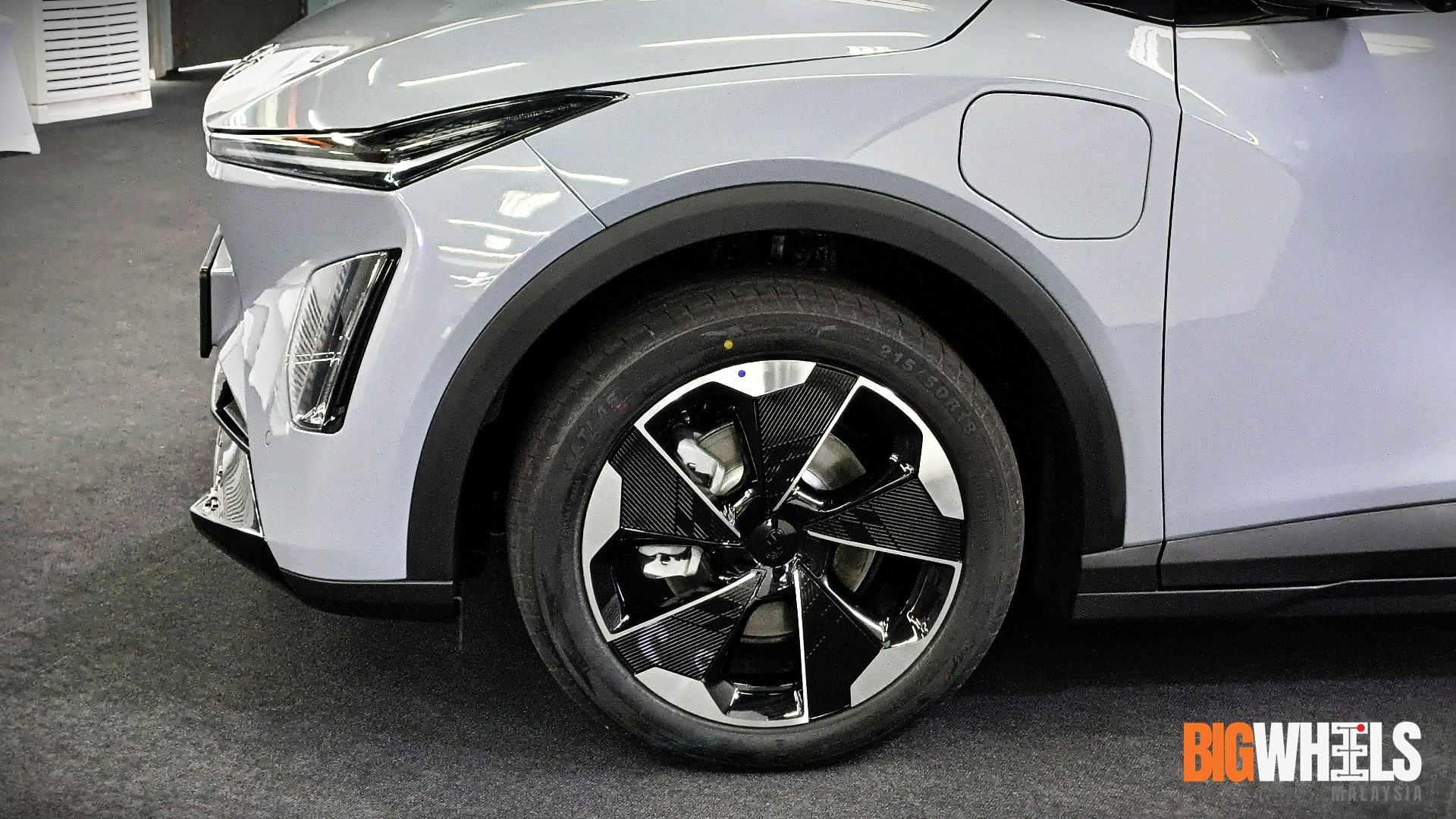
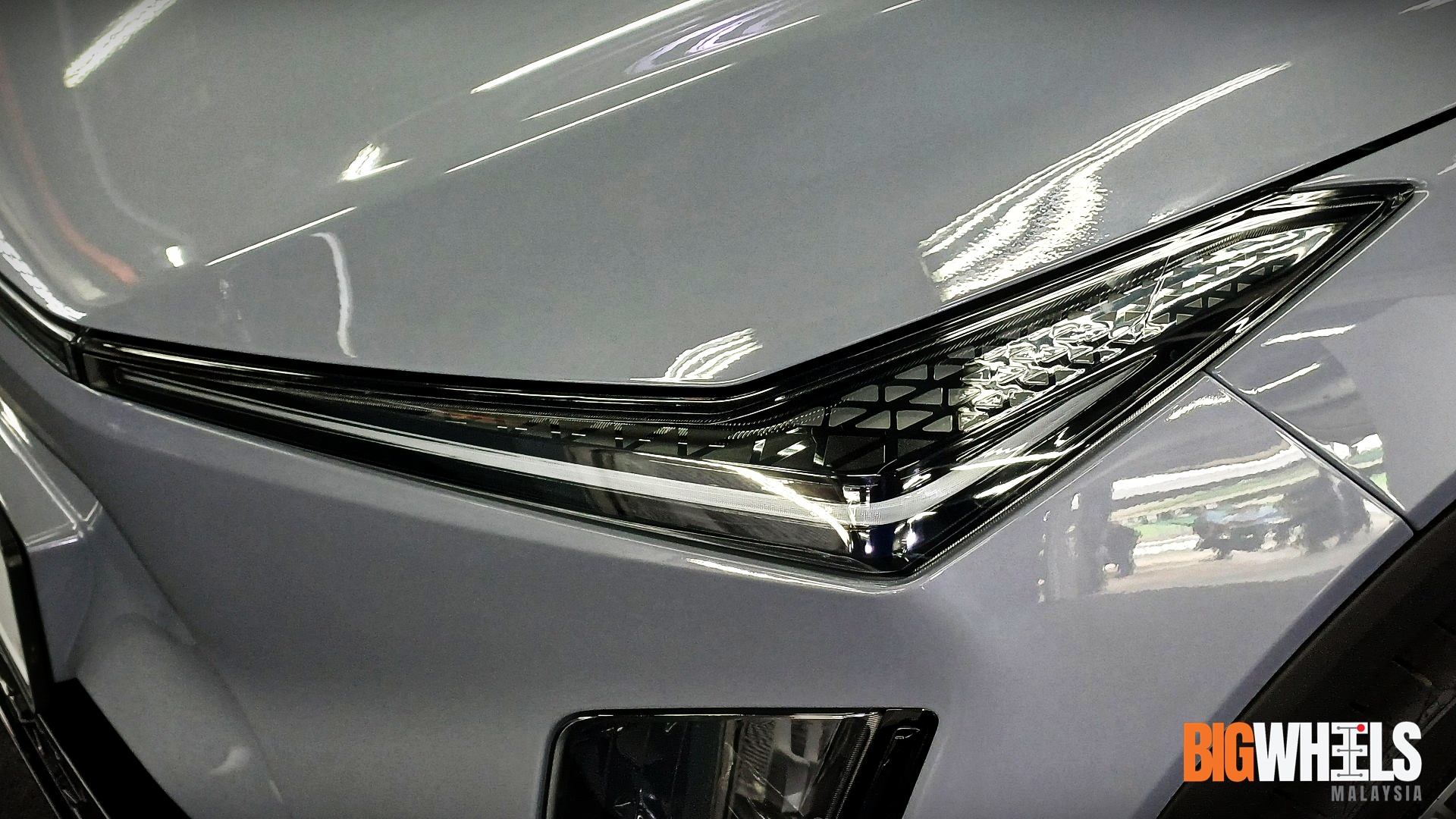
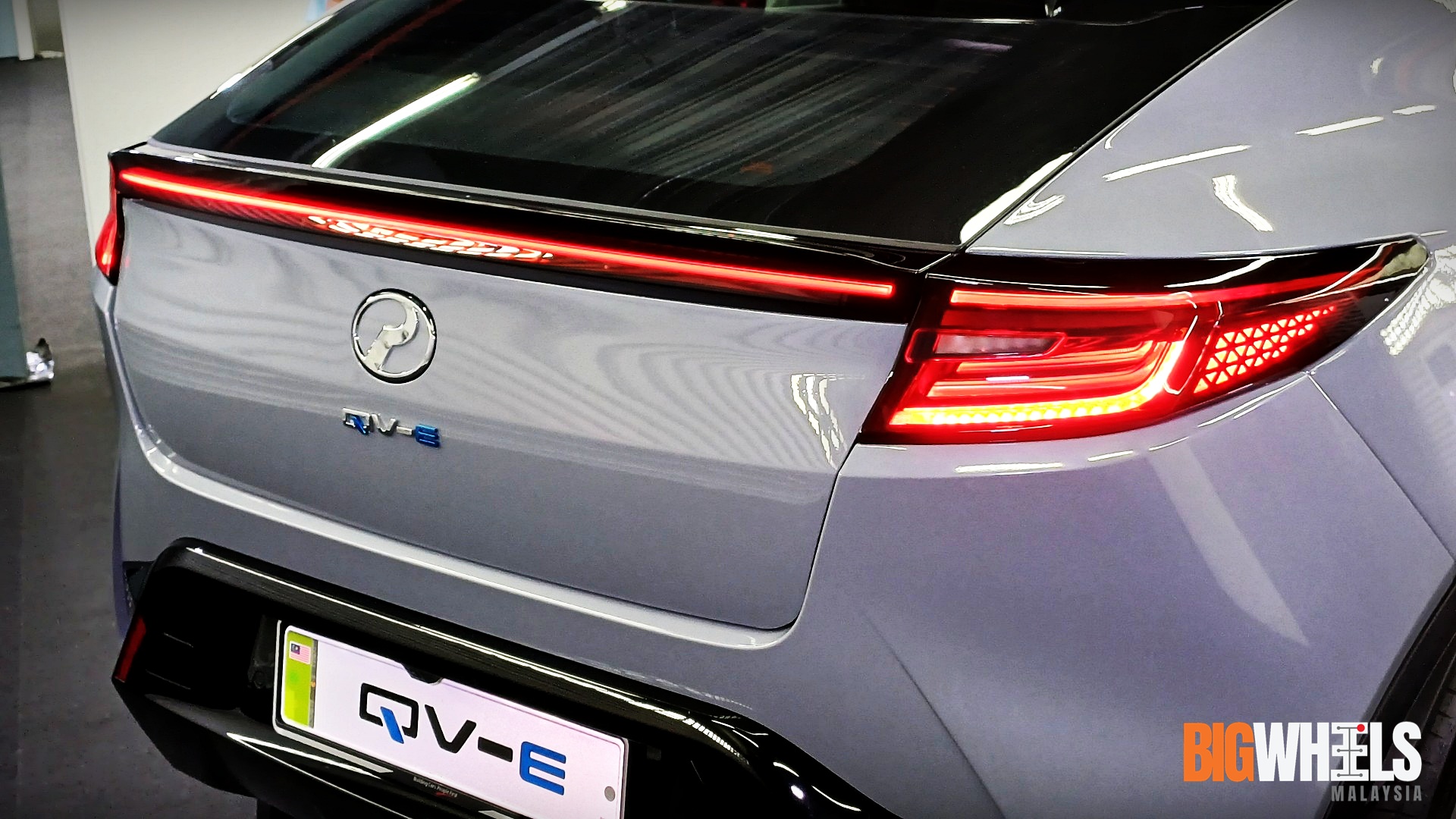
Visually, the QV-E combines the stance of a sporty hatchback with the silhouette of a coupe-like crossover. Measuring 4,170 mm long and 1,800 mm wide, it is notably larger than a Myvi.
The wheelbase stretches 2,680 mm, and the low roofline gives it one of the sleekest profiles ever seen on a Perodua-badged vehicle. Inside, however, rear passenger space is modest, a deliberate choice.
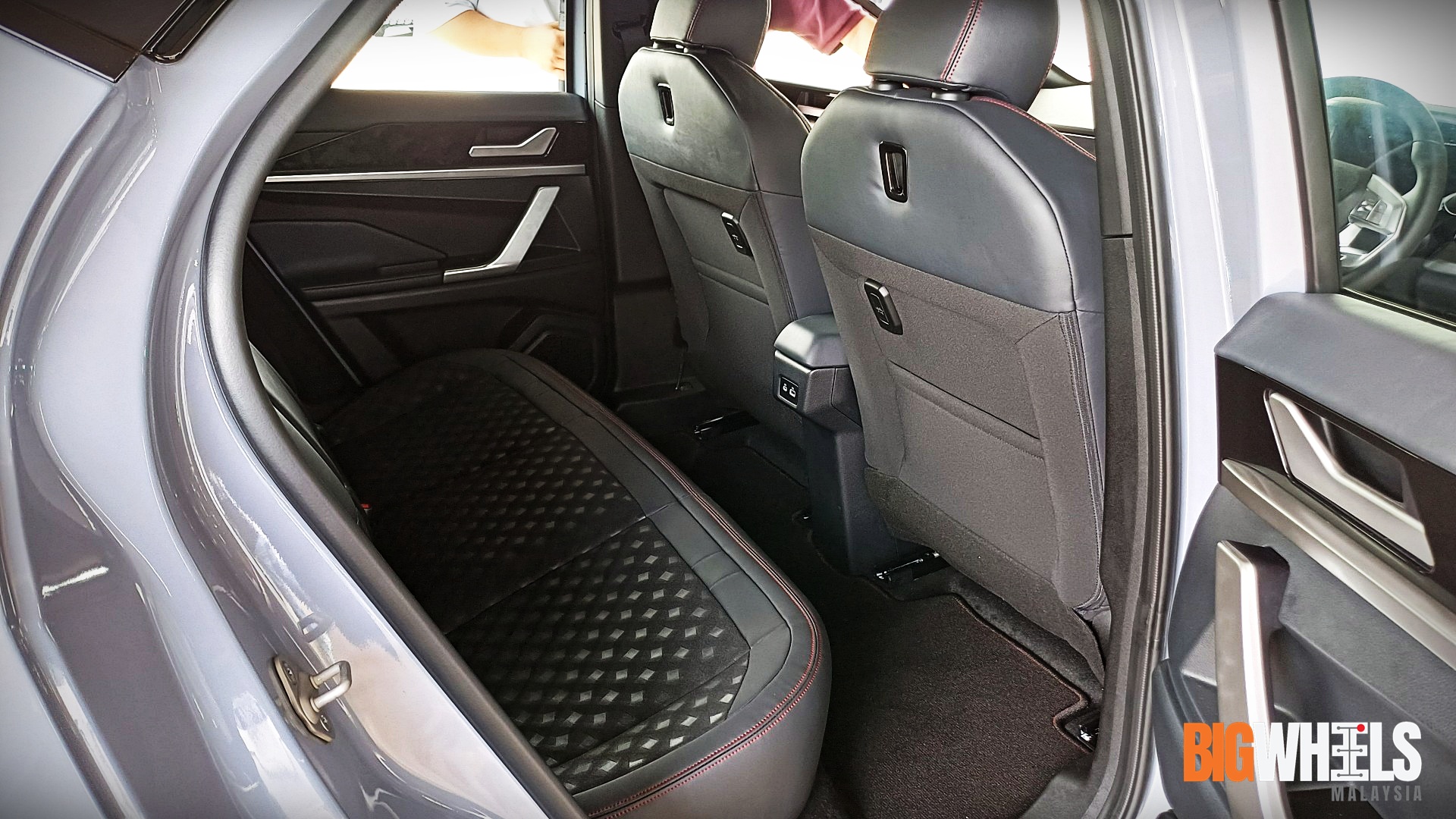
Perodua says the QV-E is targeted at young, affluent buyers—primarily from M40 and T20 households—who prioritise style, performance and technology over outright practicality. Designed mainly for two adults and young children, the car makes some sacrifices in rear headroom, visibility and cabin space to meet its lifestyle-oriented brief.
Under the bodywork sits the most powerful drivetrain ever fitted to a Perodua. A front-mounted electric motor delivers 204 PS and 285 Nm, launching the QV-E from 0–100 km/h in 7.5 seconds—substantially quicker than the Proton eMas 5.

Top speed is 165 km/h. Power is supplied by a 52.5 kWh LFP battery sourced from CATL, with an estimated 445 km NEDC range, translating to roughly 380 km WLTP-equivalent. The battery alone weighs just over 400 kg, contributing to a kerb weight of about 1,600 kg.
As far as charging is concerned, the QV-E supports 60 kW DC fast charging which takes the battery from 30% to 80% in 30 minutes. Home charging via the onboard 6.6 kW AC charger takes around eight hours for a full charge.
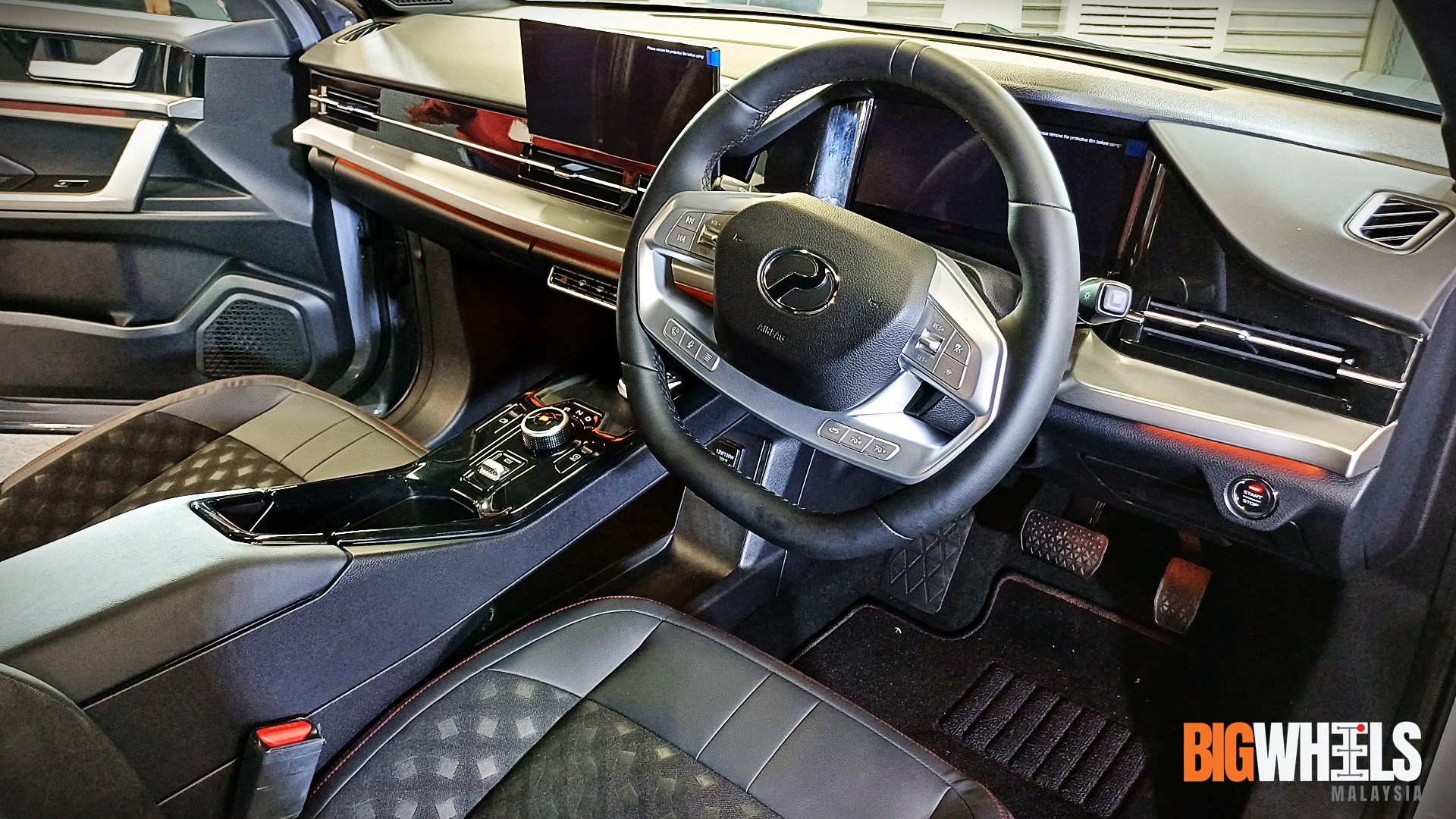
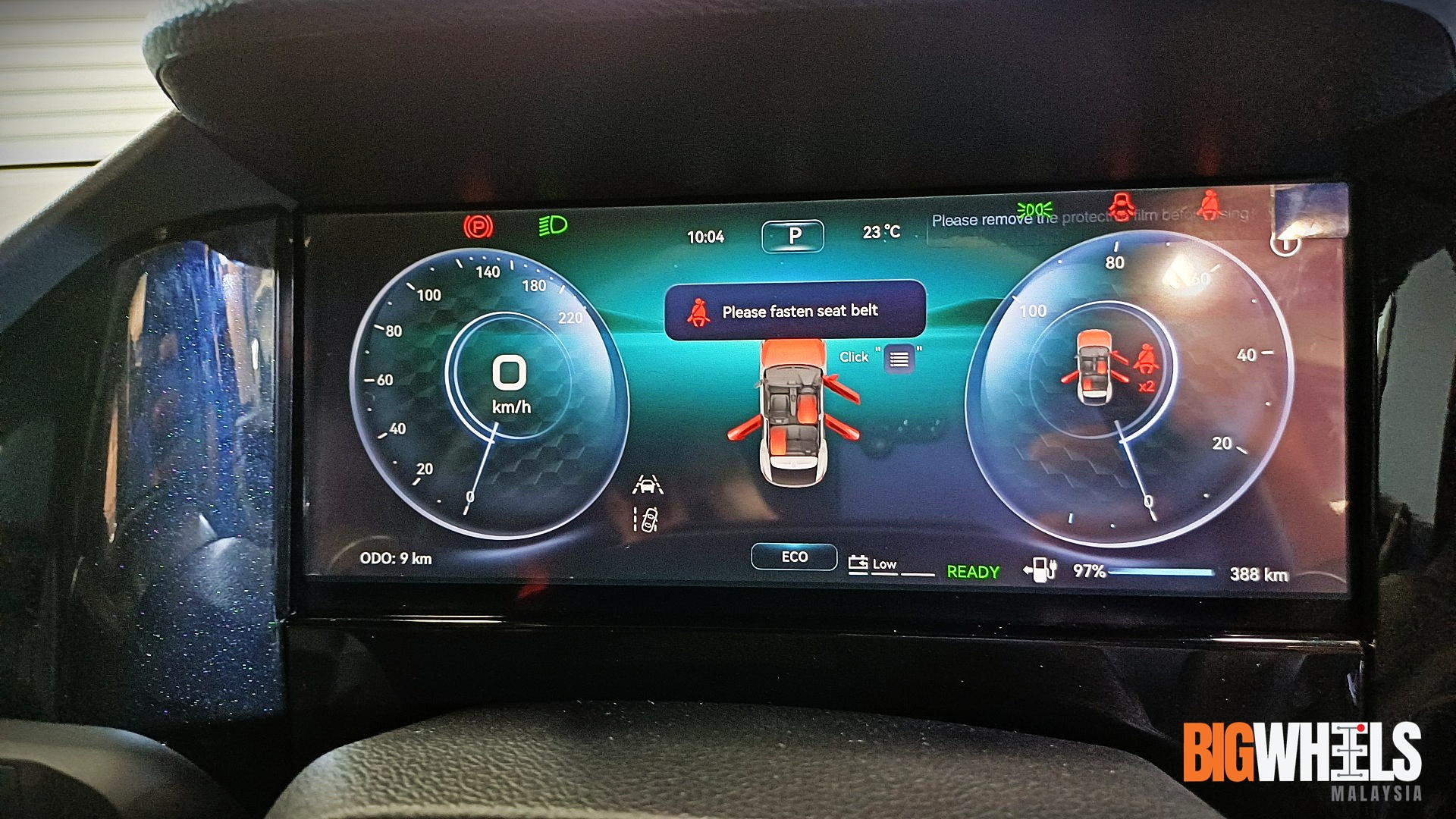
To match its technological positioning, the QV-E debuts a long list of Perodua-first features. A digital rear-view mirror replaces the traditional mirror to counter the low, sloping rear window.
The driver’s seat is powered, the cabin features ambient lighting, and the infotainment setup includes a 10.25-inch display with wireless Apple CarPlay and Android Auto. There is also a wireless charger, tyre pressure monitoring system and, for the first time in a Perodua, a soft-touch dashboard.
Safety is equally comprehensive. Alongside Perodua’s full suite of ADAS systems, the QV-E introduces Child Presence Detection (CPD)—a radar-based system that senses movement or breathing in the rear seats, even under a blanket.
If a child is left behind, the car triggers alerts on the horn, lights, app notifications and SMS messages. The cabin is monitored even in darkness or extreme heat up to 85°C. There is also an SOS emergency call button connected to MERS 999 and Perodua Auto Assist.
Beyond the car itself, Perodua has built an entire ecosystem to support its first EV. Its new P-Circle app manages the vehicle, charging, battery status and payments. The company has also introduced a home wallbox with smart monitoring features, and concepts such as P-Charge Mobile, a movable DC charging pod designed to assist areas with limited infrastructure. There are even “On The Go” charging trucks planned for festive-season highway travel.
Battery leasing also ensures proper end-of-life handling. Each battery receives a unique “Battery Passport” so Perodua can track its condition, resale pathway and disposal. To ensure transparency and control, the QV-E can only be sold through Perodua’s official Pre-Owned Vehicles network because each transfer requires a fresh battery lease contract for the next owner.
Perodua is also using the QV-E to help build Malaysia’s EV supply chain. The company aims for 50% local content by early 2026 and 70% by 2030, including localised production of major EV components in the future.
Production has already started at Perodua’s Smart Mobility Plant in Sungai Choh, with additional support from the neighbouring Tan Chong facility in Serendah. The brand targets 500 units per month initially, ramping up to 3,000 units per month after late 2026. Sales and servicing will be handled exclusively through selected EV-authorised Perodua outlets nationwide.

At RM80,000 plus RM275 per month for the battery, the QV-E sits slightly above the Proton eMas 5 in total ownership cost, but offers stronger performance, greater range, unique features, and a more advanced approach to battery lifecycle management.
It also carries the distinction of being Malaysia’s first true ground-up EV, created under immense pressure yet packed with technological ambition and national significance.