

The latest rear-axle incident has prompted a recall and the temporary suspension of vehicle type approval, but not every Chery model is affected. Here is what owners and prospective buyers need to know.
Chery’s rear-axle controversy has resurfaced in Malaysia, nearly two and a half years after a similar incident involving the Omoda 5 triggered a recall of 600 vehicles.
The latest incident, reported in Johor Bahru in early October 2026, involved a Chery Omoda 5 whose rear axle and suspension assembly became detached from the vehicle while it was on the road.
The incident prompted the Road Transport Department (JPJ) to temporarily suspend the model’s Vehicle Type Approval (VTA) and halt new registrations while investigations are carried out.
Chery Auto Malaysia subsequently announced another recall campaign covering affected Omoda 5 C and H variants, with inspections and necessary component replacements to be carried out free of charge.
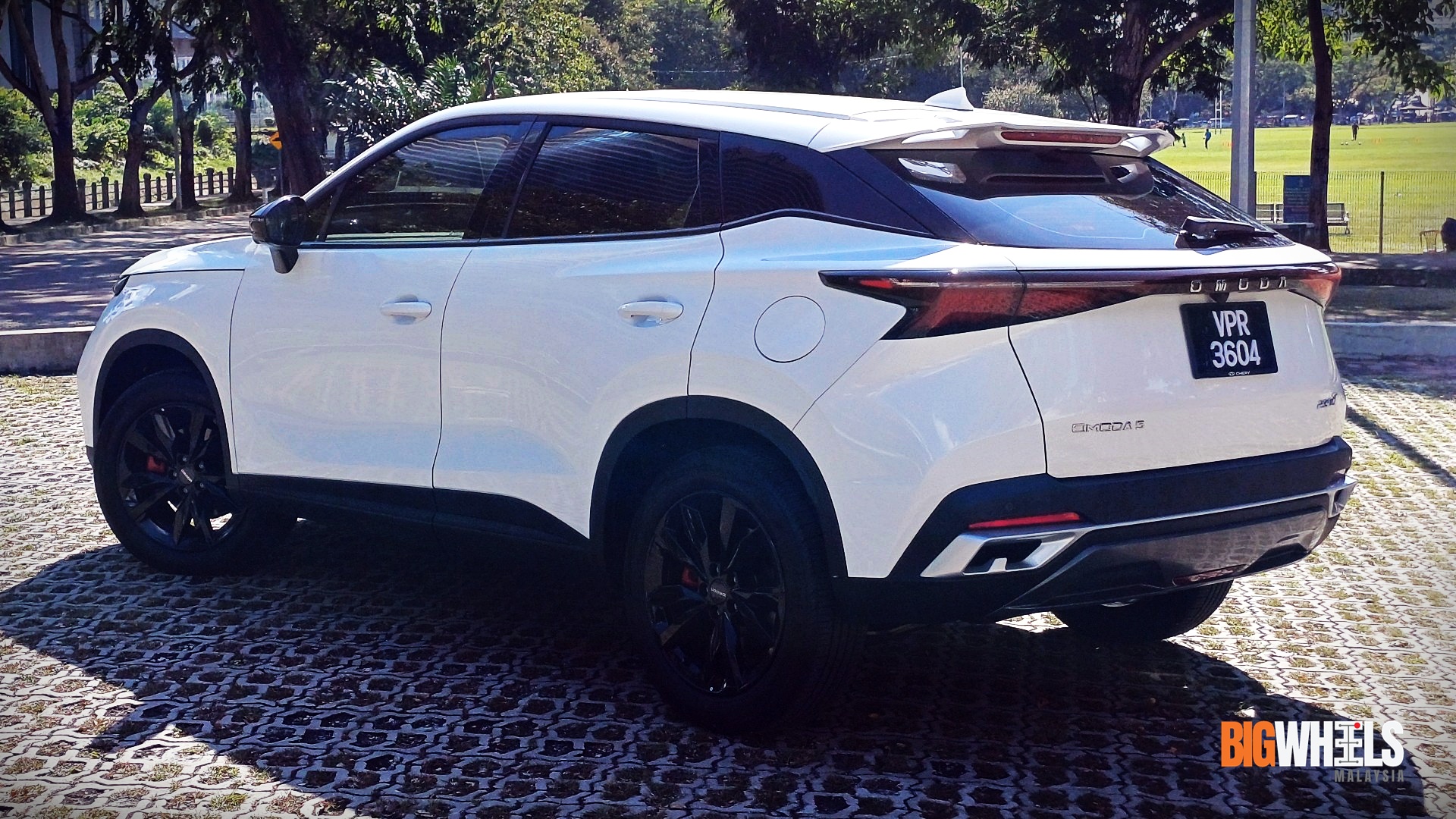
However, with the original Omoda 5 having been replaced by the facelifted Chery O5, questions have emerged over whether newer vehicles, existing owners and customers awaiting delivery are also affected.
The important distinction is that the recall campaign, the suspension of VTA and the investigation into the axle failure are related, but they do not automatically mean every Chery vehicle has the same defect.
What exactly happened?
The latest controversy centres on a rear-axle failure involving an older Omoda 5 in Johor Bahru. Images of the damaged vehicle circulated online, raising concerns about the integrity of its rear suspension assembly and the potential consequences for other road users.
JPJ’s response goes beyond simply asking the manufacturer to inspect individual vehicles. The department has temporarily suspended the Omoda 5’s VTA, postponed new registrations and instructed Chery to identify potentially affected vehicles using component numbers, production batches, vehicle identification numbers (VINs) and other technical information.

JPJ will also audit the relevant production and assembly processes, alongside the suppliers responsible for the axle components. The audit is expected to examine manufacturing compliance, quality-control procedures, weld-joint inspection and component safety.
The suspension will remain in place until the necessary corrective and preventive measures have been implemented and JPJ is satisfied that the safety risks have been addressed.
This is significant because VTA is part of the regulatory approval process that allows a vehicle type to be registered for road use. Its temporary suspension therefore affects the model’s ability to enter the Malaysian registration system, not merely its manufacturer’s internal recall arrangements.
Why is this particularly serious for Chery?
This is not the first time the Omoda 5’s rear axle has become a public concern.
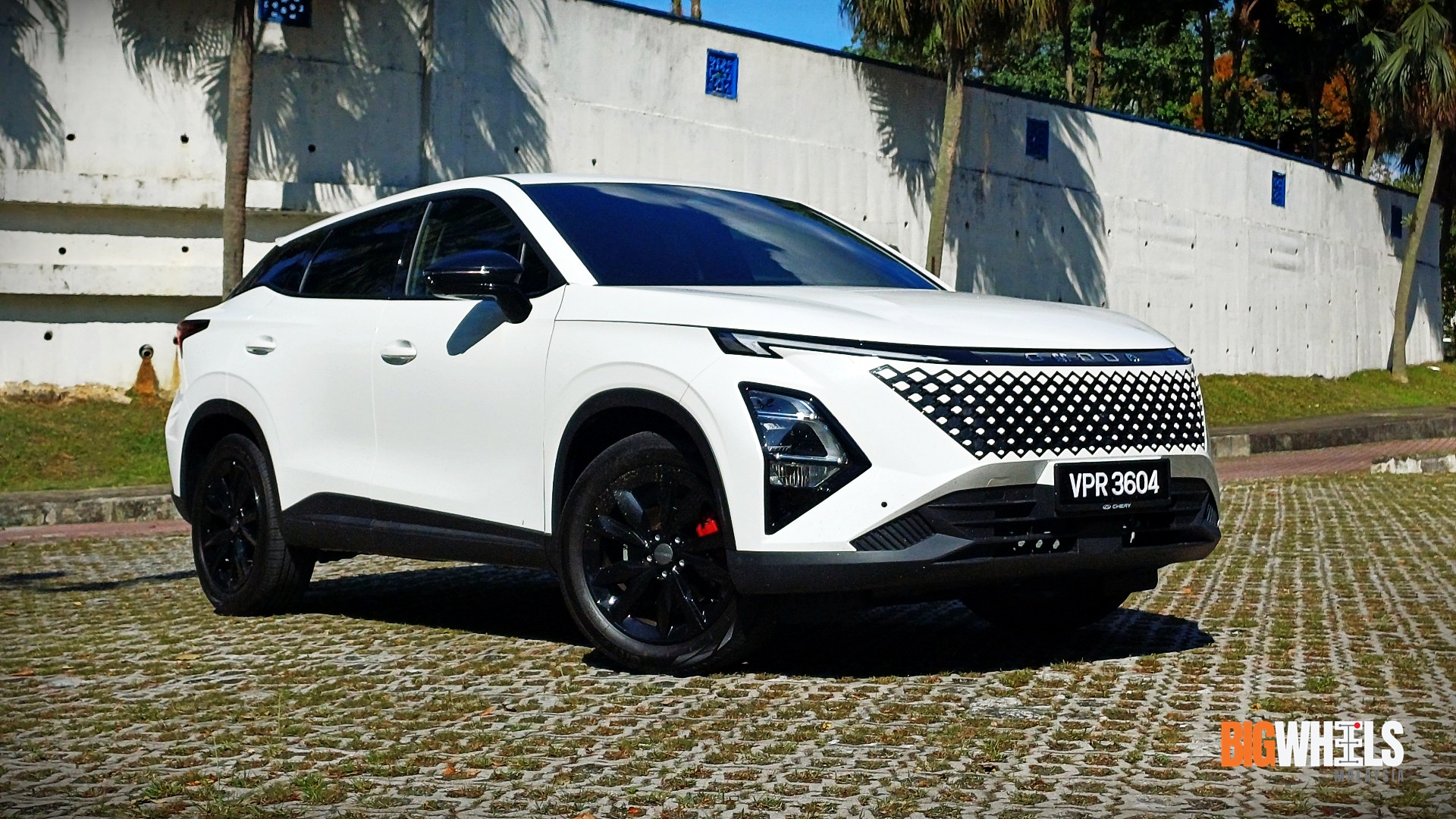
In April 2024, another axle-detachment incident prompted Chery Malaysia to recall 600 Omoda 5 vehicles. Following an investigation, the company attributed the original problem to a welding-machine calibration issue at a component supplier.
Chery identified 60 vehicles fitted with the affected parts, which were produced on 15 August 2023. It then expanded the inspection campaign to cover vehicles with rear axles manufactured between 14 and 17 August 2023, bringing the total recall population to 600 units.
The latest incident raises an obvious question: is the current case linked to the same manufacturing defect, or does it involve a different production batch or failure mechanism?
That question cannot be answered conclusively from the incident alone. The earlier investigation identified a specific welding-related problem, but the cause of the latest failure must be established through a fresh technical investigation.
Nevertheless, a second high-profile incident involving the same component is likely to intensify scrutiny of Chery’s quality-control processes and the effectiveness of its previous corrective measures.
For a relatively young automotive brand in Malaysia, how transparently and effectively it handles this investigation could be just as important as the eventual technical findings.
Which Chery models are affected?
The distinction between the different Omoda models is crucial.
1. Original Chery Omoda 5 — recall applies to potentially affected units
The current recall concerns the original, pre-facelift Omoda 5, including the C and H variants identified by Chery Malaysia.
However, owners should not assume that every vehicle of these variants necessarily contains a defective component. The manufacturer is using VIN checks to establish which individual vehicles fall within the campaign.
Owners should verify their vehicle’s status rather than relying solely on its registration year, variant badge or appearance.
2. Facelifted Chery O5 — not included in the announced recall
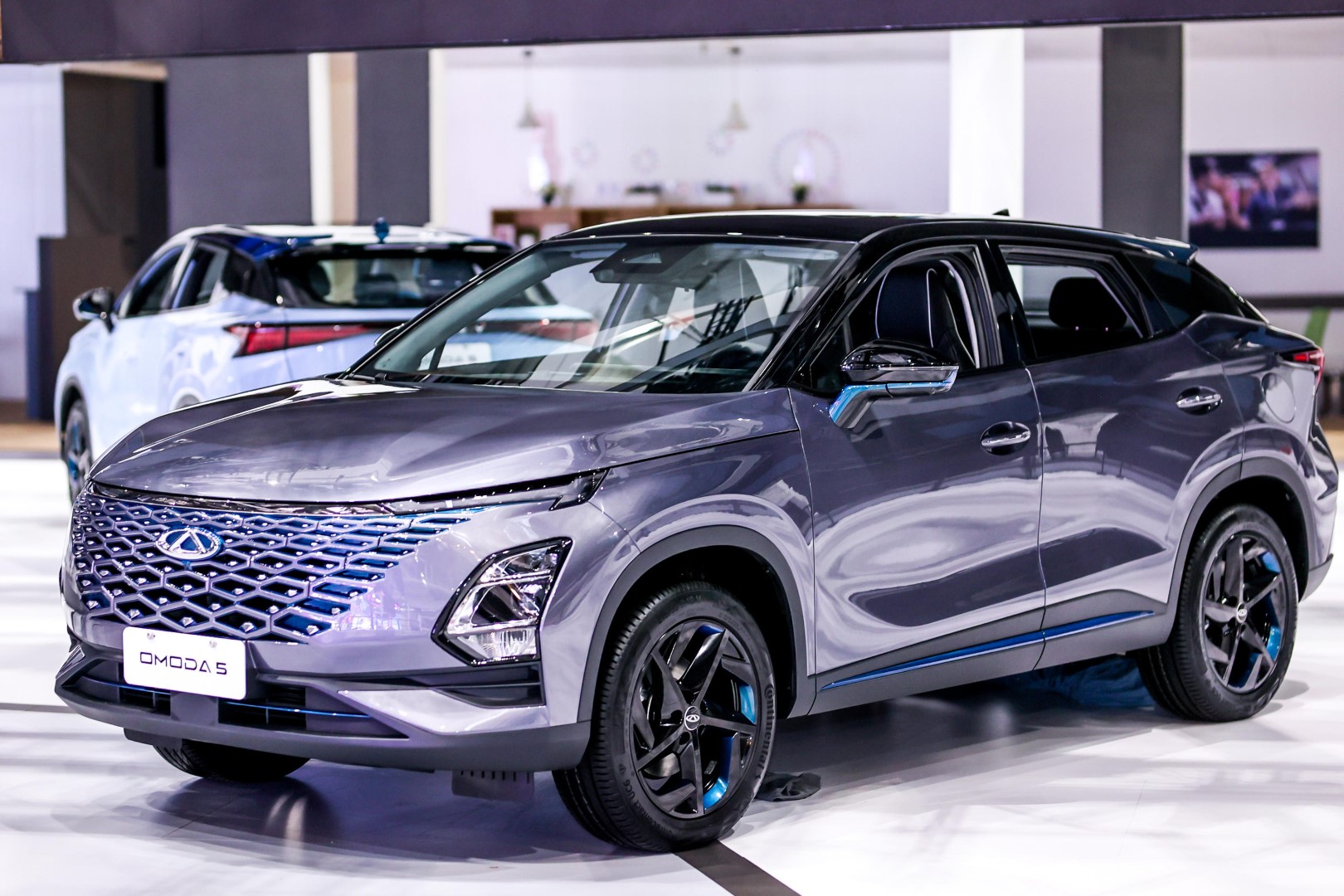
The original Omoda 5 was replaced in Malaysia by the facelifted Chery O5 in September 2025.
The newer model uses a multi-link rear suspension arrangement instead of the torsion-beam setup fitted to the original Omoda 5. This is a meaningful mechanical distinction because the rear suspension architecture and its associated components are different.

Chery Malaysia has stated that its current production models are not affected by this recall campaign. That means the available information does not support treating every Chery O5 as affected simply because it shares part of the original model’s name.
However, the distinction should not be interpreted as proof that every conceivable safety concern has been ruled out. The recall scope and the findings of JPJ’s technical investigation are separate matters.
3. Chery Omoda E5 — not included in the announced recall
The fully electric Omoda E5 also uses a multi-link rear suspension arrangement. It is not included in the recall campaign announced by Chery Malaysia, which specifically identifies affected Omoda 5 C and H variants.

There is currently no confirmed basis for extending this particular recall to the Omoda E5 merely because it belongs to the wider Omoda family.
4. Other Chery models — no confirmed inclusion in this recall
Models such as the Tiggo Cross, Tiggo 7 and Tiggo 8 have not been identified as part of the announced Omoda 5 recall.
There is no justification for assuming that these vehicles are affected by the same axle issue without supporting technical evidence or an official notice.
The central point is that model names, shared branding and common manufacturing locations do not, by themselves, establish that vehicles use the same potentially defective component.
Who is affected, and who is not?
For owners and buyers, the practical implications are different depending on the vehicle involved.
Existing owners of the original Omoda 5
These owners should check their VIN against Chery Malaysia’s recall database, even if their vehicles have not exhibited any unusual behaviour.
If the vehicle is included, Chery says the inspection and any necessary component replacement will be provided at no charge.
Owners who are uncertain about their vehicle’s status can also contact an authorised service centre for assistance.
Owners of the facelifted Chery O5 and Omoda E5
Neither model is included in the recall announced on 11 October 2026. Their owners should not assume that their vehicles are affected by the original Omoda 5 campaign.
They should, however, continue to follow official announcements in case the investigation produces additional findings or changes to the scope of the campaign.
Customers waiting for delivery or registration of an original Omoda 5
These buyers face a different concern. With VTA temporarily suspended and new registrations halted, affected transactions may be delayed while the regulatory investigation proceeds.
The precise implications for individual bookings, completed purchases and pending deliveries will depend on their circumstances and any further instructions from JPJ and Chery.
Customers should seek written clarification from their dealers on registration status, delivery timelines and the available options if their transaction cannot proceed as planned.
Prospective buyers considering the Chery O5 or other Chery models
The current recall does not automatically invalidate these models or establish that they share the same defect.
Nevertheless, buyers should distinguish between a model being outside a particular recall and a regulator having completed every aspect of its investigation. The former is confirmed by the announced recall scope; the latter should not be assumed.
What should affected owners do now?
The first step is to check the vehicle identification number rather than trying to identify the problem visually.
Owners can visit Chery Malaysia’s official product-update page at https://www.chery.my/chery-product-update and enter their VIN to check whether their vehicle is included.
If the vehicle is affected, owners should contact Chery’s authorised service network to arrange an inspection and follow the instructions provided by the manufacturer.
Given the nature of the reported failure, owners who have reason to suspect a problem with their vehicle’s rear axle or suspension should not continue driving it simply because the vehicle has not yet been confirmed as part of the recall. They should contact Chery for guidance on safe inspection and recovery arrangements.
Chery Malaysia’s customer-care number for the current campaign is 03-9388 0888. Owners should retain their recall confirmation, inspection records and any documentation relating to component replacement.
What happens next?
Two issues now need to be resolved.
The first is the immediate safety question: which vehicles contain potentially affected components, and what corrective work is required?
The second is the regulatory question: what caused the latest axle failure, and what evidence will JPJ require before reinstating the suspended VTA?
The investigation into the latest incident should establish whether the failure is connected to the welding issue identified in 2024 or whether another factor is responsible. JPJ’s planned technical audit should also help determine whether the relevant manufacturing and inspection processes meet the required standards.
Until those findings are available, it would be premature to conclude that the two incidents have exactly the same cause. It would be equally premature to dismiss the latest incident as an isolated case without the necessary evidence.
For Chery, the immediate priority is to identify affected vehicles, complete the recall properly and communicate the findings clearly. For JPJ, the task is to establish whether the vehicles and manufacturing processes meet the necessary safety requirements before approval is restored.
For owners, the most important step is to verify their vehicle’s status through official channels rather than relying on social-media speculation.
Ultimately, this is a test of both vehicle safety and manufacturer accountability. The recall addresses the immediate risk to potentially affected owners, while the JPJ investigation must establish what went wrong and what needs to change to prevent a recurrence. The outcome will matter not only to existing Omoda 5 owners, but also to the confidence of Malaysian buyers considering Chery’s newer models.