
For the longest time, the automotive world has been obsessed with making engines smaller. Four cylinders replaced six, hybrid systems became more powerful, turbochargers became more sophisticated, and electric motors stepped in to fill the gaps in torque delivery.
On paper, everything got quicker, more efficient, and more environmentally friendly. Yet every now and then, you get behind the wheel of something like the Audi Q7 S line, and you’re reminded that there really is no replacement for displacement.
Well… almost.
Yes, the Q7’s 3.0-litre V6 isn’t naturally aspirated. It is turbocharged, features mild-hybrid technology, and is packed with modern engineering. But none of that changes the fact that it is still a proper six-cylinder engine, and you can feel it from the very first press of the accelerator.
After spending time behind the wheel of the Audi Q7 S line, one thing became abundantly clear – there is still something uniquely satisfying about a large-capacity six-cylinder engine.
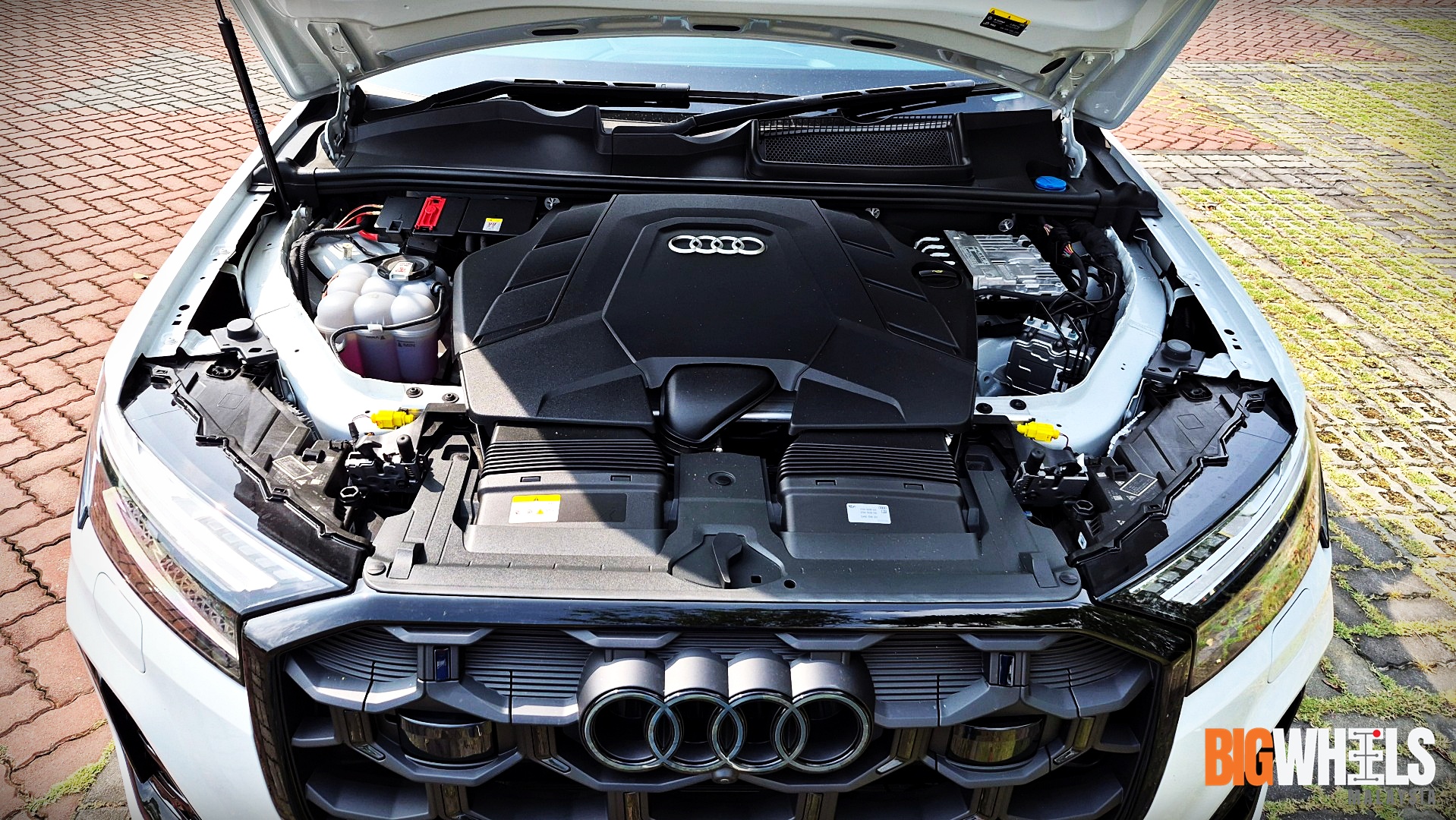
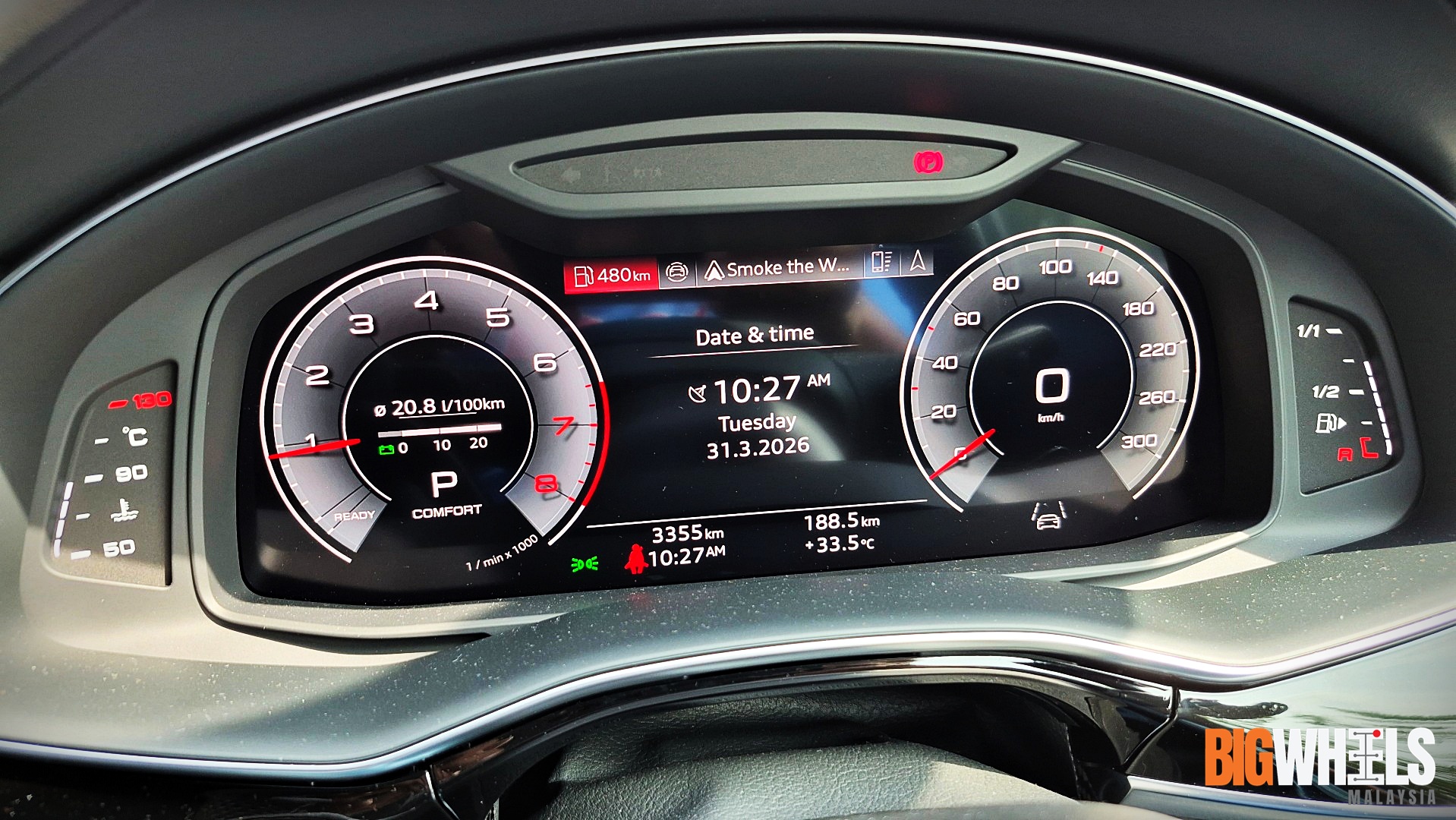
The Q7 is powered by a 3.0-litre turbocharged V6 with a 48-volt mild-hybrid system, producing 340 PS and 500 Nm of torque, channelled to all four wheels through Audi’s quattro permanent all-wheel-drive system and an eight-speed Tiptronic automatic transmission. It dispatches the century sprint in just 5.6 seconds despite weighing well over two tonnes.
Those figures are certainly impressive, but what really stands out isn’t outright speed. It is the effortless way the Q7 delivers its performance. Peak torque arrives from just 1,370 rpm and remains available until 4,500 rpm, giving the SUV an almost inexhaustible reserve of pulling power.
Whether overtaking slower traffic, climbing steep inclines or carrying a full load of passengers, the engine never feels strained. There is always the reassuring sense that it has plenty more in reserve.
This is where the old saying, “there is no replacement for displacement”, still rings true.
Yes, this V6 is turbocharged and yes, it benefits from mild-hybrid assistance, but its character remains fundamentally different from that of a smaller four-cylinder engine. Many modern SUVs can match or even beat the Q7 in a straight-line sprint thanks to instant electric torque, but few deliver their performance with the same sense of composure and mechanical confidence.
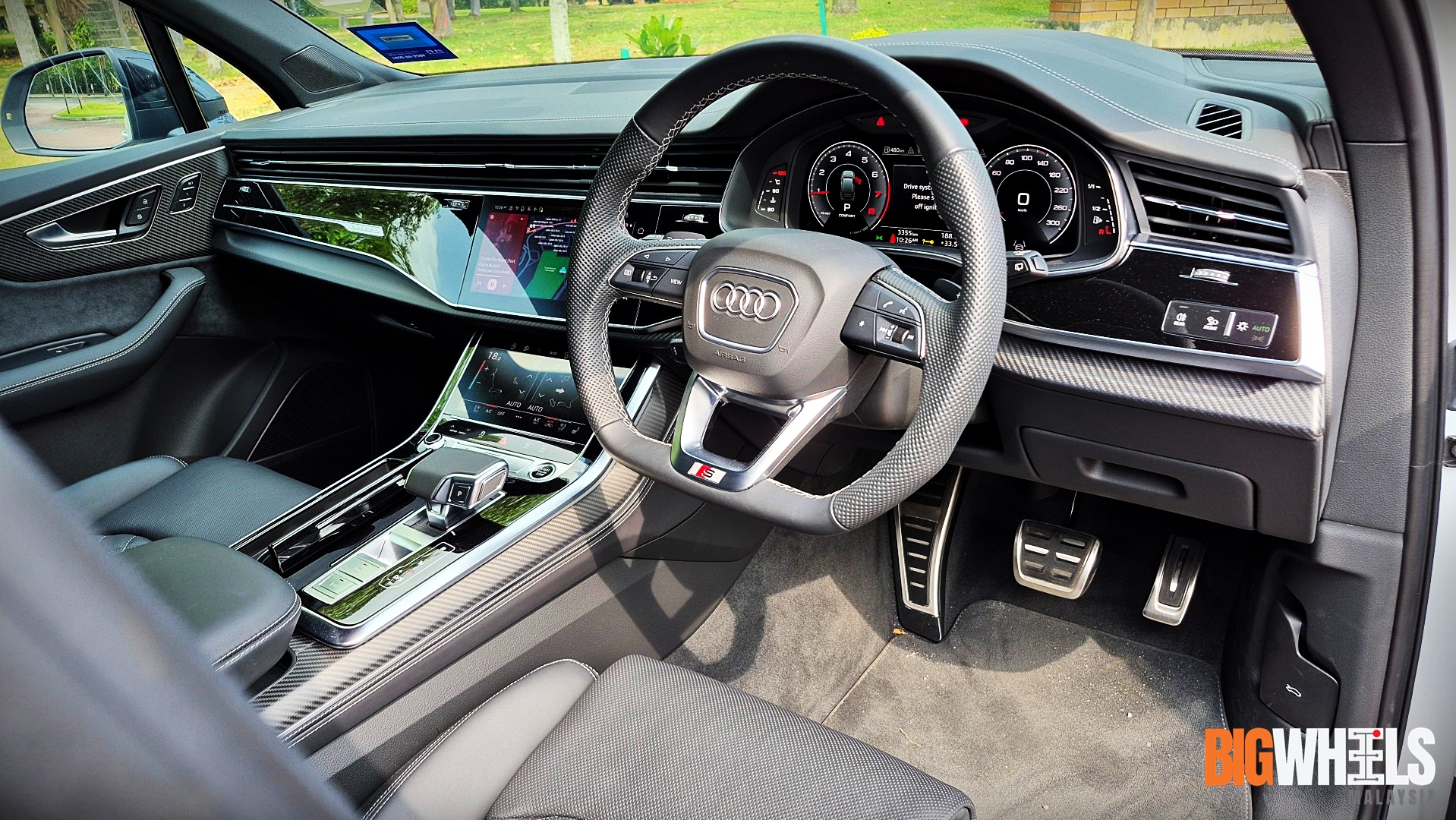
Rather than feeling eager or frantic, the Q7 simply feels muscular. Every input is met with a smooth, effortless response that gives the impression the vehicle is operating well within its limits.
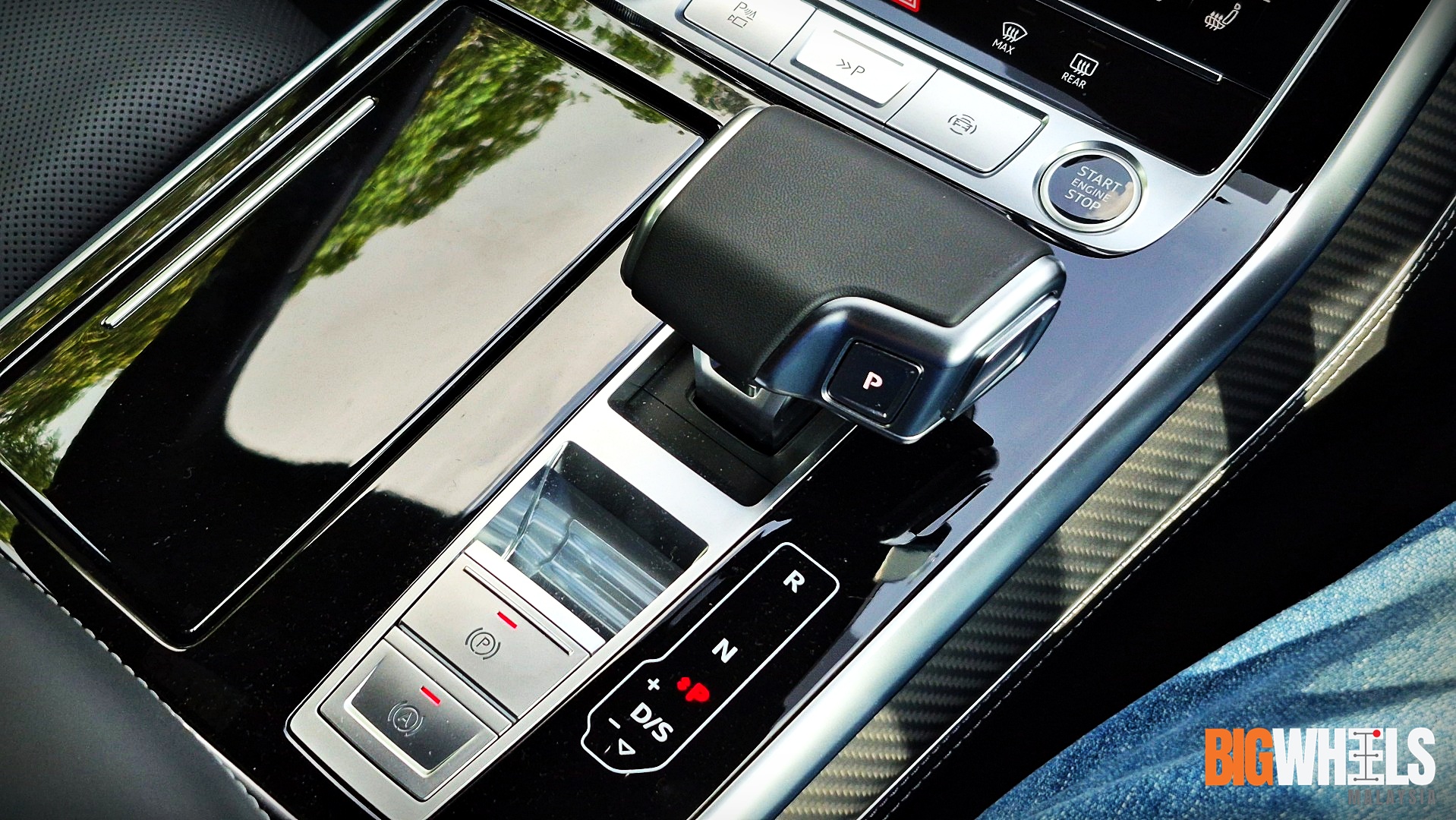
That same sense of solidity extends throughout the rest of the vehicle. Audi has long been recognised for its build quality, and the Q7 continues that tradition. The cabin feels exceptionally well screwed together, with soft-touch materials covering most surfaces and switchgear that operates with the precise tactile feedback that has become synonymous with the brand. Even over uneven Malaysian roads, the structure feels rigid, free from the creaks and vibrations that can sometimes develop in large SUVs.
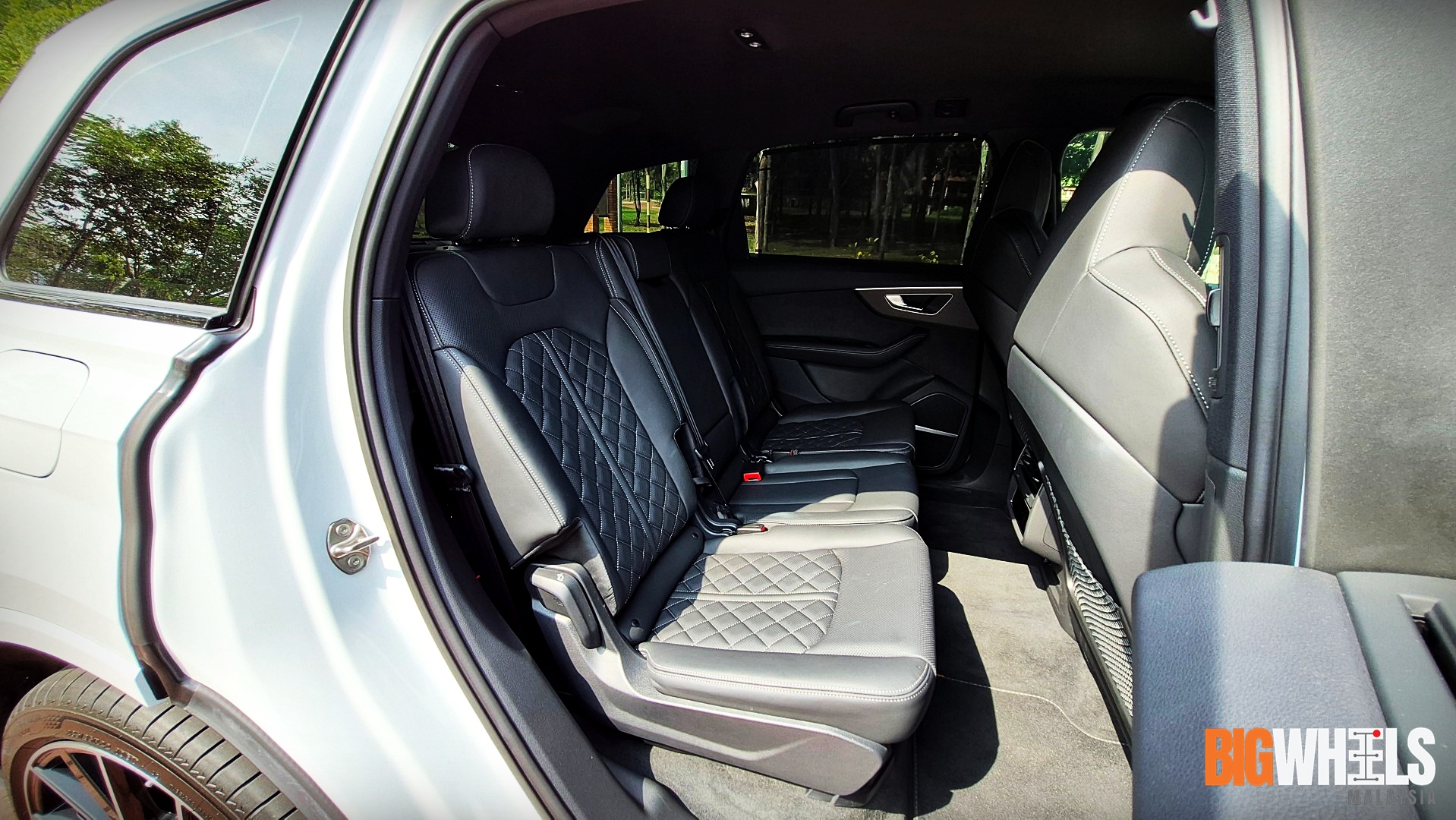
The S line trim also contributes significantly to the driving experience. The sports seats are noticeably firmer than those found in some rivals, but they provide excellent support during long-distance journeys without sacrificing comfort.
The thick-rimmed multifunction steering wheel is another highlight. It feels substantial in your hands and reinforces the impression that you’re driving something engineered with durability in mind rather than merely chasing showroom appeal.
And then there is the soundtrack.
Audi has not turned the Q7 into a loud performance SUV, nor should it have. However, when the V6 is worked harder, there is a subtle yet unmistakable growl that filters into the cabin.
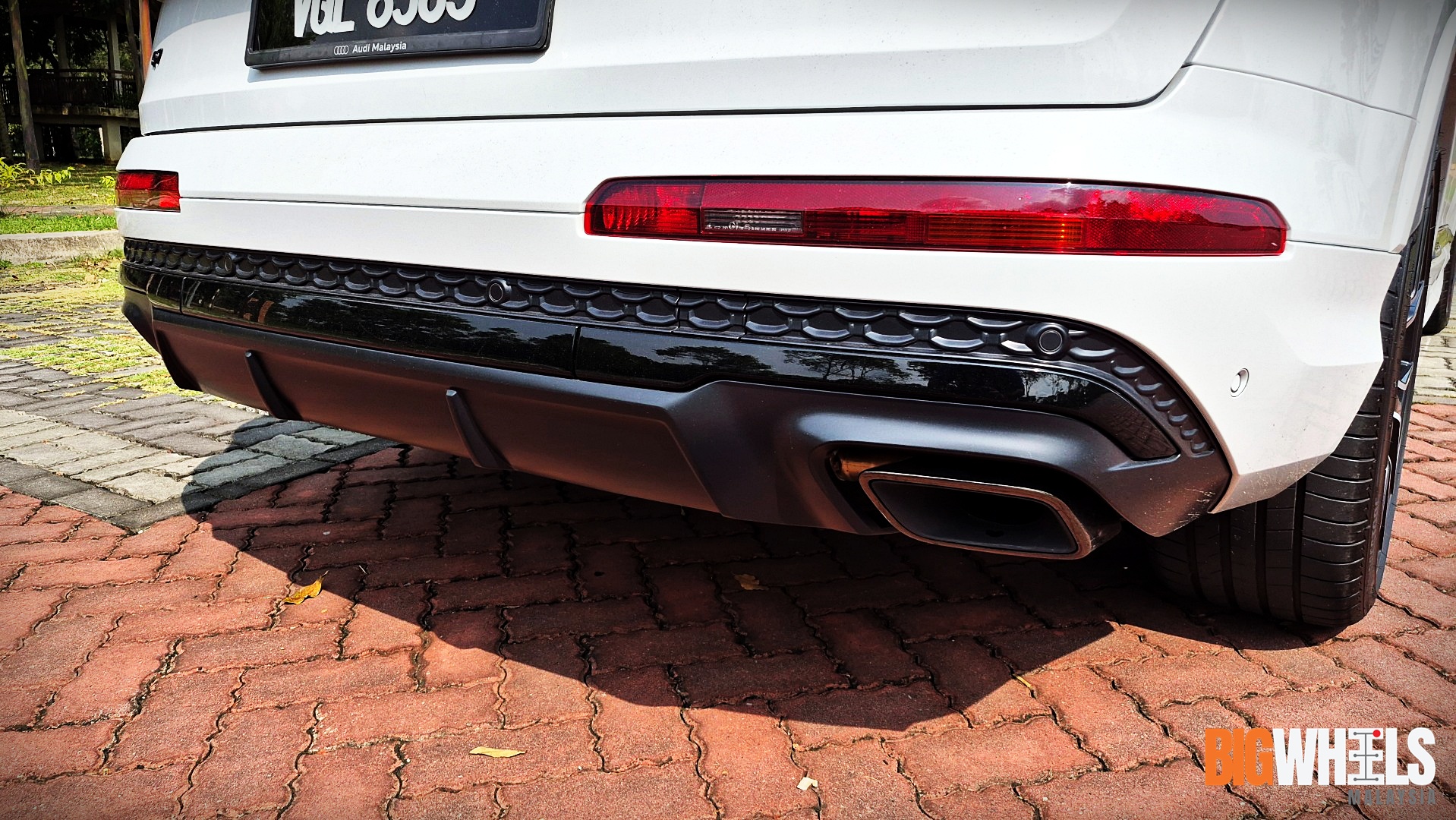
It is refined rather than aggressive, but it serves as a reminder that there are still six cylinders working beneath the bonnet. For enthusiasts who grew up with naturally aspirated V6s and V8s, it evokes memories of an era when engine character played a much bigger role in defining a car.
Younger buyers who have spent most of their driving lives in turbocharged four-cylinder or fully electrified vehicles may find it refreshing to experience a powertrain that delivers not only strong performance, but also genuine mechanical character.
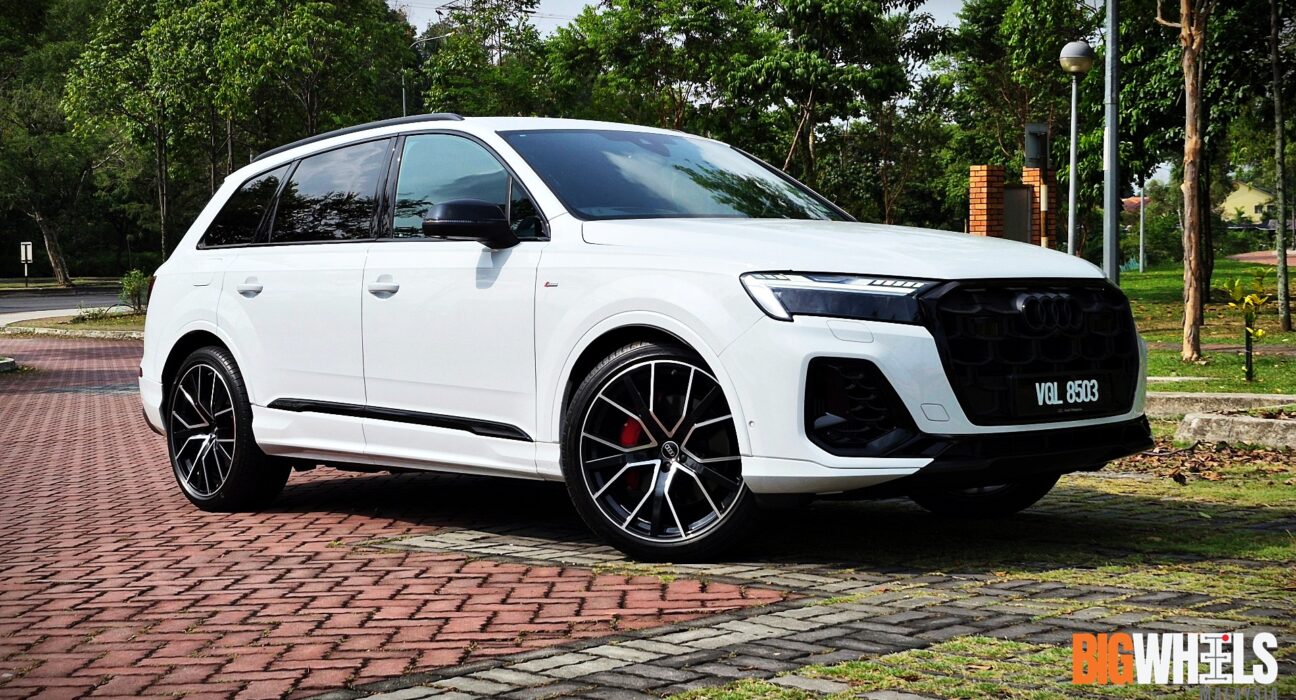
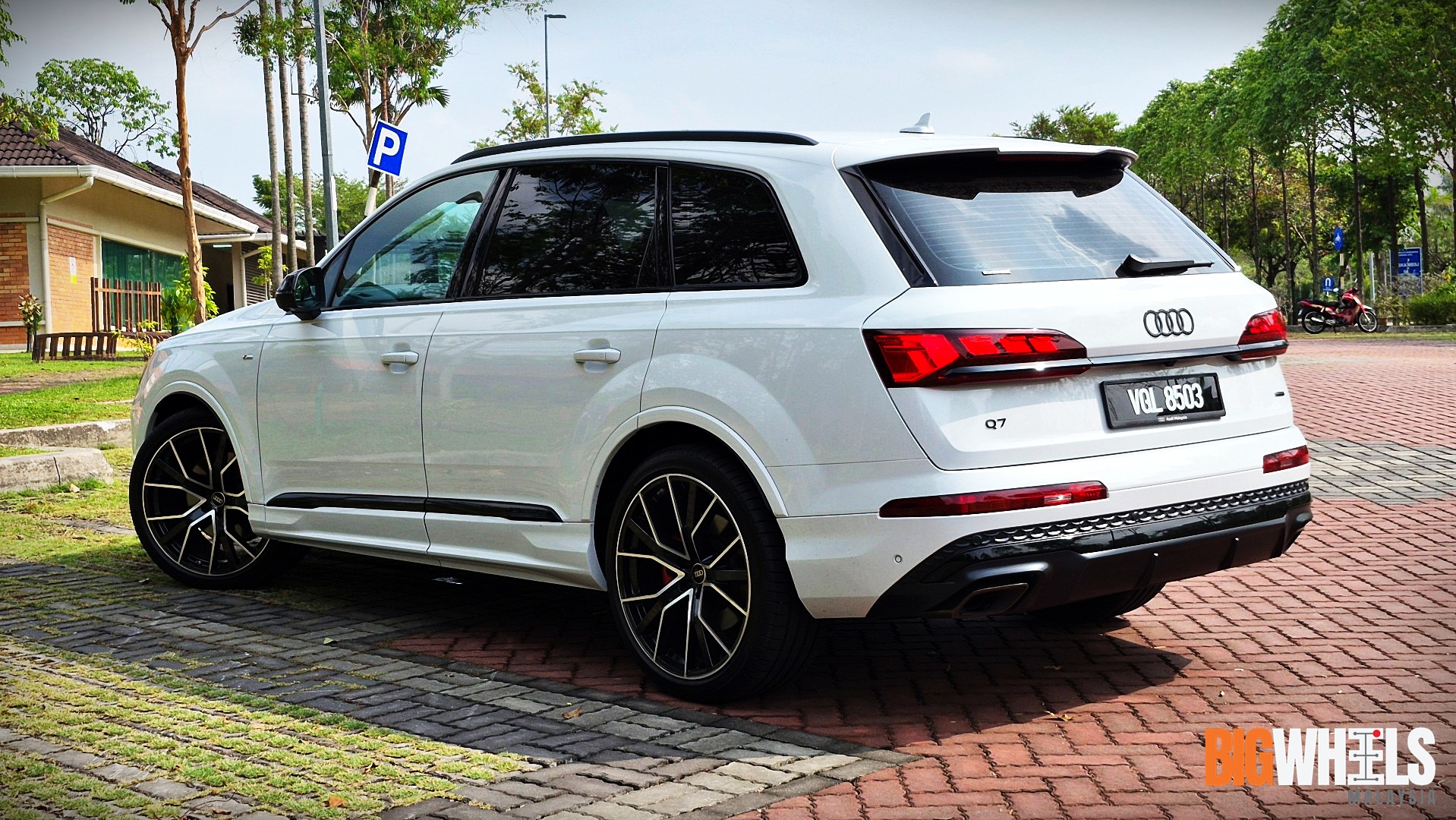
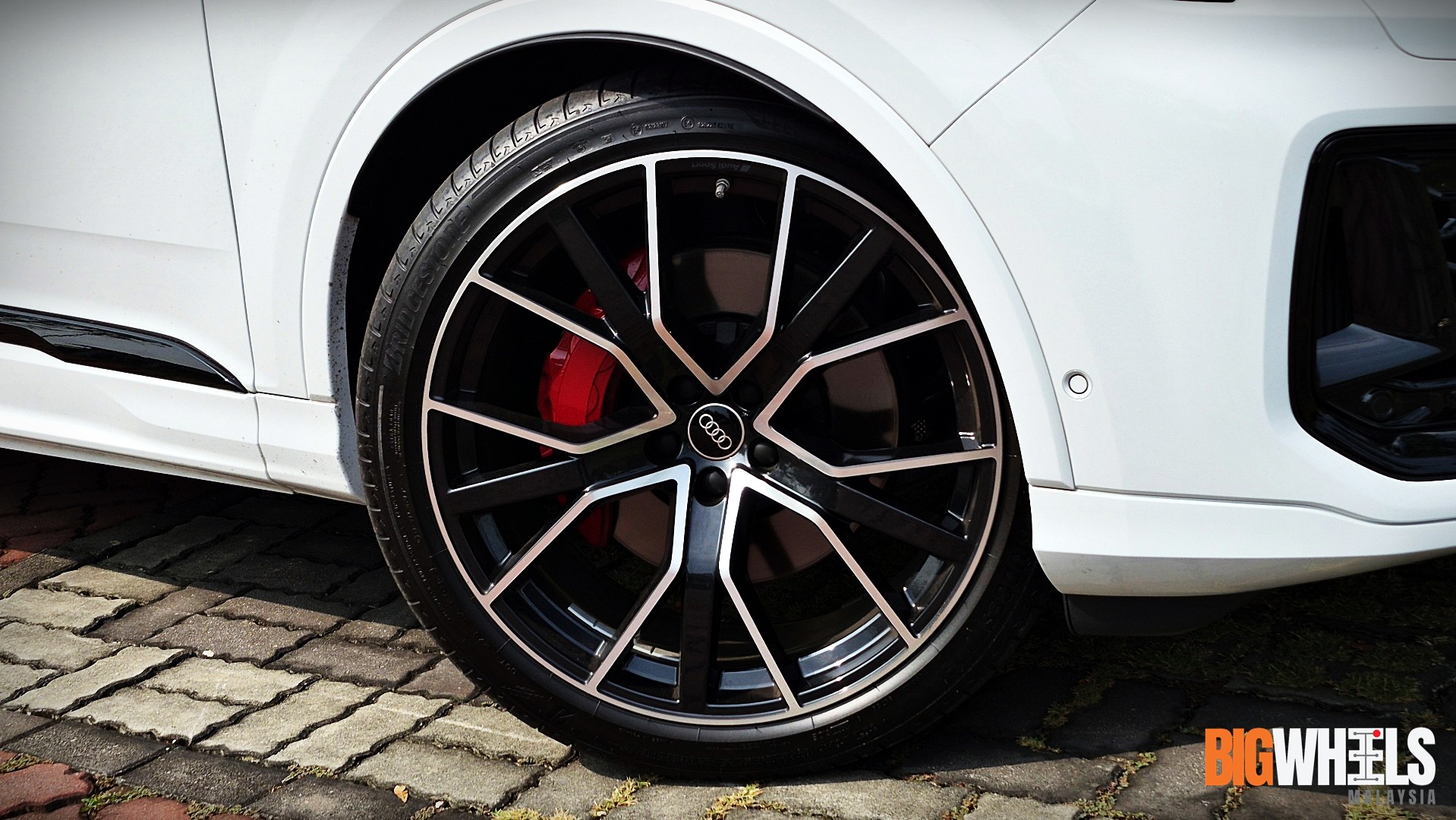
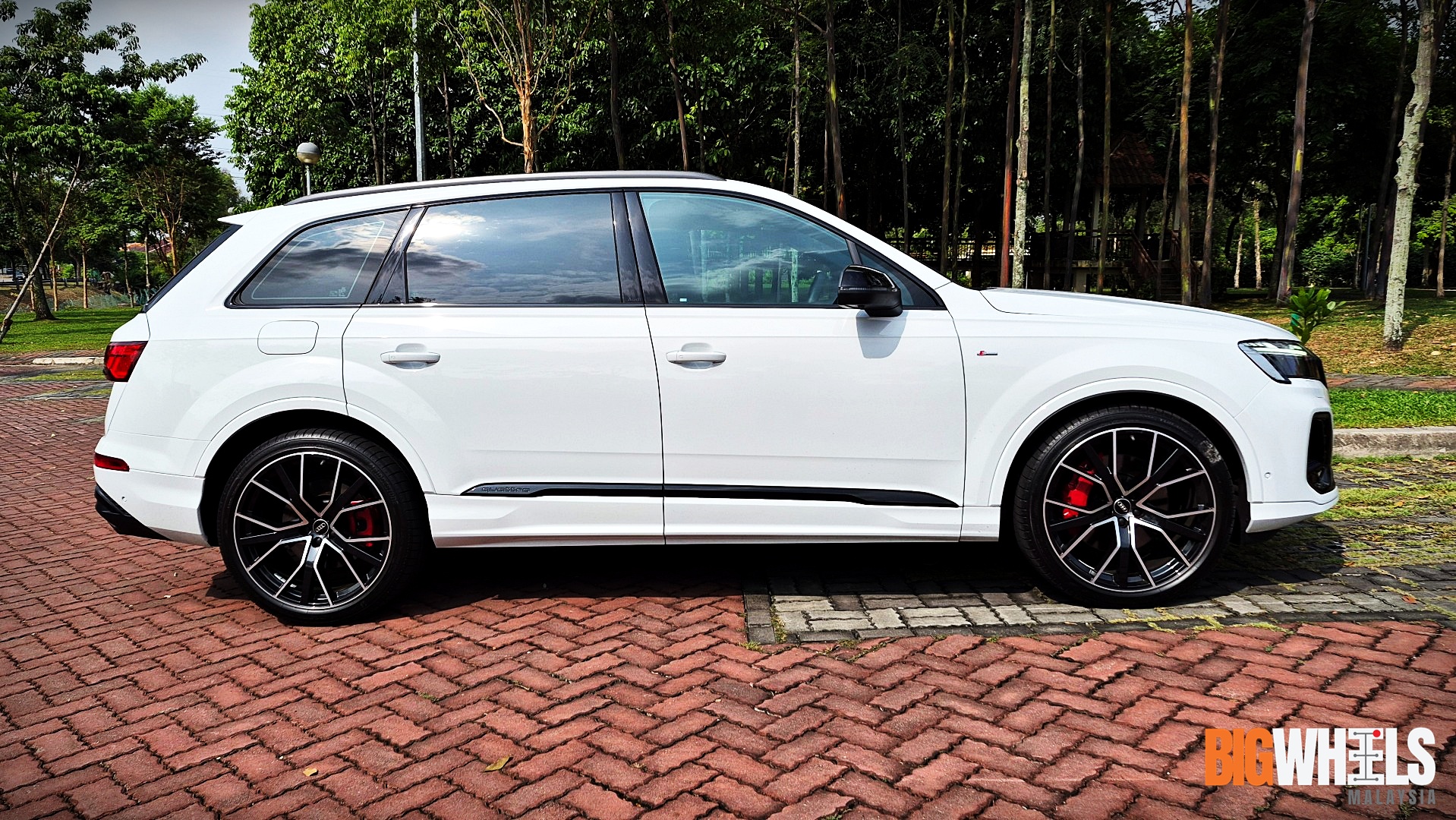
Visually, the Q7 avoids unnecessary flamboyance. Instead, it relies on clean proportions, a broad Singleframe grille, sharp Matrix LED lighting, muscular wheel arches and 22-inch Audi Sport alloy wheels to create its presence.
It is an SUV that looks substantial without trying too hard, and its understated styling is likely to age more gracefully than trendier designs that rely on excessive creases and oversized trim pieces.
Perhaps the biggest story surrounding the Q7 in Malaysia, however, has little to do with its design or performance.
For years, Audi struggled against BMW and Mercedes-Benz because of pricing. While the BMW X5 and Mercedes-Benz GLE benefited from local assembly, Audi models were largely imported as completely built-up (CBU) units, making them noticeably more expensive than similarly specified rivals.
That pricing disadvantage often made Audi a difficult recommendation, even when the products themselves were excellent.
The Q7 changes that narrative. It is Audi’s first locally assembled (CKD) model in Malaysia—and the first CKD Audi produced in Southeast Asia—which has allowed the brand to price it far more competitively.
The official retail price stands at RM459,990, with an on-the-road price of approximately RM462,272 (without the Audi Assurance Package), putting it squarely in contention with premium seven-seat SUVs from BMW and Mercedes-Benz. Promotional campaigns have even brought selected units below the RM400,000 mark, further strengthening its value proposition.
At this price point, the Audi Q7 S line finally competes on equal footing. Buyers are no longer paying a premium simply because of where the vehicle was assembled. Instead, they can judge it on its merits—and those merits are considerable.
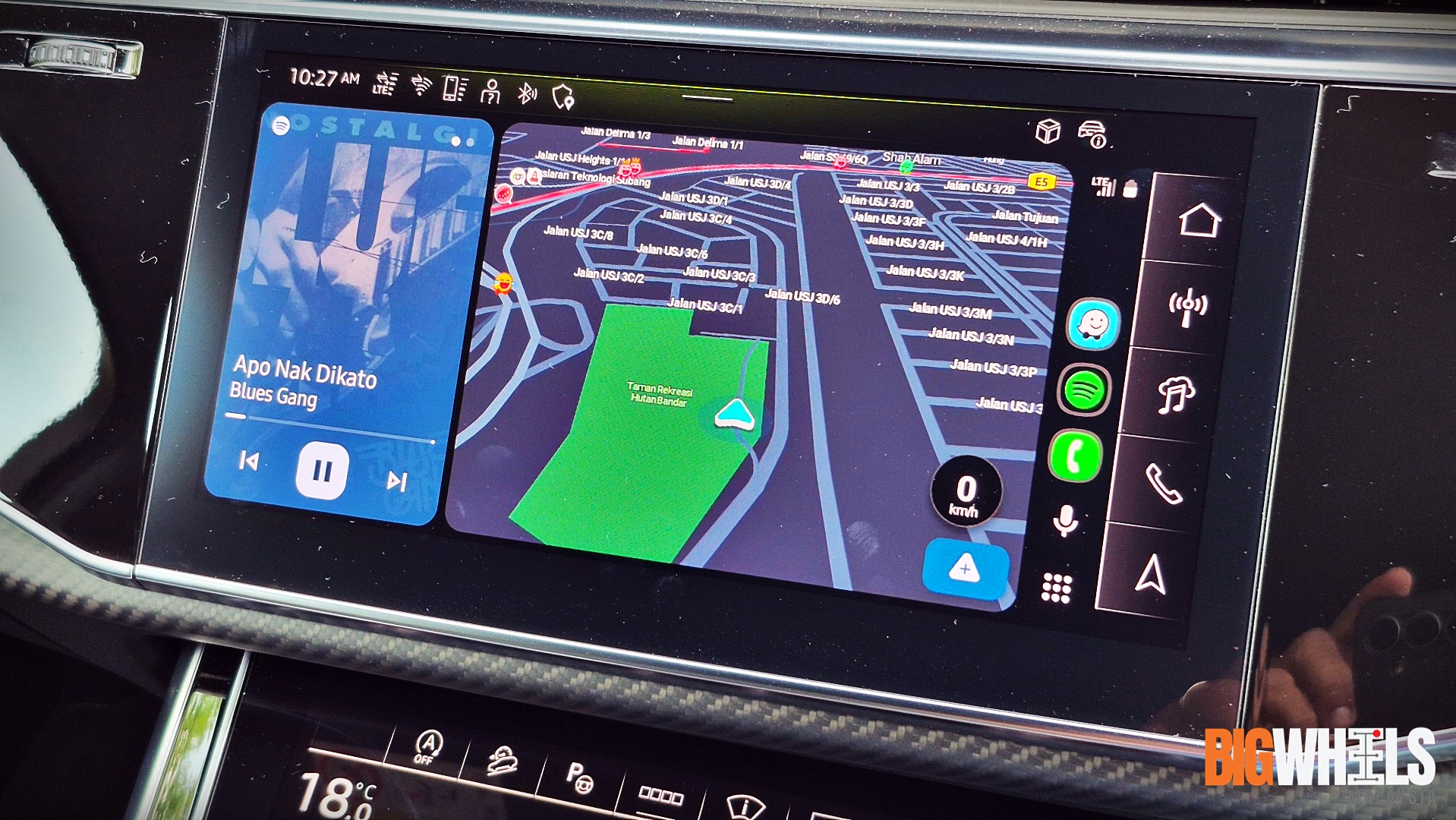
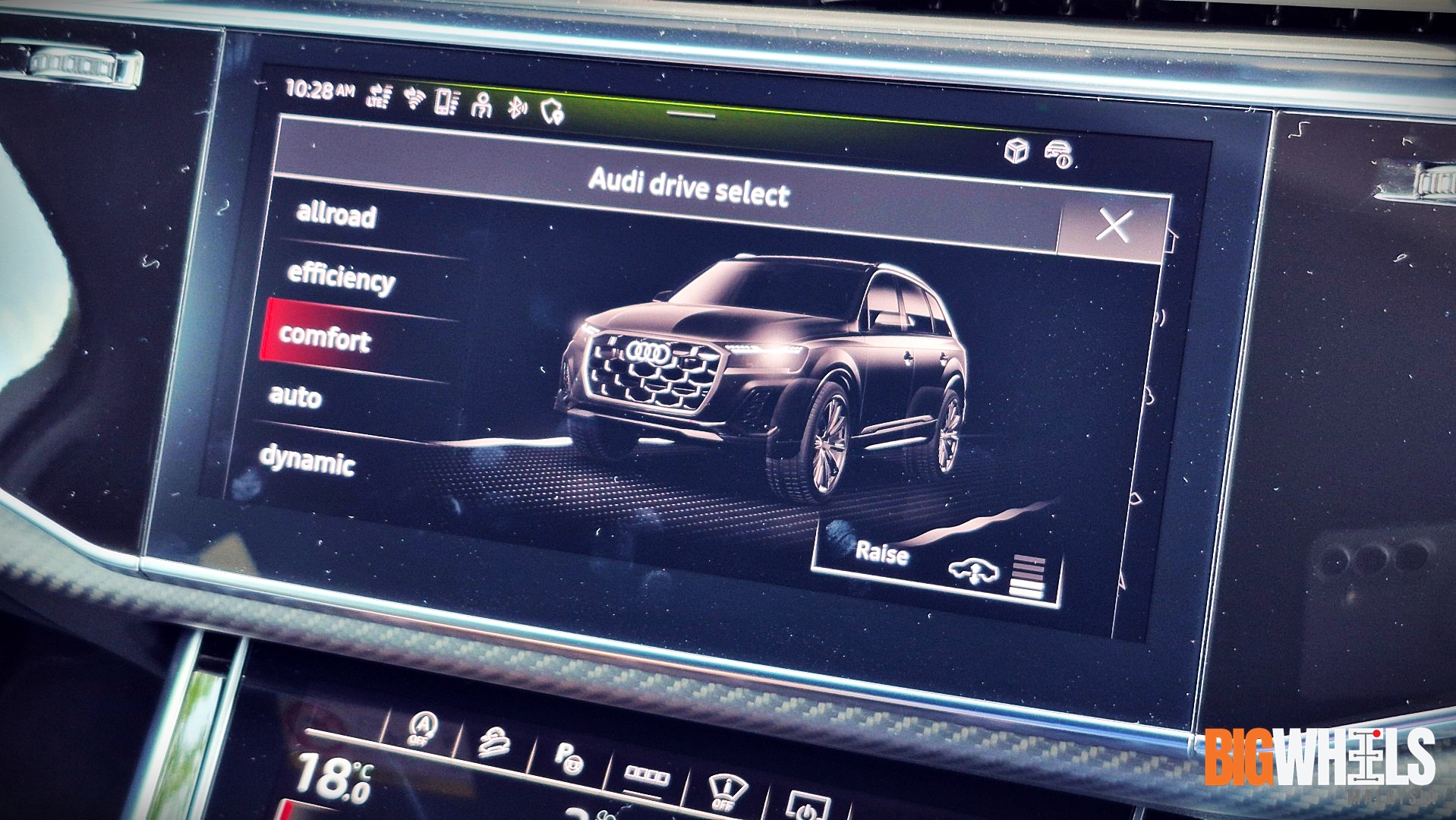
The Q7 is not the flashiest luxury SUV on sale today, nor does it chase gimmicks or oversized touchscreens to impress buyers. Instead, it focuses on fundamentals: effortless performance, impeccable refinement, exceptional build quality and the reassuring confidence that comes from a properly engineered six-cylinder powertrain.
As the industry continues moving towards smaller engines and greater electrification, vehicles like the Audi Q7 S line are becoming increasingly rare. It embraces modern technology where it makes sense—the 48-volt mild-hybrid system improves efficiency, while the turbocharger broadens the torque curve—but it never loses the character that only a large-capacity V6 can provide.
In many ways, that is what makes the Q7 so appealing. It doesn’t simply feel quick or luxurious.
It feels substantial, reassuring, and most importantly, it feels like the kind of SUV that reminds you why enthusiasts still have a soft spot for six-cylinder engines. In an era where performance is increasingly defined by software and electric assistance, the Audi Q7 S line proves that engine character still matters—and sometimes, there really is no replacement for displacement.