
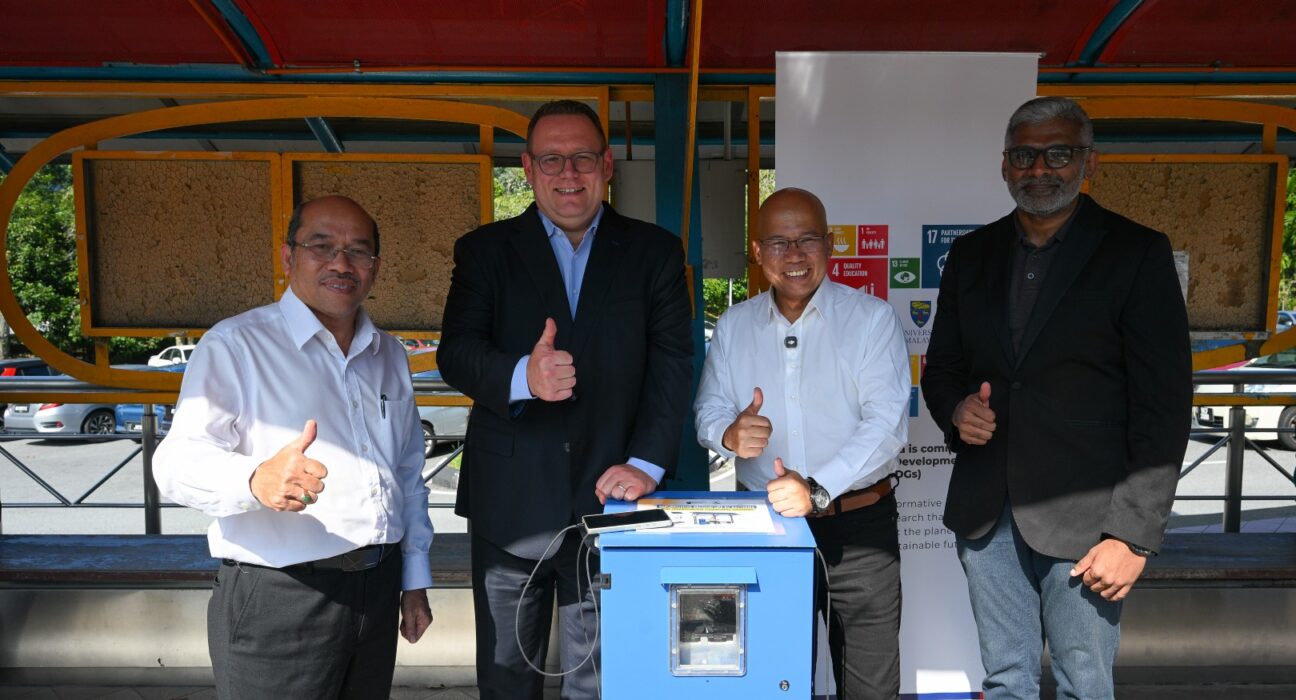
What happens to an electric vehicle battery after it is no longer suitable for powering a car? BMW Group Malaysia and Universiti Malaya (UM) are exploring a practical answer – give it a second life as an energy storage system.
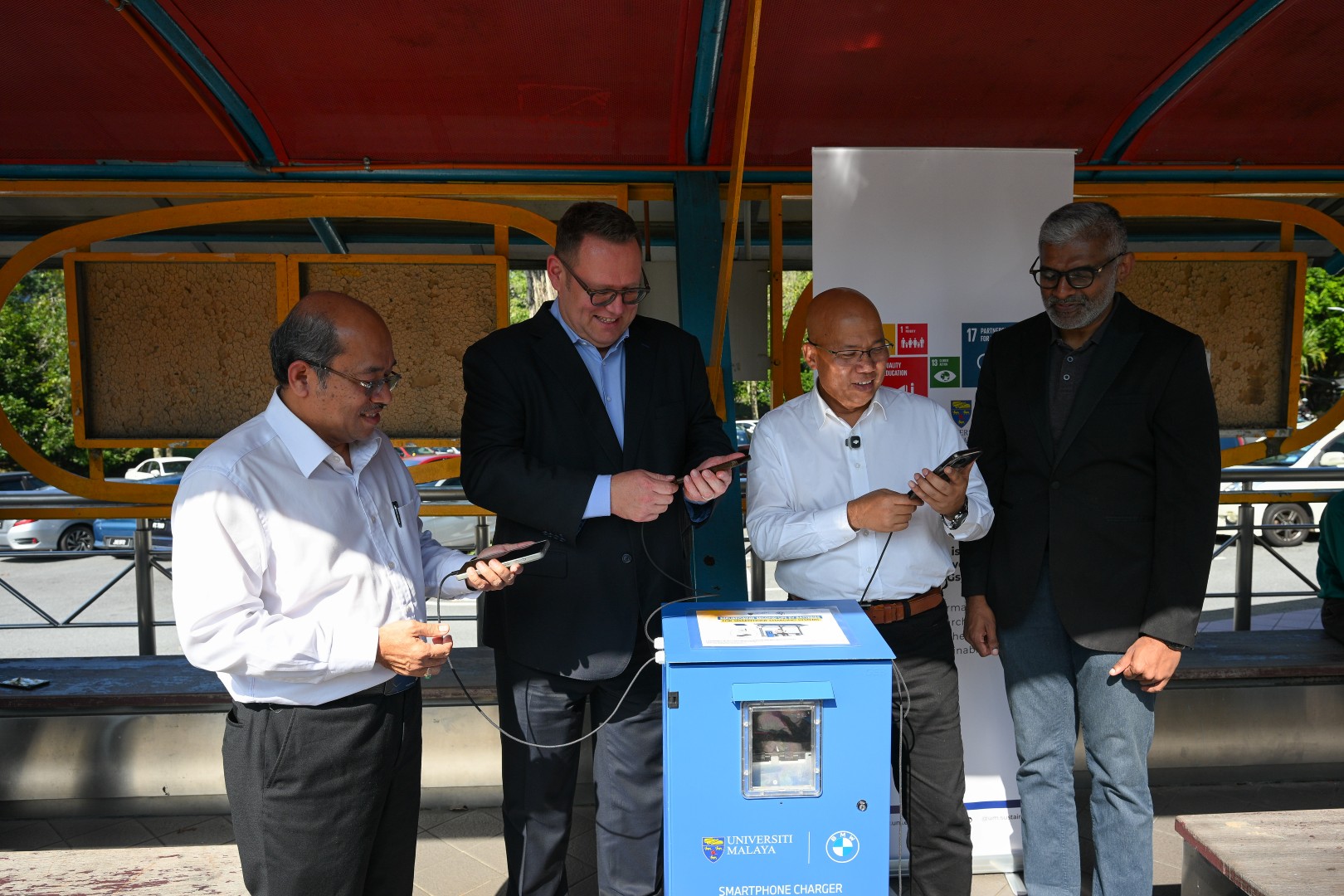
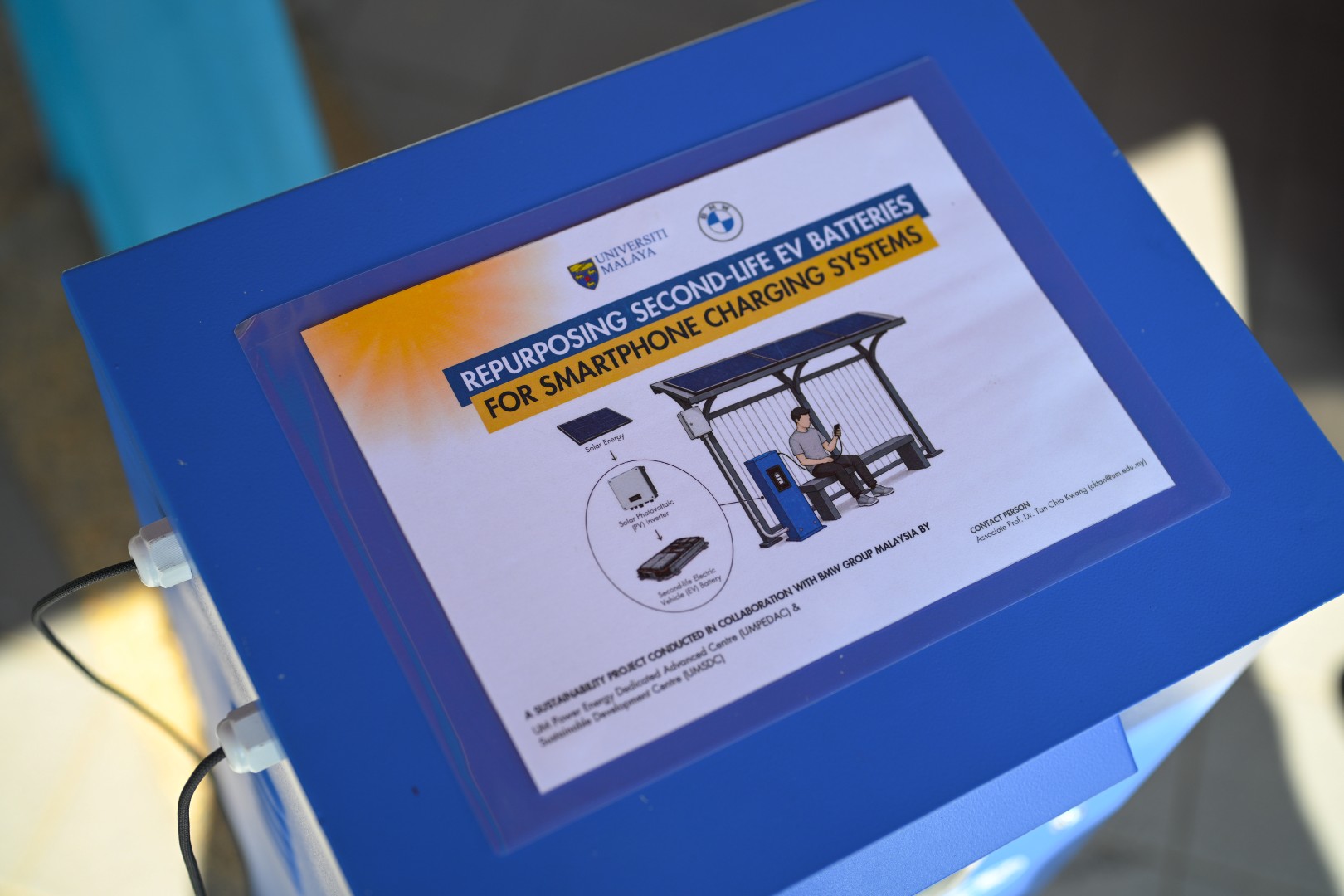
The latest result of their collaboration is a solar-powered smartphone charging station at UM’s Central bus stop, powered by repurposed BMW EV batteries. The installation marks the first completed real-world application of the RE x Universiti Malaya research initiative, turning more than two years of laboratory research into something that students and staff can use every day.
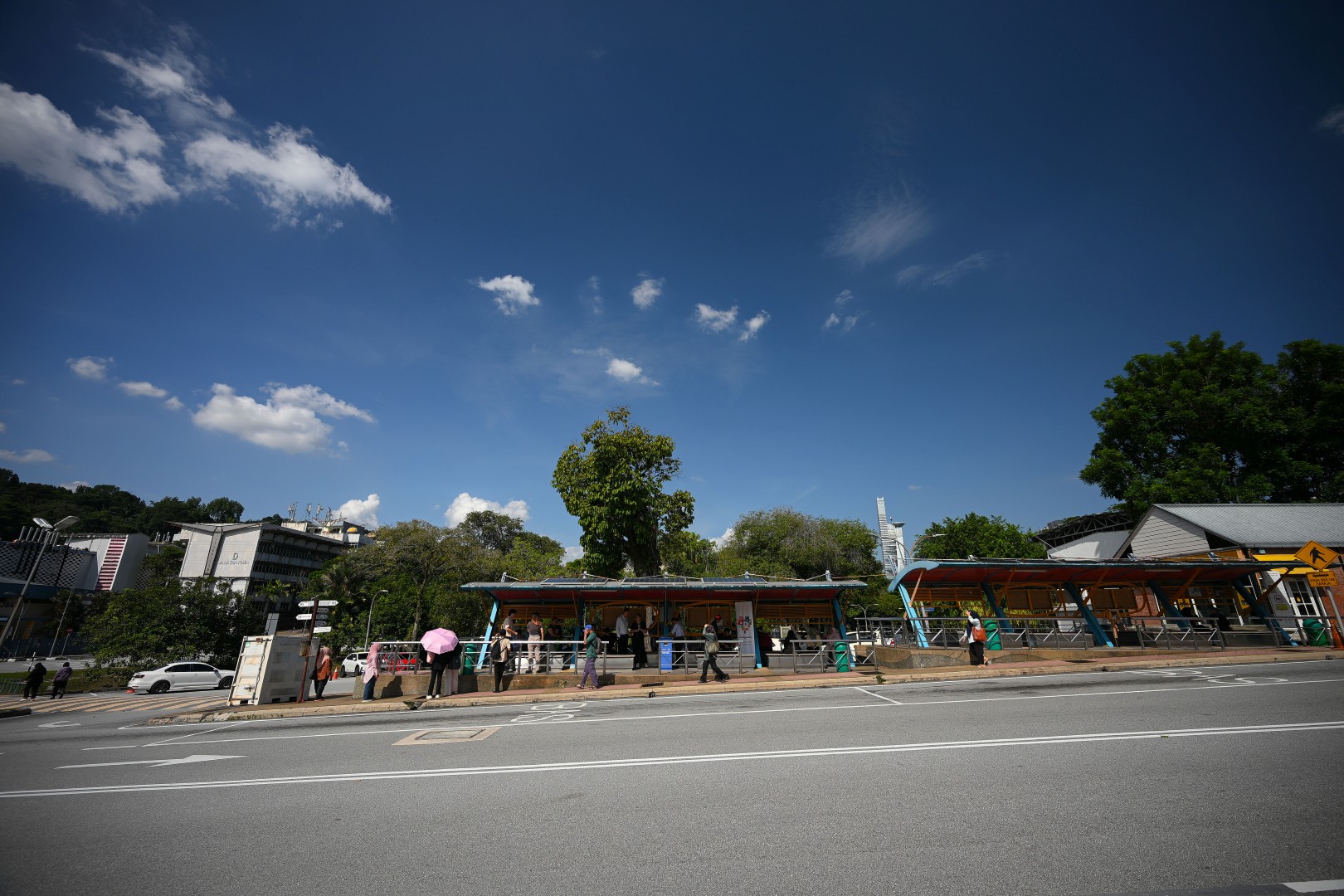
Located at a bus stop used by more than 3,000 people daily, the charging station demonstrates how retired EV batteries can continue to provide useful energy even after their automotive life has ended.
More importantly, however, the project is not simply about charging smartphones. It is part of a much larger effort to develop a practical second-life ecosystem for EV batteries in Malaysia.
From EV battery to solar energy storage
BMW Group Malaysia has delivered more than 38,700 electrified vehicles — including fully electric and plug-in hybrid models — as of March 2026. As these vehicles age, their batteries are collected by BMW Group Malaysia as part of its battery management process. More than 13,600 batteries have already been recollected.
Instead of immediately treating these batteries as waste or sending them for recycling, the RE initiative explores whether they can still perform useful work in less demanding applications. That is where Universiti Malaya comes in.
In January 2026, BMW Group Malaysia signed a Memorandum of Understanding with UM, bringing together the Power Energy Dedicated Advanced Centre (UMPEDAC), UM Community Engagement Centre (UMCares) and UM Sustainable Development Centre (UMSDC).
Researchers led by Associate Professor Dr. Tan Chia Kwang have been testing retired BMW batteries at cell level, determining their remaining State of Health (SoH) and identifying which cells can safely be reused.
Cells that have degraded beyond the required threshold are removed, while suitable cells are grouped and reconfigured into new battery packs.
The result is effectively a new energy storage system built from batteries that are no longer ideal for use in an electric vehicle but still have useful capacity for stationary applications.
The research has so far produced two distinct applications, with different battery packs matched to different energy requirements.
The lower-capacity packs are being used for applications such as the new smartphone charging station at UM. Because charging mobile devices requires relatively little energy, these batteries can continue to be useful in a less demanding role.
The more significant application involves higher-capacity packs, which are being prepared for deployment in Pos Sinderut, Kuala Lipis, Pahang. There, the second-life batteries are intended to form part of a standalone solar energy system for a Semai Orang Asli community without reliable grid electricity.
Solar panels will charge the batteries during daylight hours, with the stored energy then used after sunset when household electricity demand is higher.
That being said, the installation at UM represents an important milestone because it demonstrates that the technology is moving beyond the laboratory.
At one end of the spectrum, a student can simply plug a smartphone into the charging station. At the other, the same fundamental technology could eventually provide electricity for an off-grid community.
The partners are also looking beyond the current projects. Early discussions are already considering potential applications such as an autonomous zero-energy building at UM’s Sustainable Development Centre.
However, scaling second-life battery technology will require more than batteries and research. The project notes that supporting components and engineering adaptation remain significant costs, creating a need for long-term partners willing to contribute funding, expertise or equipment.
Ultimately, the BMW Group Malaysia and Universiti Malaya partnership demonstrates a different way of thinking about EV batteries.
Instead of viewing the end of an EV battery’s automotive life as the end of its usefulness, the project treats it as the beginning of another chapter — one where yesterday’s car battery could help charge a smartphone today, or potentially keep food refrigerated in an off-grid Malaysian community tomorrow.
For a country preparing for a much larger EV population, that could become an increasingly important part of the automotive industry’s sustainability story.